%20%20--%3E%0A%3Csvg%20version%3D%221.1%22%20id%3D%22Layer_1%22%20xmlns%3D%22http%3A%2F%2Fwww.w3.org%2F2000%2Fsvg%22%20xmlns%3Axlink%3D%22http%3A%2F%2Fwww.w3.org%2F1999%2Fxlink%22%20x%3D%220px%22%20y%3D%220px%22%0A%09%20viewBox%3D%220%200%20684.6%2068.1%22%20style%3D%22enable-background%3Anew%200%200%20684.6%2068.1%3B%22%20xml%3Aspace%3D%22preserve%22%3E%0A%3Cg%3E%0A%09%3Cpath%20d%3D%22M444.1%2C29.3h-17.4v14.5h17.4V29.3z%20M36.4%2C68.1l29.3-50.8V0H50.4L32.9%2C36.8L15.5%2C0H0v68.1h16.7V45.8l12.4%2C22.3H36.4z%0A%09%09%20M49.1%2C68.1h16.6V23.4L49.1%2C52.1V68.1z%20M76.6%2C68.1h45V53.8H93.3V41.6h21V27.1h-21V14.8h28.3V0.1h-45V68.1z%20M175.6%2C68.1h17.3v-68%0A%09%09h-16.5v40.3L150%2C0.1h-17.6v68h16.7V27.7L175.6%2C68.1z%20M235.8%2C14.8h15.4V0.1h-47.4v14.7H219v53.2h16.8V14.8z%20M290.3%2C45.9h-17.1%0A%09%09l7.5-15.6h2L290.3%2C45.9z%20M298.7%2C68.1h18l-32.2-68h-5.7l-32%2C68h18l3.3-7.1h27.1L298.7%2C68.1z%20M325.2%2C68.1h46.2V53.8h-29.6V0.1h-16.7%0A%09%09V68.1z%20M423.7%2C14.8h27.2V0.1H407v68h16.7V14.8z%20M462%2C68.1h46.2V53.8h-29.6V0.1H462V68.1z%20M564.8%2C34.1c0%2C10.7-7.2%2C19.2-18.5%2C19.2%0A%09%09c-11.4%2C0-18.5-8.5-18.5-19.2s7.1-19.2%2C18.5-19.2C557.6%2C14.9%2C564.8%2C23.4%2C564.8%2C34.1%20M580.6%2C34.1c0-19-14.2-34-34.3-34%0A%09%09c-20.2%2C0-34.3%2C15-34.3%2C34c0%2C19%2C14.1%2C34%2C34.3%2C34C566.4%2C68.1%2C580.6%2C53.1%2C580.6%2C34.1%20M604.8%2C20.5c0-4.1%2C3.3-6.2%2C6.7-6.2%0A%09%09c4.4%2C0%2C6.6%2C3%2C6.6%2C6.6h14.7C631.8%2C9.1%2C625.1%2C0.1%2C611%2C0.1c-12%2C0-21.7%2C9.3-21.7%2C20.6c0%2C10.9%2C5.9%2C15.9%2C16.7%2C19.8%0A%09%09c5.2%2C1.8%2C11.5%2C3.2%2C11.5%2C8c0%2C3.3-2.4%2C5.5-6.4%2C5.5c-3.6%2C0-6.6-3-6.6-6.7h-15.2c0%2C11.5%2C7.9%2C20.8%2C21.8%2C20.8c12%2C0%2C21.6-9.3%2C21.6-20.6%0A%09%09c0-10-5.3-16.4-16.7-19.8C610.6%2C26.1%2C604.8%2C25.3%2C604.8%2C20.5%20M670%2C20.9h14.7C683.8%2C9.1%2C677.1%2C0.1%2C663%2C0.1c-12%2C0-21.7%2C9.3-21.7%2C20.6%0A%09%09c0%2C10.9%2C5.9%2C15.9%2C16.7%2C19.8c5.2%2C1.8%2C11.5%2C3.2%2C11.5%2C8c0%2C3.3-2.4%2C5.5-6.4%2C5.5c-3.6%2C0-6.6-3-6.6-6.7h-15.2c0%2C11.5%2C7.9%2C20.8%2C21.8%2C20.8%0A%09%09c12%2C0%2C21.6-9.3%2C21.6-20.6c0-10-5.3-16.4-16.7-19.8c-5.4-1.6-11.3-2.4-11.3-7.2c0-4.1%2C3.3-6.2%2C6.7-6.2C667.7%2C14.4%2C670%2C17.3%2C670%2C20.9%0A%09%09%22%2F%3E%0A%3C%2Fg%3E%0A%3C%2Fsvg%3E%0A)

At the dawn of the 20th century, one would assume that the horrors of war, in the form of strained resources, inflation, rising depression, staggering death tolls, famine, and plague, would have been enough to deter humanity. But desperate times have always called for desperate measures. Among the most disturbing of these was the recruitment of child soldiers.
The rules of enlistment were often loosely enforced. While the legal age was between 17 and 18, many ambitious or manipulated young boys—at least one as young as six—were allowed to fight in World War II. Many of them became martyrs before they were ever given the chance to truly live.
Yukio Aria
One of Japan’s most infamous wartime strategies during the height of World War II was the use of kamikaze pilots. Their mission was simple: to destroy enemy targets by crashing aircraft loaded with explosives directly into them—while still inside.
Yukio Araki enlisted in a Japanese youth pilot program at the age of 15 and underwent specialized flight training. At 17, after a final visit to his family and leaving behind farewell letters, he took off in his aircraft during the Second Sino-Japanese War. He never returned, dying alongside dozens of others in a coordinated attack.
Sergei Aleshkov
Born Seryozha Aleshkov in the Soviet Union, his exact birth records were never recovered, though he is believed to have been born between 1932 and 1936. After surviving a massacre carried out during the German invasion—escaping at just four to six years old—he was found alone, sick, and starving in a forest by a Soviet infantry regiment.
Adopted by General Mikhail Vorobyov, Aleshkov became the regiment’s unofficial “son.” Despite his age, he assisted soldiers by carrying messages, delivering supplies, and even transporting grenades.
During one attack, when the regiment’s base was destroyed, his adoptive father was buried under debris. Aleshkov’s quick actions in calling for help saved his life.
Stationed on the front lines, he frequently faced near-death situations and was even given a miniature uniform, which made him a visible target for enemy forces. Unlike many others, Aleshkov survived the war and lived into adulthood.
Calvin Graham
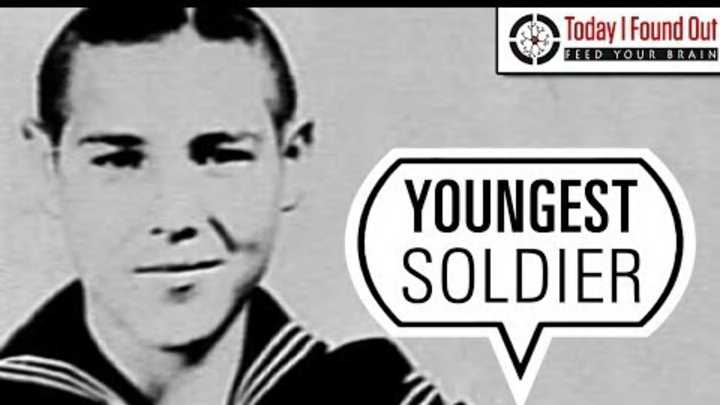
Calvin Graham’s entry into the war began with deception. At only 12 years old, he managed to enlist in the U.S. Navy by falsifying his age, going as far as convincing a dentist not to reveal the truth about how young he really was.
He went on to serve during the attack on Pearl Harbor, placing himself in one of the most defining and dangerous moments of the war. Despite his age, he performed his duties alongside grown men and was even awarded several medals for his service, briefly gaining recognition as a young war hero.
However, when his mother saw him in military footage and reported his true age to the authorities, the narrative around him quickly shifted. Instead of being celebrated, he was accused of misconduct. His medals were revoked, his benefits stripped, and was confined until his sister protested.
Graham later returned to military service at 17, this time legally, but his experience remained marked by injury and neglect. After being wounded, he was denied proper recognition and disability benefits, forcing him into a long struggle to reclaim what he had earned. It took years before parts of his status were restored, and even then, it came gradually. His Purple Heart medal was only returned after his death after presidents Bill Clinton and Jimmy Carter intervened.
Boško Buha
Boško Buha became involved in the Yugoslav Partisan resistance during World War II, at a time when the region was deeply fractured by occupation and internal conflict.
What set Buha apart was his skill with explosives. Despite his young age, he was quickly recognized among the fighters for his effectiveness in handling bombs, earning both trust and responsibility within the group.
At the age of 17, Buha was ambushed and killed during one of the operations by Chetnik forces. He was declared a national hero in 1951—8 years after his death.
Filippo Illuminato
Filippo Illuminato’s involvement in the war took place during a turning point in Italy’s position in World War II. After signing the Armistice of Cassibile, Italy shifted sides, prompting an aggressive response from Nazi Germany. Cities like Naples became immediate targets, facing occupation, air raids, and violent crackdowns.
In response, local resistance began to form, culminating in what would later be known as the “Four Days of Naples,” a massive resistance that was led by civilians.
Illuminato was among them. At just 13 years old, he had grown up in a poor, large family in Naples. When the uprising began, he joined the partisans, taking part in direct actions against German forces.
During one of these confrontations, while attempting to attack enemy troops using explosives, he was shot and killed. His actions, though brief in time, were later recognized by the Italian state, and he was posthumously awarded the Gold Medal of Military Valour.