%20%20--%3E%0A%3Csvg%20version%3D%221.1%22%20id%3D%22Layer_1%22%20xmlns%3D%22http%3A%2F%2Fwww.w3.org%2F2000%2Fsvg%22%20xmlns%3Axlink%3D%22http%3A%2F%2Fwww.w3.org%2F1999%2Fxlink%22%20x%3D%220px%22%20y%3D%220px%22%0A%09%20viewBox%3D%220%200%20684.6%2068.1%22%20style%3D%22enable-background%3Anew%200%200%20684.6%2068.1%3B%22%20xml%3Aspace%3D%22preserve%22%3E%0A%3Cg%3E%0A%09%3Cpath%20d%3D%22M444.1%2C29.3h-17.4v14.5h17.4V29.3z%20M36.4%2C68.1l29.3-50.8V0H50.4L32.9%2C36.8L15.5%2C0H0v68.1h16.7V45.8l12.4%2C22.3H36.4z%0A%09%09%20M49.1%2C68.1h16.6V23.4L49.1%2C52.1V68.1z%20M76.6%2C68.1h45V53.8H93.3V41.6h21V27.1h-21V14.8h28.3V0.1h-45V68.1z%20M175.6%2C68.1h17.3v-68%0A%09%09h-16.5v40.3L150%2C0.1h-17.6v68h16.7V27.7L175.6%2C68.1z%20M235.8%2C14.8h15.4V0.1h-47.4v14.7H219v53.2h16.8V14.8z%20M290.3%2C45.9h-17.1%0A%09%09l7.5-15.6h2L290.3%2C45.9z%20M298.7%2C68.1h18l-32.2-68h-5.7l-32%2C68h18l3.3-7.1h27.1L298.7%2C68.1z%20M325.2%2C68.1h46.2V53.8h-29.6V0.1h-16.7%0A%09%09V68.1z%20M423.7%2C14.8h27.2V0.1H407v68h16.7V14.8z%20M462%2C68.1h46.2V53.8h-29.6V0.1H462V68.1z%20M564.8%2C34.1c0%2C10.7-7.2%2C19.2-18.5%2C19.2%0A%09%09c-11.4%2C0-18.5-8.5-18.5-19.2s7.1-19.2%2C18.5-19.2C557.6%2C14.9%2C564.8%2C23.4%2C564.8%2C34.1%20M580.6%2C34.1c0-19-14.2-34-34.3-34%0A%09%09c-20.2%2C0-34.3%2C15-34.3%2C34c0%2C19%2C14.1%2C34%2C34.3%2C34C566.4%2C68.1%2C580.6%2C53.1%2C580.6%2C34.1%20M604.8%2C20.5c0-4.1%2C3.3-6.2%2C6.7-6.2%0A%09%09c4.4%2C0%2C6.6%2C3%2C6.6%2C6.6h14.7C631.8%2C9.1%2C625.1%2C0.1%2C611%2C0.1c-12%2C0-21.7%2C9.3-21.7%2C20.6c0%2C10.9%2C5.9%2C15.9%2C16.7%2C19.8%0A%09%09c5.2%2C1.8%2C11.5%2C3.2%2C11.5%2C8c0%2C3.3-2.4%2C5.5-6.4%2C5.5c-3.6%2C0-6.6-3-6.6-6.7h-15.2c0%2C11.5%2C7.9%2C20.8%2C21.8%2C20.8c12%2C0%2C21.6-9.3%2C21.6-20.6%0A%09%09c0-10-5.3-16.4-16.7-19.8C610.6%2C26.1%2C604.8%2C25.3%2C604.8%2C20.5%20M670%2C20.9h14.7C683.8%2C9.1%2C677.1%2C0.1%2C663%2C0.1c-12%2C0-21.7%2C9.3-21.7%2C20.6%0A%09%09c0%2C10.9%2C5.9%2C15.9%2C16.7%2C19.8c5.2%2C1.8%2C11.5%2C3.2%2C11.5%2C8c0%2C3.3-2.4%2C5.5-6.4%2C5.5c-3.6%2C0-6.6-3-6.6-6.7h-15.2c0%2C11.5%2C7.9%2C20.8%2C21.8%2C20.8%0A%09%09c12%2C0%2C21.6-9.3%2C21.6-20.6c0-10-5.3-16.4-16.7-19.8c-5.4-1.6-11.3-2.4-11.3-7.2c0-4.1%2C3.3-6.2%2C6.7-6.2C667.7%2C14.4%2C670%2C17.3%2C670%2C20.9%0A%09%09%22%2F%3E%0A%3C%2Fg%3E%0A%3C%2Fsvg%3E%0A)

A New Year’s Eve champagne toast may ring in the holiday for many Americans, but there’s more to New Year’s celebratory foods than a glass of bubbly. Dishes from around the world, and even some parts of the U.S., are thought to grant prosperity, health, and good luck for the coming year.
- Hoppin’ John // American South
- Pig // Austria and Germany
- Pomegranate // Greece
- Soba Noodles // Japan
- Pickled Herring // Poland and Scandinavia
- Grapes // Spain
- Cotechino con Lenticchie // Italy
- Tteokguk // South Korea
- Whisky // Scotland
Hoppin’ John // American South

This one-pot-meal, which is believed to bring good luck and prosperity, combines “peas” (usually black-eyed peas, which are more accurately beans), rice, and usually some form of pork. It's said the peas represent coins, while traditional side dishes of collard greens and cornbread signify paper money and gold, respectively. The dish has its roots in the Low Country of South Carolina, where rice grows well in the swampy river deltas. It officially appeared in cookbooks in the 1840s, but enslaved peoples were likely making the dish long before that. Southern Living offers a classic recipe.
Pig // Austria and Germany

In German, Schwein gehabt—to “have a pig”—means having a stroke of luck, so it's probably not surprising that Germany and Austria’s New Year’s traditions involve the animal in many forms: Pork might pop up in dinners on December 31, and little pigs made of marzipan (a sugar and almond paste) double as table decorations and dessert. Because pigs root forward as they’re foraging, their presence is said to represent progress in several global cultures.
Pomegranate // Greece

Greek mythology and folklore consider pomegranates symbols of fertility and prosperity. In Greece, households hang the ancient fruit above their front doors during Christmastime, and by December 31, the fruits become fodder for a New Year’s tradition. After midnight, the pomegranate is smashed against the door, and the bigger the mess, the better: The number of scattered seeds is said to represent the amount of luck the family will receive in the coming year. Both Turkey and Armenia also ring in the New Year with pomegranates.
You May Also Like ...
Add Mental Floss as a preferred news source!
Soba Noodles // Japan

In Japan, it’s tradition to serve toshikoshi soba (New Year soba) as one year turns into another. (According to The Japan Times, toshikoshi “means to climb or jump from the old year to the new.”) The concept of auspicious foods is deep-seated in Asian cultures, particularly with noodles, whose length symbolizes longevity. Soba’s buckwheat base, meanwhile, represents resilience, and some say that because the noodles’ texture offers a clean bite, they signify a clean break with the previous year.
Pickled Herring // Poland and Scandinavia

Because fish swim forward, not backward, many cultures around the world embrace these dishes as symbols of the New Year. Herring is plentiful in Poland and Scandinavia, and its silver color, representing prosperity, makes it a perfect fit for celebrations. Many eat the fish as part of a smorgasbord served right at midnight.
Grapes // Spain

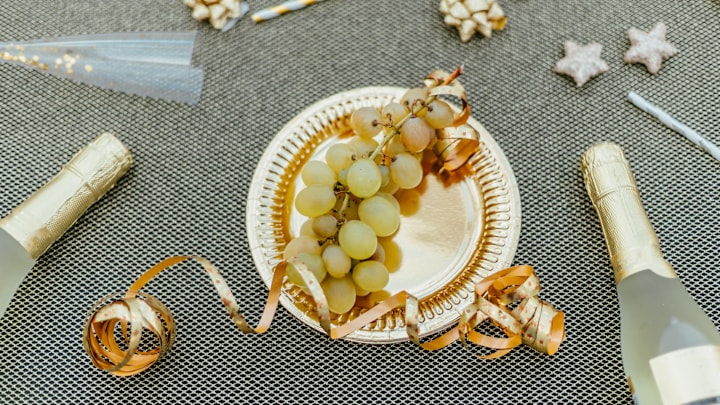
The Spanish stick to the fruit rather than the drink for their New Year celebrations. Spaniards spend the first seconds of the year scarfing down a grape upon each chime at midnight. Each grape represents luck for one of the months ahead; get them all down, and you’re sure to have a happy year. The tradition is said to have originated a century ago during a year when Spanish growers had a bumper grape crop (although some take the tradition as far back as the 1880s). There are different strategies for the task. It’s just important to have one before the wolfing begins.
Cotechino con Lenticchie // Italy

Italians mark the New Year period with La Festa di San Silvestro. The celebration begins with this sausage-and-lentil stew, in which the coin-like lentils represent money and good fortune. Side dishes sometimes include a side dish of zampone, a stuffed pig’s foot.
Tteokguk // South Korea

Tteokguk is synonymous with Korean New Year, which is celebrated in January or February on the Gregorian calendar. The comfort dish begins with a savory broth with chewy, thinly sliced rice cakes, and is often garnished with eggs, seaweed, or green onions. Regional variations can change the toppings or even the flavor of the broth. Regardless of the style, the dish is thought to give eaters good luck. In Korean culture, people consider themselves a year older on New Year’s instead of their birthdays, so they can count their age by bowls of tteokguk they’ve consumed.
Whisky // Scotland

In Scotland, New Year’s Eve ushers in the celebration of Hogmanay. It’s traditionally marked with the First Footing, in which a man (usually dark-haired) is the first to set foot in a neighbor’s house. He arrives bearing gifts such as shortbread and whisky, to toast the new year. His generosity pays off: The “first footer” is thought to bring the household good luck.
A version of this story originally ran in 2020; it has been updated for 2025.