%20%20--%3E%0A%3Csvg%20version%3D%221.1%22%20id%3D%22Layer_1%22%20xmlns%3D%22http%3A%2F%2Fwww.w3.org%2F2000%2Fsvg%22%20xmlns%3Axlink%3D%22http%3A%2F%2Fwww.w3.org%2F1999%2Fxlink%22%20x%3D%220px%22%20y%3D%220px%22%0A%09%20viewBox%3D%220%200%20684.6%2068.1%22%20style%3D%22enable-background%3Anew%200%200%20684.6%2068.1%3B%22%20xml%3Aspace%3D%22preserve%22%3E%0A%3Cg%3E%0A%09%3Cpath%20d%3D%22M444.1%2C29.3h-17.4v14.5h17.4V29.3z%20M36.4%2C68.1l29.3-50.8V0H50.4L32.9%2C36.8L15.5%2C0H0v68.1h16.7V45.8l12.4%2C22.3H36.4z%0A%09%09%20M49.1%2C68.1h16.6V23.4L49.1%2C52.1V68.1z%20M76.6%2C68.1h45V53.8H93.3V41.6h21V27.1h-21V14.8h28.3V0.1h-45V68.1z%20M175.6%2C68.1h17.3v-68%0A%09%09h-16.5v40.3L150%2C0.1h-17.6v68h16.7V27.7L175.6%2C68.1z%20M235.8%2C14.8h15.4V0.1h-47.4v14.7H219v53.2h16.8V14.8z%20M290.3%2C45.9h-17.1%0A%09%09l7.5-15.6h2L290.3%2C45.9z%20M298.7%2C68.1h18l-32.2-68h-5.7l-32%2C68h18l3.3-7.1h27.1L298.7%2C68.1z%20M325.2%2C68.1h46.2V53.8h-29.6V0.1h-16.7%0A%09%09V68.1z%20M423.7%2C14.8h27.2V0.1H407v68h16.7V14.8z%20M462%2C68.1h46.2V53.8h-29.6V0.1H462V68.1z%20M564.8%2C34.1c0%2C10.7-7.2%2C19.2-18.5%2C19.2%0A%09%09c-11.4%2C0-18.5-8.5-18.5-19.2s7.1-19.2%2C18.5-19.2C557.6%2C14.9%2C564.8%2C23.4%2C564.8%2C34.1%20M580.6%2C34.1c0-19-14.2-34-34.3-34%0A%09%09c-20.2%2C0-34.3%2C15-34.3%2C34c0%2C19%2C14.1%2C34%2C34.3%2C34C566.4%2C68.1%2C580.6%2C53.1%2C580.6%2C34.1%20M604.8%2C20.5c0-4.1%2C3.3-6.2%2C6.7-6.2%0A%09%09c4.4%2C0%2C6.6%2C3%2C6.6%2C6.6h14.7C631.8%2C9.1%2C625.1%2C0.1%2C611%2C0.1c-12%2C0-21.7%2C9.3-21.7%2C20.6c0%2C10.9%2C5.9%2C15.9%2C16.7%2C19.8%0A%09%09c5.2%2C1.8%2C11.5%2C3.2%2C11.5%2C8c0%2C3.3-2.4%2C5.5-6.4%2C5.5c-3.6%2C0-6.6-3-6.6-6.7h-15.2c0%2C11.5%2C7.9%2C20.8%2C21.8%2C20.8c12%2C0%2C21.6-9.3%2C21.6-20.6%0A%09%09c0-10-5.3-16.4-16.7-19.8C610.6%2C26.1%2C604.8%2C25.3%2C604.8%2C20.5%20M670%2C20.9h14.7C683.8%2C9.1%2C677.1%2C0.1%2C663%2C0.1c-12%2C0-21.7%2C9.3-21.7%2C20.6%0A%09%09c0%2C10.9%2C5.9%2C15.9%2C16.7%2C19.8c5.2%2C1.8%2C11.5%2C3.2%2C11.5%2C8c0%2C3.3-2.4%2C5.5-6.4%2C5.5c-3.6%2C0-6.6-3-6.6-6.7h-15.2c0%2C11.5%2C7.9%2C20.8%2C21.8%2C20.8%0A%09%09c12%2C0%2C21.6-9.3%2C21.6-20.6c0-10-5.3-16.4-16.7-19.8c-5.4-1.6-11.3-2.4-11.3-7.2c0-4.1%2C3.3-6.2%2C6.7-6.2C667.7%2C14.4%2C670%2C17.3%2C670%2C20.9%0A%09%09%22%2F%3E%0A%3C%2Fg%3E%0A%3C%2Fsvg%3E%0A)

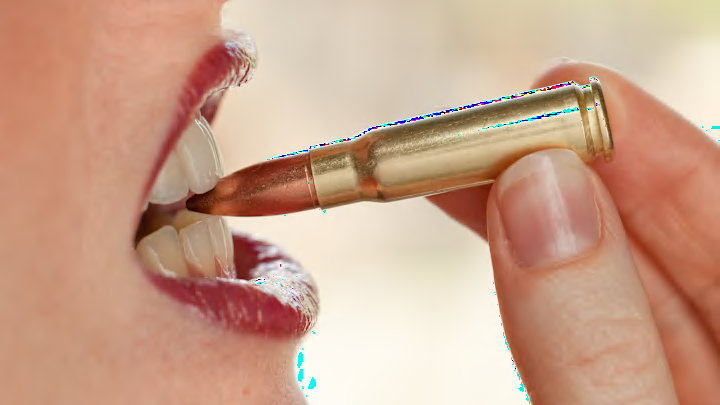
Life isn’t always a piece of cake. Sometimes, it throws situations at us that are uncomfortable, unavoidable, or just plain difficult—and that’s when we say it’s time to “bite the bullet.”
But the expression has a more bewildering, and possibly even bloody, backstory than its modern, metaphorical meaning suggests. Tracing the idiom "bite the bullet" leads to possible military origins, medieval medical practices, its debut in print, and its eventual widespread use, often in a more than a little hyperbolic manner.
From Medicine to Metaphor

Going under the knife is never fun, but it was even less so in the 18th and 19th centuries, long before modern anesthesia materialized. One of the most commonly cited explanations for “bite the bullet” points to battlefield medicine during this period, when the absence of effective anesthetics led to more primitive methods of pain management. Surgeons often operated under crude conditions, with patients enduring procedures fully conscious or only lightly sedated.
According to the theory, patients were given something—often a piece of wood or even a lead bullet—to bite down on during surgery, both to help them withstand the pain and to prevent injury from involuntary biting. While historians debate how widespread this practice actually was—especially during the Civil War, when chloroform and ether were already in use as anesthetics—it reflects the harsh realities of early medical care.
From there, the phrase took on a life of its own, shifting from a literal image of endurance to a metaphor for any difficult situation that must simply be faced. As Merriam-Webster defines it, “bite the bullet” means “to enter with resignation upon a difficult or distressing course of action,” with its first known use dating to 1844.
Another Shot at the Story
Around that same era, another explanation emerged that places the phrase within the context of British colonial military life in India. Once again, this version involves a literal bullet—and a bite. The story goes that 19th-century soldiers were issued early rifle cartridges made of paper, which had to be torn open with the teeth before the powder could be loaded into the weapon.
Some accounts connect this practice to a larger conflict within the British Indian Army, where Sepoys—native Indian soldiers serving under British rule—reportedly objected to cartridges believed to be greased with animal fat, which conflicted with both Hindu and Muslim religious practices. Because biting into the cartridges was a necessary step in loading the rifle, the act became culturally and religiously charged, contributing to growing unrest.
In some versions of the story, British officers forced the soldiers to “bite the bullet”—a grievance that helped spark the Indian Rebellion of 1857. Still, the phrase was already in circulation by that point.
A Literary Boost

By the late 19th century, the phrase “bite the bullet” had gained enough traction in everyday speech to begin appearing in print—most notably in The Light That Failed (1891) by Rudyard Kipling. In Chapter 11, the text reads: “‘Steady, Dickie, steady!’ said the deep voice in his ear, and the grip tightened. ‘Bite on the bullet, old man, and don’t let them think you’re afraid.’”
The line reflects how the phrase was already being used figuratively, helping solidify the meaning we recognize today. Suddenly, that dentist appointment or tax filing you’ve been dreading doesn’t seem quite so bad compared to what “biting the bullet” may have originally meant.