%20%20--%3E%0A%3Csvg%20version%3D%221.1%22%20id%3D%22Layer_1%22%20xmlns%3D%22http%3A%2F%2Fwww.w3.org%2F2000%2Fsvg%22%20xmlns%3Axlink%3D%22http%3A%2F%2Fwww.w3.org%2F1999%2Fxlink%22%20x%3D%220px%22%20y%3D%220px%22%0A%09%20viewBox%3D%220%200%20684.6%2068.1%22%20style%3D%22enable-background%3Anew%200%200%20684.6%2068.1%3B%22%20xml%3Aspace%3D%22preserve%22%3E%0A%3Cg%3E%0A%09%3Cpath%20d%3D%22M444.1%2C29.3h-17.4v14.5h17.4V29.3z%20M36.4%2C68.1l29.3-50.8V0H50.4L32.9%2C36.8L15.5%2C0H0v68.1h16.7V45.8l12.4%2C22.3H36.4z%0A%09%09%20M49.1%2C68.1h16.6V23.4L49.1%2C52.1V68.1z%20M76.6%2C68.1h45V53.8H93.3V41.6h21V27.1h-21V14.8h28.3V0.1h-45V68.1z%20M175.6%2C68.1h17.3v-68%0A%09%09h-16.5v40.3L150%2C0.1h-17.6v68h16.7V27.7L175.6%2C68.1z%20M235.8%2C14.8h15.4V0.1h-47.4v14.7H219v53.2h16.8V14.8z%20M290.3%2C45.9h-17.1%0A%09%09l7.5-15.6h2L290.3%2C45.9z%20M298.7%2C68.1h18l-32.2-68h-5.7l-32%2C68h18l3.3-7.1h27.1L298.7%2C68.1z%20M325.2%2C68.1h46.2V53.8h-29.6V0.1h-16.7%0A%09%09V68.1z%20M423.7%2C14.8h27.2V0.1H407v68h16.7V14.8z%20M462%2C68.1h46.2V53.8h-29.6V0.1H462V68.1z%20M564.8%2C34.1c0%2C10.7-7.2%2C19.2-18.5%2C19.2%0A%09%09c-11.4%2C0-18.5-8.5-18.5-19.2s7.1-19.2%2C18.5-19.2C557.6%2C14.9%2C564.8%2C23.4%2C564.8%2C34.1%20M580.6%2C34.1c0-19-14.2-34-34.3-34%0A%09%09c-20.2%2C0-34.3%2C15-34.3%2C34c0%2C19%2C14.1%2C34%2C34.3%2C34C566.4%2C68.1%2C580.6%2C53.1%2C580.6%2C34.1%20M604.8%2C20.5c0-4.1%2C3.3-6.2%2C6.7-6.2%0A%09%09c4.4%2C0%2C6.6%2C3%2C6.6%2C6.6h14.7C631.8%2C9.1%2C625.1%2C0.1%2C611%2C0.1c-12%2C0-21.7%2C9.3-21.7%2C20.6c0%2C10.9%2C5.9%2C15.9%2C16.7%2C19.8%0A%09%09c5.2%2C1.8%2C11.5%2C3.2%2C11.5%2C8c0%2C3.3-2.4%2C5.5-6.4%2C5.5c-3.6%2C0-6.6-3-6.6-6.7h-15.2c0%2C11.5%2C7.9%2C20.8%2C21.8%2C20.8c12%2C0%2C21.6-9.3%2C21.6-20.6%0A%09%09c0-10-5.3-16.4-16.7-19.8C610.6%2C26.1%2C604.8%2C25.3%2C604.8%2C20.5%20M670%2C20.9h14.7C683.8%2C9.1%2C677.1%2C0.1%2C663%2C0.1c-12%2C0-21.7%2C9.3-21.7%2C20.6%0A%09%09c0%2C10.9%2C5.9%2C15.9%2C16.7%2C19.8c5.2%2C1.8%2C11.5%2C3.2%2C11.5%2C8c0%2C3.3-2.4%2C5.5-6.4%2C5.5c-3.6%2C0-6.6-3-6.6-6.7h-15.2c0%2C11.5%2C7.9%2C20.8%2C21.8%2C20.8%0A%09%09c12%2C0%2C21.6-9.3%2C21.6-20.6c0-10-5.3-16.4-16.7-19.8c-5.4-1.6-11.3-2.4-11.3-7.2c0-4.1%2C3.3-6.2%2C6.7-6.2C667.7%2C14.4%2C670%2C17.3%2C670%2C20.9%0A%09%09%22%2F%3E%0A%3C%2Fg%3E%0A%3C%2Fsvg%3E%0A)

The expression "hold the fort" is often used to urge someone to take command or maintain control of a situation: Merriam-Webster defines the phrase as "to maintain a firm position" or "to take care of usual affairs." It can also be used to indicate that someone is maintaining that control on a temporary basis: the Cambridge Dictionary states its meaning as "to have responsibility for something while someone else is absent."
So, what are the origins of this phrase, which has become a widespread part of everyday vocabulary? As it turns out, this is one of a number of expressions with military connections, and in this case it began to gain traction after it was used in the midst of a particular historical battle.
A High-Stakes Battle

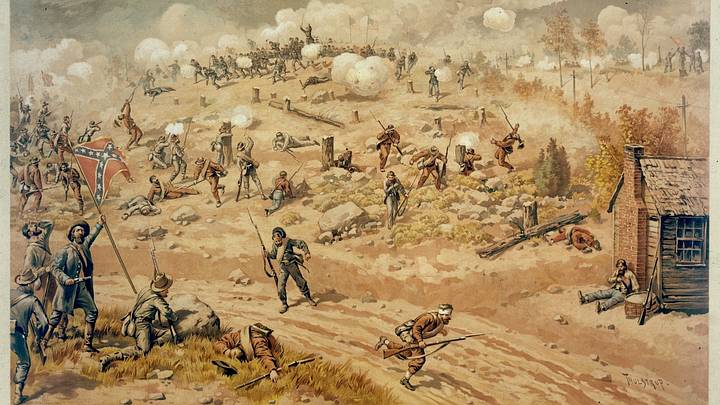
While the use of "hold the fort" can be traced as far back as the 1590s, it began to be used much more widely following its association with a conflict during the American Civil War: the Battle of Allatoona Pass on October 5, 1864, when Union troops managed to fend off Confederate troops who were attacking the town of Allatoona in Georgia. The conflict was fierce and resulted in the deaths of 30% of the soldiers involved.
During the battle, General William T. Sherman sent several messages to the federal signal station there, urging another general, John Corse, to stay strong: one which said, "Sherman is coming. Hold out," and another which stated, "General Sherman says hold fast. We are coming."
According to James A. Graham, a soldier serving on the Union side, Sherman also gave the following instruction to be passed on to Corse, which contained these specific words: "Hold the fort: I am sending reinforcements." The battle ultimately resulted in a victory for the Union. The expression “hold the fort” therefore began to be widely associated with the battle itself in later accounts.
Beyond the Battlefield
The phrase would eventually take on a life of its own: as well as becoming a common part of English language vocabulary, it was also used as the title for visual and musical works which drew from these historical events. The ultimate success of the Union soldiers in winning the conflict led to the expression taking on additional connotations, and the evangelist Philip Paul Bliss would later write a hymn entitled "Hold the Fort" in 1870. The lyrics can be found in the Minnesota Heritage Songbook, and the chorus includes the line "Hold the Fort, for I am coming."
The expression also inspired artists, as can be seen in an image now in the collections of the New York Public Library: a print by the American illustrator Thure de Thulstrup, which shows a scene from the conflict and is likewise titled "Hold the Fort."