%20%20--%3E%0A%3Csvg%20version%3D%221.1%22%20id%3D%22Layer_1%22%20xmlns%3D%22http%3A%2F%2Fwww.w3.org%2F2000%2Fsvg%22%20xmlns%3Axlink%3D%22http%3A%2F%2Fwww.w3.org%2F1999%2Fxlink%22%20x%3D%220px%22%20y%3D%220px%22%0A%09%20viewBox%3D%220%200%20684.6%2068.1%22%20style%3D%22enable-background%3Anew%200%200%20684.6%2068.1%3B%22%20xml%3Aspace%3D%22preserve%22%3E%0A%3Cg%3E%0A%09%3Cpath%20d%3D%22M444.1%2C29.3h-17.4v14.5h17.4V29.3z%20M36.4%2C68.1l29.3-50.8V0H50.4L32.9%2C36.8L15.5%2C0H0v68.1h16.7V45.8l12.4%2C22.3H36.4z%0A%09%09%20M49.1%2C68.1h16.6V23.4L49.1%2C52.1V68.1z%20M76.6%2C68.1h45V53.8H93.3V41.6h21V27.1h-21V14.8h28.3V0.1h-45V68.1z%20M175.6%2C68.1h17.3v-68%0A%09%09h-16.5v40.3L150%2C0.1h-17.6v68h16.7V27.7L175.6%2C68.1z%20M235.8%2C14.8h15.4V0.1h-47.4v14.7H219v53.2h16.8V14.8z%20M290.3%2C45.9h-17.1%0A%09%09l7.5-15.6h2L290.3%2C45.9z%20M298.7%2C68.1h18l-32.2-68h-5.7l-32%2C68h18l3.3-7.1h27.1L298.7%2C68.1z%20M325.2%2C68.1h46.2V53.8h-29.6V0.1h-16.7%0A%09%09V68.1z%20M423.7%2C14.8h27.2V0.1H407v68h16.7V14.8z%20M462%2C68.1h46.2V53.8h-29.6V0.1H462V68.1z%20M564.8%2C34.1c0%2C10.7-7.2%2C19.2-18.5%2C19.2%0A%09%09c-11.4%2C0-18.5-8.5-18.5-19.2s7.1-19.2%2C18.5-19.2C557.6%2C14.9%2C564.8%2C23.4%2C564.8%2C34.1%20M580.6%2C34.1c0-19-14.2-34-34.3-34%0A%09%09c-20.2%2C0-34.3%2C15-34.3%2C34c0%2C19%2C14.1%2C34%2C34.3%2C34C566.4%2C68.1%2C580.6%2C53.1%2C580.6%2C34.1%20M604.8%2C20.5c0-4.1%2C3.3-6.2%2C6.7-6.2%0A%09%09c4.4%2C0%2C6.6%2C3%2C6.6%2C6.6h14.7C631.8%2C9.1%2C625.1%2C0.1%2C611%2C0.1c-12%2C0-21.7%2C9.3-21.7%2C20.6c0%2C10.9%2C5.9%2C15.9%2C16.7%2C19.8%0A%09%09c5.2%2C1.8%2C11.5%2C3.2%2C11.5%2C8c0%2C3.3-2.4%2C5.5-6.4%2C5.5c-3.6%2C0-6.6-3-6.6-6.7h-15.2c0%2C11.5%2C7.9%2C20.8%2C21.8%2C20.8c12%2C0%2C21.6-9.3%2C21.6-20.6%0A%09%09c0-10-5.3-16.4-16.7-19.8C610.6%2C26.1%2C604.8%2C25.3%2C604.8%2C20.5%20M670%2C20.9h14.7C683.8%2C9.1%2C677.1%2C0.1%2C663%2C0.1c-12%2C0-21.7%2C9.3-21.7%2C20.6%0A%09%09c0%2C10.9%2C5.9%2C15.9%2C16.7%2C19.8c5.2%2C1.8%2C11.5%2C3.2%2C11.5%2C8c0%2C3.3-2.4%2C5.5-6.4%2C5.5c-3.6%2C0-6.6-3-6.6-6.7h-15.2c0%2C11.5%2C7.9%2C20.8%2C21.8%2C20.8%0A%09%09c12%2C0%2C21.6-9.3%2C21.6-20.6c0-10-5.3-16.4-16.7-19.8c-5.4-1.6-11.3-2.4-11.3-7.2c0-4.1%2C3.3-6.2%2C6.7-6.2C667.7%2C14.4%2C670%2C17.3%2C670%2C20.9%0A%09%09%22%2F%3E%0A%3C%2Fg%3E%0A%3C%2Fsvg%3E%0A)

The military plays various roles in countries around the world, and in some places has a more prominent role in everyday life than others, such as in nations where military service is mandatory for many adult citizens. However, one area where their presence is consistently felt every day is in our vocabulary.
The military has a long list of terms to describe various aspects of the armed services, and over the years some of these have transcended their origins to become a part of everyday speech for many people in the Anglosphere. Here are five military expressions that transcended their origins to become a standard part of everyday English.
AWOL

The acronym AWOL stands for “Absent Without Leave” and is commonly used to refer to any situation in which a person isn't where they’re expected to be (as used in expressions like “going AWOL”). Merriam-Webster defines it as “absent often without notice or permission.”
The concept of “Absent Without Leave” was originally a military one: the Etymology Dictionary identifies its first use of the expression in 1767, and notes that it was first used in America in 1917. And while it has become an everyday expression used to refer to many kinds of absences, it continues to be used in the military, where going AWOL can have serious consequences.
In the Trenches

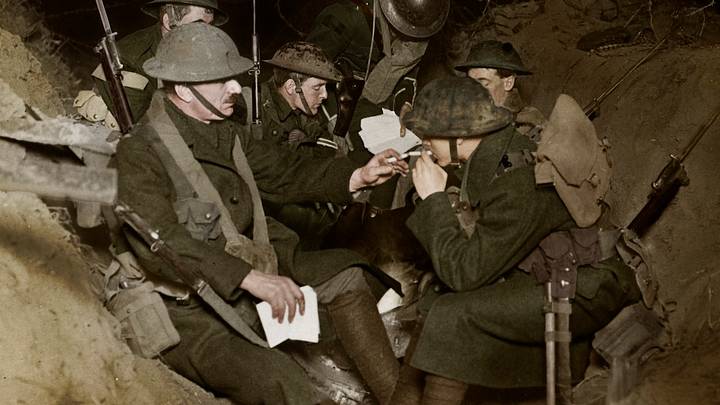
The use of trenches in military conflicts goes back hundreds of years, but played a particularly big role in World War I, where troops were stationed in opposing trenches dug directly into the battlefield.
The expression “in the trenches” has since become a general metaphor for any situation involving intense conflict, even of the non-physical kind. The expression is also used to refer to the idea of being involved in difficult work in general: the Cambridge Dictionary defines it as “working in the most active and difficult parts of a job or business.”
Over the Top

The expression “over the top” is such a widespread element of everyday speech that it’s sometimes forgotten it also has military origins. Like “in the trenches,” this phrase also originates from WWI, and is likewise connected to trench warfare. Most fighting in the trenches took place inside these constructions, with the two sides shooting at each other from their positions; however, sometimes soldiers would be ordered to leave the trenches and literally go “over the top” onto the open battlefield, which was very risky and led to many fatalities.
Over time, the phrase “over the top” became a way to express, in many different contexts, that an action or situation was too much.
Snapshot

A term that people might be more surprised to learn as having military associations is “snapshot.” This word, most commonly used to refer to a photograph (or as a general metaphor for a quick summary of a situation), actually has its roots in shooting terminology.
The Etymology Dictionary traces its origins to 1808, when it was originally written as “snap-shot” with a hyphen and was first used to describe a type of gunshot: “a quick shot with a gun, without aim, at a fast-moving target.” In 1860, Sir John Herschel applied the word to photography, and the expression became more widespread as camera technology improved and took photos much faster than earlier models.
Under the Radar

The concept of going “under the radar” is often used to denote a situation that has developed or taken place without being noticed. Its military origins can be found in aviation: the word “radar” began as an acronym for "radio detection and ranging," and was first used during World War II in the UK to track German planes traveling to Britain.
It has therefore become a common expression for anything that intentionally operates to avoid detection, as opposed to something that might be low-profile without trying to hide.