%20%20--%3E%0A%3Csvg%20version%3D%221.1%22%20id%3D%22Layer_1%22%20xmlns%3D%22http%3A%2F%2Fwww.w3.org%2F2000%2Fsvg%22%20xmlns%3Axlink%3D%22http%3A%2F%2Fwww.w3.org%2F1999%2Fxlink%22%20x%3D%220px%22%20y%3D%220px%22%0A%09%20viewBox%3D%220%200%20684.6%2068.1%22%20style%3D%22enable-background%3Anew%200%200%20684.6%2068.1%3B%22%20xml%3Aspace%3D%22preserve%22%3E%0A%3Cg%3E%0A%09%3Cpath%20d%3D%22M444.1%2C29.3h-17.4v14.5h17.4V29.3z%20M36.4%2C68.1l29.3-50.8V0H50.4L32.9%2C36.8L15.5%2C0H0v68.1h16.7V45.8l12.4%2C22.3H36.4z%0A%09%09%20M49.1%2C68.1h16.6V23.4L49.1%2C52.1V68.1z%20M76.6%2C68.1h45V53.8H93.3V41.6h21V27.1h-21V14.8h28.3V0.1h-45V68.1z%20M175.6%2C68.1h17.3v-68%0A%09%09h-16.5v40.3L150%2C0.1h-17.6v68h16.7V27.7L175.6%2C68.1z%20M235.8%2C14.8h15.4V0.1h-47.4v14.7H219v53.2h16.8V14.8z%20M290.3%2C45.9h-17.1%0A%09%09l7.5-15.6h2L290.3%2C45.9z%20M298.7%2C68.1h18l-32.2-68h-5.7l-32%2C68h18l3.3-7.1h27.1L298.7%2C68.1z%20M325.2%2C68.1h46.2V53.8h-29.6V0.1h-16.7%0A%09%09V68.1z%20M423.7%2C14.8h27.2V0.1H407v68h16.7V14.8z%20M462%2C68.1h46.2V53.8h-29.6V0.1H462V68.1z%20M564.8%2C34.1c0%2C10.7-7.2%2C19.2-18.5%2C19.2%0A%09%09c-11.4%2C0-18.5-8.5-18.5-19.2s7.1-19.2%2C18.5-19.2C557.6%2C14.9%2C564.8%2C23.4%2C564.8%2C34.1%20M580.6%2C34.1c0-19-14.2-34-34.3-34%0A%09%09c-20.2%2C0-34.3%2C15-34.3%2C34c0%2C19%2C14.1%2C34%2C34.3%2C34C566.4%2C68.1%2C580.6%2C53.1%2C580.6%2C34.1%20M604.8%2C20.5c0-4.1%2C3.3-6.2%2C6.7-6.2%0A%09%09c4.4%2C0%2C6.6%2C3%2C6.6%2C6.6h14.7C631.8%2C9.1%2C625.1%2C0.1%2C611%2C0.1c-12%2C0-21.7%2C9.3-21.7%2C20.6c0%2C10.9%2C5.9%2C15.9%2C16.7%2C19.8%0A%09%09c5.2%2C1.8%2C11.5%2C3.2%2C11.5%2C8c0%2C3.3-2.4%2C5.5-6.4%2C5.5c-3.6%2C0-6.6-3-6.6-6.7h-15.2c0%2C11.5%2C7.9%2C20.8%2C21.8%2C20.8c12%2C0%2C21.6-9.3%2C21.6-20.6%0A%09%09c0-10-5.3-16.4-16.7-19.8C610.6%2C26.1%2C604.8%2C25.3%2C604.8%2C20.5%20M670%2C20.9h14.7C683.8%2C9.1%2C677.1%2C0.1%2C663%2C0.1c-12%2C0-21.7%2C9.3-21.7%2C20.6%0A%09%09c0%2C10.9%2C5.9%2C15.9%2C16.7%2C19.8c5.2%2C1.8%2C11.5%2C3.2%2C11.5%2C8c0%2C3.3-2.4%2C5.5-6.4%2C5.5c-3.6%2C0-6.6-3-6.6-6.7h-15.2c0%2C11.5%2C7.9%2C20.8%2C21.8%2C20.8%0A%09%09c12%2C0%2C21.6-9.3%2C21.6-20.6c0-10-5.3-16.4-16.7-19.8c-5.4-1.6-11.3-2.4-11.3-7.2c0-4.1%2C3.3-6.2%2C6.7-6.2C667.7%2C14.4%2C670%2C17.3%2C670%2C20.9%0A%09%09%22%2F%3E%0A%3C%2Fg%3E%0A%3C%2Fsvg%3E%0A)

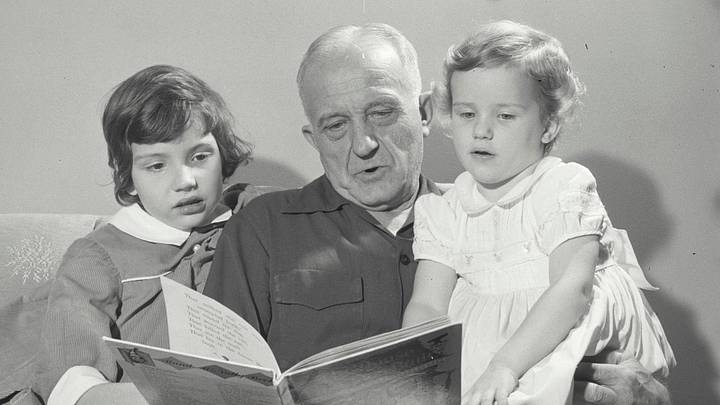
Language is always in flux, with different phrases and slang coming and going. Similar to inside jokes and cultural references, what was commonly said in one generation sounds bizarre to another. The idioms and sayings of our grandparents' generation don't make much sense to us, so we choose to use language that we can relate to. In this process, then, the older phrases begin to disappear.
If you've ever rolled your eyes at one of the seemingly silly things your grandparent said, then you are in good company. Some of us might say the phrases of our grandparents' era, but they've become more of a tongue-in-cheek usage. These expressions are just stuck in the past, and soon they will be completely foreign to younger generations.
- "The bee's knees"
- "Now you're cooking with gas"
- "No comments from the peanut gallery"
- "Mind your 'P's and 'Q's"
- "Close only counts in horseshoes and hand grenades"
- "Don't get your knickers in a twist"
- "Goodness gracious, great balls of fire"
- "You make a better door than a window"

"The bee's knees"
The most recent time many of us have heard the phrase "the bee's knees" is probably from School of Rock (2003), when Jack Black's character tells a boy that he'll be cool if he joins the band. "The bee's knees" was used often in the 1920s to describe something excellent. It was one of a number of nonsensical, animal-themed slang words created at the time, but it's fallen out of fashion in favor of newer slang.

"Now you're cooking with gas"
"Now you're cooking with gas" was most often used to compliment someone on a brilliant idea, but it actually began as an advertising slogan in the 1930s. The gas industry tried to get people to buy gas stoves instead of electric or wood-burning ones, and their marketing was so catchy that the phrase was added to our lexicon.

"No comments from the peanut gallery"
Thanks to the old TV show Howdy Doody, the "peanut gallery" became a popularized saying when referring to the opinions of the studio audience. Unfortunately, the term actually goes back to Vaudeville theaters and their cheapest seats being called the peanut gallery. These seats were most often occupied by Black Americans or other minorities, so the phrase implies that no one wants to hear the thoughts or opinions of non-whites. That's why it's better that this phrase disappears.

"Mind your 'P's and 'Q's"
"Mind your 'P's and 'Q's" was a common reminder given to older generations to be on their best behavior. There are several theories about the origin of the phrase, though none of them have irrefutable evidence. One says that it's about paying attention to writing or printing the lowercase 'p' and 'q' so as not to mix them up. Another theorizes it's shorthand for pints and quarts, which was how bars kept tallies of drinks ordered. Whatever the origin, this phrase is all but faded from modern language.

"Close only counts in horseshoes and hand grenades"
When saying that "close" or "almost" don't cut it sometimes, our grandparents often quoted the latter half of MLB player and coach Frank Robinson's statement: "Close don't count in baseball. Close only counts in horseshoes and hand grenades." When playing the lawn game horseshoes, you still get a certain number of points if your horseshoe is close to the pole, and hand grenades still cause damage even if they don't hit the precise target. In today's world, with video games and military drones, people don't often think of horseshoes or hand grenades anymore.

"Don't get your knickers in a twist"
Knickers, short for knickerbockers, is an old-fashioned word for women's underwear. Getting your knickers (or panties) in a twist meant that you were getting upset over something inconsequential. The phrase began in the 1960s, but as most people don't call their underwear "knickers" anymore, it has become outdated. You're much more likely to hear someone tell you to "chill."

"Goodness gracious, great balls of fire"
Technically, "goodness gracious" and "great balls of fire" are two separate phrases that older generations used to express shock or amazement. If your grandparent listened to Jerry Lee Lewis's 1957 song, "Goodness Gracious, Great Balls of Fire," however, they might have combined them into one long way of expressing their surprise or awe. Or, your grandmother loved Gone With the Wind and just quoted Scarlett O'Hara saying, "Great balls of fire!" Those references are a little too old for people today to understand these phrases, though.

"You make a better door than a window"
So many of us heard this idiom as kids when we stood in the way of Grandpa's viewing The Price is Right or Grandma's daytime soap operas. Since doors are not transparent, "you make a better door than a window" was a slightly passive-aggressive way of telling someone that they were blocking your view. Why couldn't our grandparents just ask us to move directly? Open communication was not really a thing for older generations.