%20%20--%3E%0A%3Csvg%20version%3D%221.1%22%20id%3D%22Layer_1%22%20xmlns%3D%22http%3A%2F%2Fwww.w3.org%2F2000%2Fsvg%22%20xmlns%3Axlink%3D%22http%3A%2F%2Fwww.w3.org%2F1999%2Fxlink%22%20x%3D%220px%22%20y%3D%220px%22%0A%09%20viewBox%3D%220%200%20684.6%2068.1%22%20style%3D%22enable-background%3Anew%200%200%20684.6%2068.1%3B%22%20xml%3Aspace%3D%22preserve%22%3E%0A%3Cg%3E%0A%09%3Cpath%20d%3D%22M444.1%2C29.3h-17.4v14.5h17.4V29.3z%20M36.4%2C68.1l29.3-50.8V0H50.4L32.9%2C36.8L15.5%2C0H0v68.1h16.7V45.8l12.4%2C22.3H36.4z%0A%09%09%20M49.1%2C68.1h16.6V23.4L49.1%2C52.1V68.1z%20M76.6%2C68.1h45V53.8H93.3V41.6h21V27.1h-21V14.8h28.3V0.1h-45V68.1z%20M175.6%2C68.1h17.3v-68%0A%09%09h-16.5v40.3L150%2C0.1h-17.6v68h16.7V27.7L175.6%2C68.1z%20M235.8%2C14.8h15.4V0.1h-47.4v14.7H219v53.2h16.8V14.8z%20M290.3%2C45.9h-17.1%0A%09%09l7.5-15.6h2L290.3%2C45.9z%20M298.7%2C68.1h18l-32.2-68h-5.7l-32%2C68h18l3.3-7.1h27.1L298.7%2C68.1z%20M325.2%2C68.1h46.2V53.8h-29.6V0.1h-16.7%0A%09%09V68.1z%20M423.7%2C14.8h27.2V0.1H407v68h16.7V14.8z%20M462%2C68.1h46.2V53.8h-29.6V0.1H462V68.1z%20M564.8%2C34.1c0%2C10.7-7.2%2C19.2-18.5%2C19.2%0A%09%09c-11.4%2C0-18.5-8.5-18.5-19.2s7.1-19.2%2C18.5-19.2C557.6%2C14.9%2C564.8%2C23.4%2C564.8%2C34.1%20M580.6%2C34.1c0-19-14.2-34-34.3-34%0A%09%09c-20.2%2C0-34.3%2C15-34.3%2C34c0%2C19%2C14.1%2C34%2C34.3%2C34C566.4%2C68.1%2C580.6%2C53.1%2C580.6%2C34.1%20M604.8%2C20.5c0-4.1%2C3.3-6.2%2C6.7-6.2%0A%09%09c4.4%2C0%2C6.6%2C3%2C6.6%2C6.6h14.7C631.8%2C9.1%2C625.1%2C0.1%2C611%2C0.1c-12%2C0-21.7%2C9.3-21.7%2C20.6c0%2C10.9%2C5.9%2C15.9%2C16.7%2C19.8%0A%09%09c5.2%2C1.8%2C11.5%2C3.2%2C11.5%2C8c0%2C3.3-2.4%2C5.5-6.4%2C5.5c-3.6%2C0-6.6-3-6.6-6.7h-15.2c0%2C11.5%2C7.9%2C20.8%2C21.8%2C20.8c12%2C0%2C21.6-9.3%2C21.6-20.6%0A%09%09c0-10-5.3-16.4-16.7-19.8C610.6%2C26.1%2C604.8%2C25.3%2C604.8%2C20.5%20M670%2C20.9h14.7C683.8%2C9.1%2C677.1%2C0.1%2C663%2C0.1c-12%2C0-21.7%2C9.3-21.7%2C20.6%0A%09%09c0%2C10.9%2C5.9%2C15.9%2C16.7%2C19.8c5.2%2C1.8%2C11.5%2C3.2%2C11.5%2C8c0%2C3.3-2.4%2C5.5-6.4%2C5.5c-3.6%2C0-6.6-3-6.6-6.7h-15.2c0%2C11.5%2C7.9%2C20.8%2C21.8%2C20.8%0A%09%09c12%2C0%2C21.6-9.3%2C21.6-20.6c0-10-5.3-16.4-16.7-19.8c-5.4-1.6-11.3-2.4-11.3-7.2c0-4.1%2C3.3-6.2%2C6.7-6.2C667.7%2C14.4%2C670%2C17.3%2C670%2C20.9%0A%09%09%22%2F%3E%0A%3C%2Fg%3E%0A%3C%2Fsvg%3E%0A)

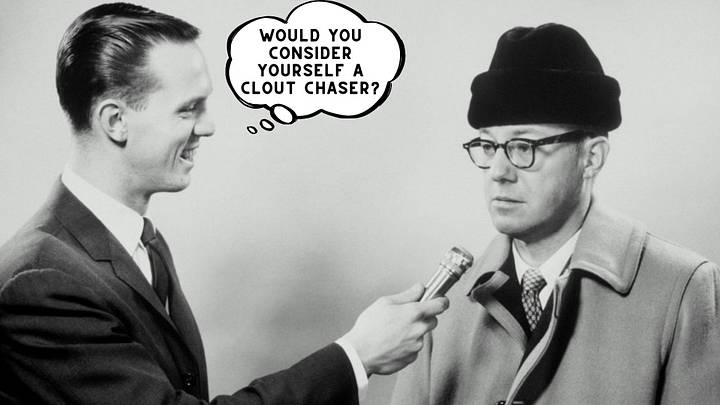
There was a time, long ago, when people chased dreams, careers, and even the ice cream truck down the street. But, in the 21st century, there’s a new thing to chase: “clout.”
If you’ve ever been online, you’ve probably heard someone accused of being a “clout chaser.” The phrase is usually tossed around with animosity, and being called one is a bit embarrassing.
But what does “clout chasing” really mean? And why has it become one of the internet’s favorite insults?
WHAT IS "CLOUT CHASING?"

Clout chasing means doing things primarily to get attention, popularity, influence, or online fame. The word “clout” means power and influence, especially on social media. Add “chasing,” and suddenly you have someone sprinting after internet relevance like it’s the last cookie in the cookie jar.
The term, almost always negative, is used most frequently when someone attaches themselves to a celebrity, trend, controversy, or viral moment just to gain followers or attention. Maybe an influencer starts fake drama to boost their views. Maybe someone suddenly becomes best friends with a famous creator the moment the camera starts rolling. That’s the kind of behavior people call clout chasing. It’s basically a way of saying someone is desperate for attention and can’t attract it organically.
Of course, the phrase is used pretty casually online. Sometimes people are genuinely networking or promoting themselves, and other times they’re clearly treating social media like a reality show audition. And the internet loves to decide which is which.
HOW TO USE "CLOUT CHASING" IN A SENTENCE

The phrase works in both casual conversations and online commentary. It can be playful, sarcastic, or slightly judgmental, and sometimes it's all three at once.
For example:
“He started beef with that actor for attention. Total clout chaser.”
“Every time there’s a viral trend, she's on it immediately. Her friends say she’s clout chasing.”
“I posted one gym selfie and my friends accused me of clout chasing.”
You can use it as a noun (“that’s clout chasing”) or describe someone as a “clout chaser.” Either way, the meaning stays clear: someone wants attention, and everyone else notices.
Interestingly, the phrase has become so common that people sometimes use it jokingly about themselves. Someone posts a carefully staged coffee photo and captions it, “just a little clout chasing before noon.”
EVERYONE IS PERFORMING IN THEIR OWN WAY

The ironic thing about clout chasing is that social media practically encourages it. Apps reward attention. Attention brings followers. Followers bring influence. So while the term is often meant as criticism, it also reflects the confounding reality of internet culture.
Most people aren’t trying to become famous overnight. They just want to be seen, heard, liked, or maybe reposted by someone with a blue checkmark. In the end, clout chasing seems, well, exhausting, but if you think about it, most of us are running some sort of digital race.