%20%20--%3E%0A%3Csvg%20version%3D%221.1%22%20id%3D%22Layer_1%22%20xmlns%3D%22http%3A%2F%2Fwww.w3.org%2F2000%2Fsvg%22%20xmlns%3Axlink%3D%22http%3A%2F%2Fwww.w3.org%2F1999%2Fxlink%22%20x%3D%220px%22%20y%3D%220px%22%0A%09%20viewBox%3D%220%200%20684.6%2068.1%22%20style%3D%22enable-background%3Anew%200%200%20684.6%2068.1%3B%22%20xml%3Aspace%3D%22preserve%22%3E%0A%3Cg%3E%0A%09%3Cpath%20d%3D%22M444.1%2C29.3h-17.4v14.5h17.4V29.3z%20M36.4%2C68.1l29.3-50.8V0H50.4L32.9%2C36.8L15.5%2C0H0v68.1h16.7V45.8l12.4%2C22.3H36.4z%0A%09%09%20M49.1%2C68.1h16.6V23.4L49.1%2C52.1V68.1z%20M76.6%2C68.1h45V53.8H93.3V41.6h21V27.1h-21V14.8h28.3V0.1h-45V68.1z%20M175.6%2C68.1h17.3v-68%0A%09%09h-16.5v40.3L150%2C0.1h-17.6v68h16.7V27.7L175.6%2C68.1z%20M235.8%2C14.8h15.4V0.1h-47.4v14.7H219v53.2h16.8V14.8z%20M290.3%2C45.9h-17.1%0A%09%09l7.5-15.6h2L290.3%2C45.9z%20M298.7%2C68.1h18l-32.2-68h-5.7l-32%2C68h18l3.3-7.1h27.1L298.7%2C68.1z%20M325.2%2C68.1h46.2V53.8h-29.6V0.1h-16.7%0A%09%09V68.1z%20M423.7%2C14.8h27.2V0.1H407v68h16.7V14.8z%20M462%2C68.1h46.2V53.8h-29.6V0.1H462V68.1z%20M564.8%2C34.1c0%2C10.7-7.2%2C19.2-18.5%2C19.2%0A%09%09c-11.4%2C0-18.5-8.5-18.5-19.2s7.1-19.2%2C18.5-19.2C557.6%2C14.9%2C564.8%2C23.4%2C564.8%2C34.1%20M580.6%2C34.1c0-19-14.2-34-34.3-34%0A%09%09c-20.2%2C0-34.3%2C15-34.3%2C34c0%2C19%2C14.1%2C34%2C34.3%2C34C566.4%2C68.1%2C580.6%2C53.1%2C580.6%2C34.1%20M604.8%2C20.5c0-4.1%2C3.3-6.2%2C6.7-6.2%0A%09%09c4.4%2C0%2C6.6%2C3%2C6.6%2C6.6h14.7C631.8%2C9.1%2C625.1%2C0.1%2C611%2C0.1c-12%2C0-21.7%2C9.3-21.7%2C20.6c0%2C10.9%2C5.9%2C15.9%2C16.7%2C19.8%0A%09%09c5.2%2C1.8%2C11.5%2C3.2%2C11.5%2C8c0%2C3.3-2.4%2C5.5-6.4%2C5.5c-3.6%2C0-6.6-3-6.6-6.7h-15.2c0%2C11.5%2C7.9%2C20.8%2C21.8%2C20.8c12%2C0%2C21.6-9.3%2C21.6-20.6%0A%09%09c0-10-5.3-16.4-16.7-19.8C610.6%2C26.1%2C604.8%2C25.3%2C604.8%2C20.5%20M670%2C20.9h14.7C683.8%2C9.1%2C677.1%2C0.1%2C663%2C0.1c-12%2C0-21.7%2C9.3-21.7%2C20.6%0A%09%09c0%2C10.9%2C5.9%2C15.9%2C16.7%2C19.8c5.2%2C1.8%2C11.5%2C3.2%2C11.5%2C8c0%2C3.3-2.4%2C5.5-6.4%2C5.5c-3.6%2C0-6.6-3-6.6-6.7h-15.2c0%2C11.5%2C7.9%2C20.8%2C21.8%2C20.8%0A%09%09c12%2C0%2C21.6-9.3%2C21.6-20.6c0-10-5.3-16.4-16.7-19.8c-5.4-1.6-11.3-2.4-11.3-7.2c0-4.1%2C3.3-6.2%2C6.7-6.2C667.7%2C14.4%2C670%2C17.3%2C670%2C20.9%0A%09%09%22%2F%3E%0A%3C%2Fg%3E%0A%3C%2Fsvg%3E%0A)

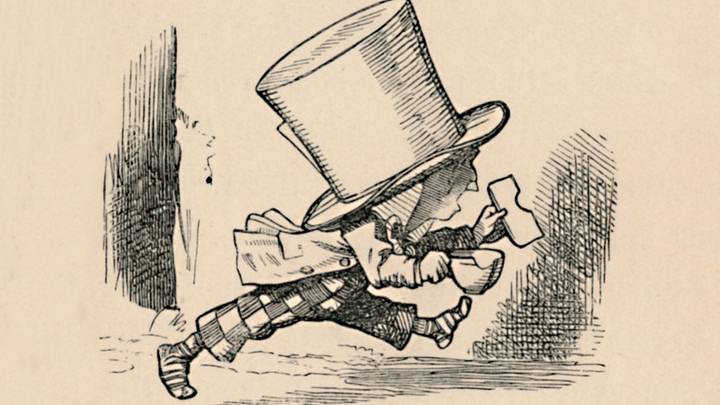
It’s largely assumed that the phrase “mad as a hatter” is derived from one of literature's most beloved tales in which the character with a top hat is, well, mad. He’s abnormal, certainly, but his story is not where this phrase originates.
Its beginnings are much more disturbing and tragically realistic than the plot Lewis Carroll painted. So, why exactly do we say “mad as a hatter”? Let’s take a magnifying glass to the storybook and step back in time to discover if hatters were truly “mad” and if so, why?
ALICE'S ADVENTURES IN WONDERLAND

A popular belief exists that this unusual phrase originates with Lewis Carroll's wonderful 1865 children's novel, Alice's Adventures in Wonderland. That work has been adapted for audio, television, and film countless times, making the eccentric characters that populate Carroll’s pages part of modern popular culture. One of the most memorable of Carroll's inventions is the Mad Hatter. In the novel, Alice first encounters this curious personage when she stumbles upon a tea party the Mad Hatter is hosting with the March Hare and the Dormouse. The Hatter recites incomprehensible poetry, asks meaningless riddles, and generally acts bizarre. Popularized through such highly successful movies as Disney's 1951 animated classic, many people assume Carroll's Mad Hatter is the inspiration behind the phrase, 'Mad as a Hatter,' but that's not entirely correct. It doesn’t even appear anywhere in Carroll's books.
A REAL-LIFE 'MAD' HATTER

In fact, the saying predates Alice's Adventures in Wonderland by several decades. Its first documented appearance is in an issue of the literary journal, Blackwood's Edinburgh Magazine, published in 1829. But where did it come from? There are several competing theories. The first (and most well-known) is that it refers to the hat-making trade. This trade was big business throughout the 18th and 19th centuries, especially in England. Hat makers used mercury in the production of felt, which was a core ingredient of hats. We now know that long-term exposure to mercury can cause neurological symptoms, including loss of vision, lack of coordination, and impairments of speech, making this the most viable theory for the phrase's origin.
There are competing explanations, however. Lexicographer Samuel Johnson, in his 1755 work, A Dictionary of the English Language, listed 'hatter' as a verb meaning 'to harass' or 'harangue', suggestive of a person with unstable energy. Others have put forward the notion that the phrase is linked to the Old English word 'atter,' which means 'poison'. One colourful observation relates to a real person – a contemporary of Carroll's who lived in Oxford. Theophilus Carter was a cabinet maker and well-known eccentric who frequently took up a position outside his furniture shop on Oxford's High Street. Carroll may well have been familiar with Carter. Might Carroll have mixed elements of Carter with the strange behavior of seasoned hat makers? It appears likely and lends a sad and tragic element to the phrase, which Carroll's writing has helped keep alive to this day.