%20%20--%3E%0A%3Csvg%20version%3D%221.1%22%20id%3D%22Layer_1%22%20xmlns%3D%22http%3A%2F%2Fwww.w3.org%2F2000%2Fsvg%22%20xmlns%3Axlink%3D%22http%3A%2F%2Fwww.w3.org%2F1999%2Fxlink%22%20x%3D%220px%22%20y%3D%220px%22%0A%09%20viewBox%3D%220%200%20684.6%2068.1%22%20style%3D%22enable-background%3Anew%200%200%20684.6%2068.1%3B%22%20xml%3Aspace%3D%22preserve%22%3E%0A%3Cg%3E%0A%09%3Cpath%20d%3D%22M444.1%2C29.3h-17.4v14.5h17.4V29.3z%20M36.4%2C68.1l29.3-50.8V0H50.4L32.9%2C36.8L15.5%2C0H0v68.1h16.7V45.8l12.4%2C22.3H36.4z%0A%09%09%20M49.1%2C68.1h16.6V23.4L49.1%2C52.1V68.1z%20M76.6%2C68.1h45V53.8H93.3V41.6h21V27.1h-21V14.8h28.3V0.1h-45V68.1z%20M175.6%2C68.1h17.3v-68%0A%09%09h-16.5v40.3L150%2C0.1h-17.6v68h16.7V27.7L175.6%2C68.1z%20M235.8%2C14.8h15.4V0.1h-47.4v14.7H219v53.2h16.8V14.8z%20M290.3%2C45.9h-17.1%0A%09%09l7.5-15.6h2L290.3%2C45.9z%20M298.7%2C68.1h18l-32.2-68h-5.7l-32%2C68h18l3.3-7.1h27.1L298.7%2C68.1z%20M325.2%2C68.1h46.2V53.8h-29.6V0.1h-16.7%0A%09%09V68.1z%20M423.7%2C14.8h27.2V0.1H407v68h16.7V14.8z%20M462%2C68.1h46.2V53.8h-29.6V0.1H462V68.1z%20M564.8%2C34.1c0%2C10.7-7.2%2C19.2-18.5%2C19.2%0A%09%09c-11.4%2C0-18.5-8.5-18.5-19.2s7.1-19.2%2C18.5-19.2C557.6%2C14.9%2C564.8%2C23.4%2C564.8%2C34.1%20M580.6%2C34.1c0-19-14.2-34-34.3-34%0A%09%09c-20.2%2C0-34.3%2C15-34.3%2C34c0%2C19%2C14.1%2C34%2C34.3%2C34C566.4%2C68.1%2C580.6%2C53.1%2C580.6%2C34.1%20M604.8%2C20.5c0-4.1%2C3.3-6.2%2C6.7-6.2%0A%09%09c4.4%2C0%2C6.6%2C3%2C6.6%2C6.6h14.7C631.8%2C9.1%2C625.1%2C0.1%2C611%2C0.1c-12%2C0-21.7%2C9.3-21.7%2C20.6c0%2C10.9%2C5.9%2C15.9%2C16.7%2C19.8%0A%09%09c5.2%2C1.8%2C11.5%2C3.2%2C11.5%2C8c0%2C3.3-2.4%2C5.5-6.4%2C5.5c-3.6%2C0-6.6-3-6.6-6.7h-15.2c0%2C11.5%2C7.9%2C20.8%2C21.8%2C20.8c12%2C0%2C21.6-9.3%2C21.6-20.6%0A%09%09c0-10-5.3-16.4-16.7-19.8C610.6%2C26.1%2C604.8%2C25.3%2C604.8%2C20.5%20M670%2C20.9h14.7C683.8%2C9.1%2C677.1%2C0.1%2C663%2C0.1c-12%2C0-21.7%2C9.3-21.7%2C20.6%0A%09%09c0%2C10.9%2C5.9%2C15.9%2C16.7%2C19.8c5.2%2C1.8%2C11.5%2C3.2%2C11.5%2C8c0%2C3.3-2.4%2C5.5-6.4%2C5.5c-3.6%2C0-6.6-3-6.6-6.7h-15.2c0%2C11.5%2C7.9%2C20.8%2C21.8%2C20.8%0A%09%09c12%2C0%2C21.6-9.3%2C21.6-20.6c0-10-5.3-16.4-16.7-19.8c-5.4-1.6-11.3-2.4-11.3-7.2c0-4.1%2C3.3-6.2%2C6.7-6.2C667.7%2C14.4%2C670%2C17.3%2C670%2C20.9%0A%09%09%22%2F%3E%0A%3C%2Fg%3E%0A%3C%2Fsvg%3E%0A)

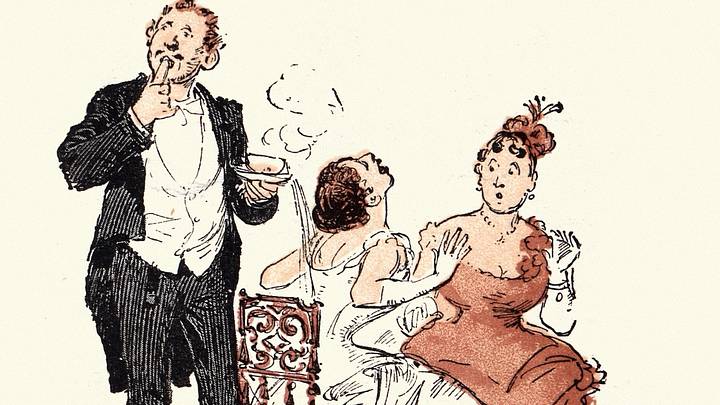
From sailors' mouths to French faux pas, English speakers have always found plenty of scapegoats when it comes to swear words. Whether you yourself have prefaced the dropping of an F-bomb with a request to "pardon my French" or simply seen it used for comedic effect on screen, the idea is the same: use a foreign language as a polite shield for profanity.
But how did French become English’s favorite cover-up for cursing? The story involves 19th-century social etiquette, creative euphemisms, and a centuries-old rivalry between the two countries.
A Matter of Manners
Before "pardon my French" became a disclaimer for certain four-letter words, it was used entirely literally in the Victorian era. During the 18th and 19th centuries, English speakers frequently dropped French phrases into conversation, whether to signal refinement, show off their social class, or simply because a phrase had that certain je ne sais quoi.
However, etiquette dictated that if you used a foreign phrase your listener might not know, you owed them a polite, humble-bragging apology. An example of this usage appears in an 1830 issue of the British publication The Lady’s Magazine:
"Bless me, how fat you are grown! Absolutely as round as a ball. You will soon be as embonpoint (excuse my French) as your poor dear father, the major."
In this context, "excuse my French" was an apologetic acknowledgment of using the word embonpoint, a French term for plumpness.
Lost in Translation

According to the Oxford English Dictionary, using the word "French" to imply something scandalous or explicit dates back to at least 1682, such as 18th-century authors referring to provocative books as "French novels."
By the late 19th century, as the literal expression migrated across the Atlantic through circulating literature and newspapers, it took on an ironic twist. French phrases were going from sounding sophisticated to slightly cliché, leading Americans to turn the expression into a cheeky warning for the four-letter words they were about to utter. By the time "pardon my French" emerged in print around 1895, pardon had officially ousted excuse as the preferred phrasing.
Accents aside, English speakers have long used French as a linguistic loophole. In conservative English culture, openly discussing taboo or delicate subjects was—for lack of a better word—taboo. Enter French loanwords like lingerie, negligee, and risqué, which offered a more discreet way to talk about them.
The French Connection
Of course, "pardon my French" is far from the only time the English shifted the blame onto their neighbors. From actual French vocabulary to English phrases with the word "French" slapped on, English slang is packed with these cross-Channel jabs.
For instance, "taking French leave" meant slipping out of a party without thanking the host—a habit the French ironically dubbed filer à l'anglaise, or "leaving English-style." Other examples include "French letter" (an archaic British nickname for a condom), "French kiss" (for overly passionate smooching), and "French disease" (syphilis).
So swear away and blame the French—just don't expect anyone in Paris to pardon you.