%20%20--%3E%0A%3Csvg%20version%3D%221.1%22%20id%3D%22Layer_1%22%20xmlns%3D%22http%3A%2F%2Fwww.w3.org%2F2000%2Fsvg%22%20xmlns%3Axlink%3D%22http%3A%2F%2Fwww.w3.org%2F1999%2Fxlink%22%20x%3D%220px%22%20y%3D%220px%22%0A%09%20viewBox%3D%220%200%20684.6%2068.1%22%20style%3D%22enable-background%3Anew%200%200%20684.6%2068.1%3B%22%20xml%3Aspace%3D%22preserve%22%3E%0A%3Cg%3E%0A%09%3Cpath%20d%3D%22M444.1%2C29.3h-17.4v14.5h17.4V29.3z%20M36.4%2C68.1l29.3-50.8V0H50.4L32.9%2C36.8L15.5%2C0H0v68.1h16.7V45.8l12.4%2C22.3H36.4z%0A%09%09%20M49.1%2C68.1h16.6V23.4L49.1%2C52.1V68.1z%20M76.6%2C68.1h45V53.8H93.3V41.6h21V27.1h-21V14.8h28.3V0.1h-45V68.1z%20M175.6%2C68.1h17.3v-68%0A%09%09h-16.5v40.3L150%2C0.1h-17.6v68h16.7V27.7L175.6%2C68.1z%20M235.8%2C14.8h15.4V0.1h-47.4v14.7H219v53.2h16.8V14.8z%20M290.3%2C45.9h-17.1%0A%09%09l7.5-15.6h2L290.3%2C45.9z%20M298.7%2C68.1h18l-32.2-68h-5.7l-32%2C68h18l3.3-7.1h27.1L298.7%2C68.1z%20M325.2%2C68.1h46.2V53.8h-29.6V0.1h-16.7%0A%09%09V68.1z%20M423.7%2C14.8h27.2V0.1H407v68h16.7V14.8z%20M462%2C68.1h46.2V53.8h-29.6V0.1H462V68.1z%20M564.8%2C34.1c0%2C10.7-7.2%2C19.2-18.5%2C19.2%0A%09%09c-11.4%2C0-18.5-8.5-18.5-19.2s7.1-19.2%2C18.5-19.2C557.6%2C14.9%2C564.8%2C23.4%2C564.8%2C34.1%20M580.6%2C34.1c0-19-14.2-34-34.3-34%0A%09%09c-20.2%2C0-34.3%2C15-34.3%2C34c0%2C19%2C14.1%2C34%2C34.3%2C34C566.4%2C68.1%2C580.6%2C53.1%2C580.6%2C34.1%20M604.8%2C20.5c0-4.1%2C3.3-6.2%2C6.7-6.2%0A%09%09c4.4%2C0%2C6.6%2C3%2C6.6%2C6.6h14.7C631.8%2C9.1%2C625.1%2C0.1%2C611%2C0.1c-12%2C0-21.7%2C9.3-21.7%2C20.6c0%2C10.9%2C5.9%2C15.9%2C16.7%2C19.8%0A%09%09c5.2%2C1.8%2C11.5%2C3.2%2C11.5%2C8c0%2C3.3-2.4%2C5.5-6.4%2C5.5c-3.6%2C0-6.6-3-6.6-6.7h-15.2c0%2C11.5%2C7.9%2C20.8%2C21.8%2C20.8c12%2C0%2C21.6-9.3%2C21.6-20.6%0A%09%09c0-10-5.3-16.4-16.7-19.8C610.6%2C26.1%2C604.8%2C25.3%2C604.8%2C20.5%20M670%2C20.9h14.7C683.8%2C9.1%2C677.1%2C0.1%2C663%2C0.1c-12%2C0-21.7%2C9.3-21.7%2C20.6%0A%09%09c0%2C10.9%2C5.9%2C15.9%2C16.7%2C19.8c5.2%2C1.8%2C11.5%2C3.2%2C11.5%2C8c0%2C3.3-2.4%2C5.5-6.4%2C5.5c-3.6%2C0-6.6-3-6.6-6.7h-15.2c0%2C11.5%2C7.9%2C20.8%2C21.8%2C20.8%0A%09%09c12%2C0%2C21.6-9.3%2C21.6-20.6c0-10-5.3-16.4-16.7-19.8c-5.4-1.6-11.3-2.4-11.3-7.2c0-4.1%2C3.3-6.2%2C6.7-6.2C667.7%2C14.4%2C670%2C17.3%2C670%2C20.9%0A%09%09%22%2F%3E%0A%3C%2Fg%3E%0A%3C%2Fsvg%3E%0A)

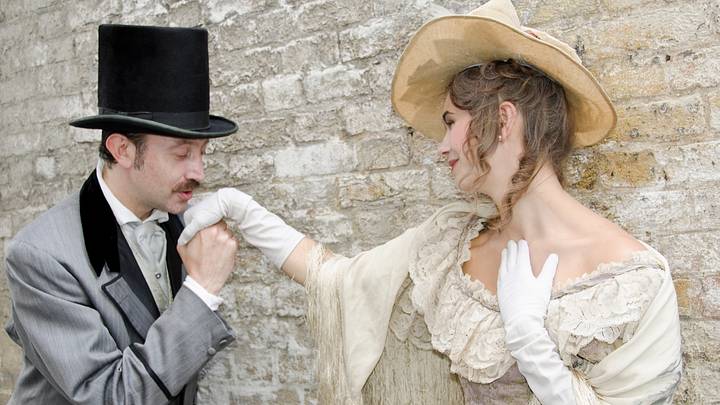
For centuries, social survival depended on far more than wealth or family name.
A single mistake at dinner, an improperly timed visit, or even wearing the wrong gloves could quietly damage a person’s reputation. Historical etiquette rules were not merely about politeness. They functioned as invisible social tests that revealed class, education, breeding, and respectability. Here are six examples of just that.
- Calling at the Wrong Time Could Ruin Your Reputation
- Gloves Were Treated Almost Like Social Language
- Mourning Clothes Came With Strict Timelines
- Introducing People Incorrectly Was a Serious Social Mistake
- Hats Communicated Respectability and Rank
- Refusing Food or Tea Could Be Interpreted as an Insult
Calling at the Wrong Time Could Ruin Your Reputation

Victorian society treated social visits almost like diplomatic negotiations. People did not simply “drop by” a person’s house whenever they felt like it. Visiting hours were carefully regulated by class and custom, and arriving at the wrong time could signal poor upbringing or social ignorance.
Upper-class women often designated highly specific “receiving hours” during which guests could visit. Showing up too early suggested desperation or lack of refinement, while arriving too late risked seeming disrespectful.
Many households also relied on elaborate calling cards. Visitors would leave decorated cards at homes to announce their presence or intention to maintain a social relationship. Even the corners of the card could communicate certain meanings. Folding or turning a corner in certain ways could indicate condolences, congratulations, or a personal visit.
These rituals might sound excessive today, but they served an important social function then. They helped elite society quietly separate insiders from outsiders.
Gloves Were Treated Almost Like Social Language

Gloves were not merely accessories in many 18th- and 19th-century social circles. They operated as symbols of cleanliness, class, and etiquette.
Victorian women were expected to own entire “glove wardrobes,” with different gloves for dinners, balls, mourning, carriage rides, and even specific times of day. Wearing visibly dirty gloves in public could seriously damage a person’s social standing. But removing them incorrectly could also create awkwardness.
In some settings, women were expected to remove gloves before eating, but not necessarily before dancing. Men often removed gloves for handshakes or dining depending on the occasion.
Gloves became such strong markers of respectability that appearing outdoors barehanded could be interpreted as improper or socially careless.
The rules mattered because gloves subtly communicated status. Fine gloves suggested wealth and leisure, while rough or worn gloves hinted at physical labor or lower social rank. Knowing exactly when and how to wear them became another way of signaling that a person understood elite social codes.
Mourning Clothes Came With Strict Timelines

Victorian mourning customs transformed grief into a highly structured social performance.
After the death of a close family member, particularly a spouse, women were often expected to wear black clothing for extended periods that could last months or even years.
Certain fabrics, jewelry, and accessories were considered appropriate during “deep mourning,” while other items became acceptable only during later mourning stages. Wearing clothing that appeared too cheerful too soon could provoke social criticism and accusations of insensitivity. Public grief became a way of demonstrating morality, loyalty, and respectability.
Introducing People Incorrectly Was a Serious Social Mistake

Modern introductions are usually casual, however, historical introductions were not. In many upper-class social settings, introducing people in the wrong order could embarrass everyone involved.
Generally, lower-status individuals were introduced to higher-status individuals, not the other way around. Younger people were introduced to older people. Men were introduced to women. These rules reflected deeply ingrained social hierarchies. The act of introduction itself symbolized acknowledgment of another person’s place within society.
Improper introductions could imply disrespect, ignorance, or social ambition beyond one’s station. Etiquette manuals therefore treated introductions with remarkable seriousness.
Hats Communicated Respectability and Rank

For centuries, hats carried enormous social meaning.
In many societies, failing to remove a hat in the proper setting was considered rude or even insulting. Victorian etiquette manuals instructed men to fully remove, not merely touch, their hats when greeting women, and remaining covered indoors could be interpreted as crude or disrespectful behavior.
Men were generally expected to remove hats indoors, during religious ceremonies, or when greeting women. Meanwhile, women’s hats often functioned as displays of status and fashion.
The size, material, and decoration of a hat could reveal information about wealth, occupation, or class. Top hats became associated with wealth and authority, while flatter caps often signaled working-class identity and labor.
Hat etiquette mattered partly because public appearance mattered intensely. A person’s clothing and behavior served as visual evidence of their upbringing long before they spoke.
Refusing Food or Tea Could Be Interpreted as an Insult

In many historical social settings, accepting food or tea carried symbolic meaning beyond simple hospitality. Refusing refreshments could suggest distrust, arrogance, or rejection of a host’s generosity, suggesting the host could not be trusted to provide adequately.
Tea culture became especially ritualized in Britain during the 18th and 19th centuries. Entire etiquette systems developed around pouring tea, serving guests wine, and responding appropriately.
Even small mistakes could appear socially awkward. The rules surrounding food and drink often reflected deeper anxieties about class and refinement. Knowing how to behave at the table signaled education and social belonging, meanwhile, failing to understand those expectations risked public embarrassment.
Many historical etiquette rules sound excessive today, but they performed an important function within highly status-conscious societies. They created invisible barriers. The people who understood the rules signaled membership within a particular social class, while those who failed revealed themselves as outsiders. Etiquette therefore became less about kindness and more about recognition.
Knowing which glove to wear, how long to mourn, or when to leave a calling card demonstrated familiarity with systems of privilege and respectability. Modern society still operates in surprisingly similar ways. Social expectations surrounding fashion, dining, online behavior, and professional etiquette continue to signal belonging and status, even if the rules themselves have changed.
History suggests that etiquette has rarely been just about manners. More often, it has been about power.