%20%20--%3E%0A%3Csvg%20version%3D%221.1%22%20id%3D%22Layer_1%22%20xmlns%3D%22http%3A%2F%2Fwww.w3.org%2F2000%2Fsvg%22%20xmlns%3Axlink%3D%22http%3A%2F%2Fwww.w3.org%2F1999%2Fxlink%22%20x%3D%220px%22%20y%3D%220px%22%0A%09%20viewBox%3D%220%200%20684.6%2068.1%22%20style%3D%22enable-background%3Anew%200%200%20684.6%2068.1%3B%22%20xml%3Aspace%3D%22preserve%22%3E%0A%3Cg%3E%0A%09%3Cpath%20d%3D%22M444.1%2C29.3h-17.4v14.5h17.4V29.3z%20M36.4%2C68.1l29.3-50.8V0H50.4L32.9%2C36.8L15.5%2C0H0v68.1h16.7V45.8l12.4%2C22.3H36.4z%0A%09%09%20M49.1%2C68.1h16.6V23.4L49.1%2C52.1V68.1z%20M76.6%2C68.1h45V53.8H93.3V41.6h21V27.1h-21V14.8h28.3V0.1h-45V68.1z%20M175.6%2C68.1h17.3v-68%0A%09%09h-16.5v40.3L150%2C0.1h-17.6v68h16.7V27.7L175.6%2C68.1z%20M235.8%2C14.8h15.4V0.1h-47.4v14.7H219v53.2h16.8V14.8z%20M290.3%2C45.9h-17.1%0A%09%09l7.5-15.6h2L290.3%2C45.9z%20M298.7%2C68.1h18l-32.2-68h-5.7l-32%2C68h18l3.3-7.1h27.1L298.7%2C68.1z%20M325.2%2C68.1h46.2V53.8h-29.6V0.1h-16.7%0A%09%09V68.1z%20M423.7%2C14.8h27.2V0.1H407v68h16.7V14.8z%20M462%2C68.1h46.2V53.8h-29.6V0.1H462V68.1z%20M564.8%2C34.1c0%2C10.7-7.2%2C19.2-18.5%2C19.2%0A%09%09c-11.4%2C0-18.5-8.5-18.5-19.2s7.1-19.2%2C18.5-19.2C557.6%2C14.9%2C564.8%2C23.4%2C564.8%2C34.1%20M580.6%2C34.1c0-19-14.2-34-34.3-34%0A%09%09c-20.2%2C0-34.3%2C15-34.3%2C34c0%2C19%2C14.1%2C34%2C34.3%2C34C566.4%2C68.1%2C580.6%2C53.1%2C580.6%2C34.1%20M604.8%2C20.5c0-4.1%2C3.3-6.2%2C6.7-6.2%0A%09%09c4.4%2C0%2C6.6%2C3%2C6.6%2C6.6h14.7C631.8%2C9.1%2C625.1%2C0.1%2C611%2C0.1c-12%2C0-21.7%2C9.3-21.7%2C20.6c0%2C10.9%2C5.9%2C15.9%2C16.7%2C19.8%0A%09%09c5.2%2C1.8%2C11.5%2C3.2%2C11.5%2C8c0%2C3.3-2.4%2C5.5-6.4%2C5.5c-3.6%2C0-6.6-3-6.6-6.7h-15.2c0%2C11.5%2C7.9%2C20.8%2C21.8%2C20.8c12%2C0%2C21.6-9.3%2C21.6-20.6%0A%09%09c0-10-5.3-16.4-16.7-19.8C610.6%2C26.1%2C604.8%2C25.3%2C604.8%2C20.5%20M670%2C20.9h14.7C683.8%2C9.1%2C677.1%2C0.1%2C663%2C0.1c-12%2C0-21.7%2C9.3-21.7%2C20.6%0A%09%09c0%2C10.9%2C5.9%2C15.9%2C16.7%2C19.8c5.2%2C1.8%2C11.5%2C3.2%2C11.5%2C8c0%2C3.3-2.4%2C5.5-6.4%2C5.5c-3.6%2C0-6.6-3-6.6-6.7h-15.2c0%2C11.5%2C7.9%2C20.8%2C21.8%2C20.8%0A%09%09c12%2C0%2C21.6-9.3%2C21.6-20.6c0-10-5.3-16.4-16.7-19.8c-5.4-1.6-11.3-2.4-11.3-7.2c0-4.1%2C3.3-6.2%2C6.7-6.2C667.7%2C14.4%2C670%2C17.3%2C670%2C20.9%0A%09%09%22%2F%3E%0A%3C%2Fg%3E%0A%3C%2Fsvg%3E%0A)

Many famous writers and authors end up contributing new words to our language, but Shakespeare is often popularly credited with contributing more than anyone else. Although it’s difficult to ascertain whether the words attributed to him were indeed his original coinages, or merely that his plays offer the first recorded use of the words in print, Shakespeare is nevertheless claimed to be responsible for as many as 1,700 new words.
Admittedly, that figure includes a great many words he simply recycled (turning pre-existing nouns into verbs, and so on), or reused in new and inventive senses. Several words that certainly do appear to be his inventions, given the written evidence available, however, you might find yourself unwittingly dropping into everyday conversation.
- AFTER-HOURS
- BARE-FACED
- BASELESS
- BEDAZZLE
- CHARACTERLESS
- DISLOCATE
- DROPLET
- EVENTFUL
- FOOTFALL
- HOT-BLOODED
- LEAKY
- LOW-RATED
- MUDDY
- NOISELESS
- OUTSTAY
- PRICELESS
- SHOOTING STAR
- SPLITTING
- TARDINESS
- WIDOWMAKER

AFTER-HOURS
Although we might associate it now with time or events taking place after a day at work, Shakespeare used the phrase after hours twice in his writing—first in Romeo and Juliet and then again in Richard III—to refer simply to the hours or period immediately after something, or in its later moments.
BARE-FACED
In A Midsummer Night’s Dream, Shakespeare used the adjective bare-faced to mean quite literally having a bare face—that is, having an entirely uncovered or undisguised face, with no beard or facial hair covering it. Then, a little later in Hamlet, he used the same word in the more figurative sense that we’d more likely use it today—namely, to mean undisguised, plain, or overt.
BASELESS
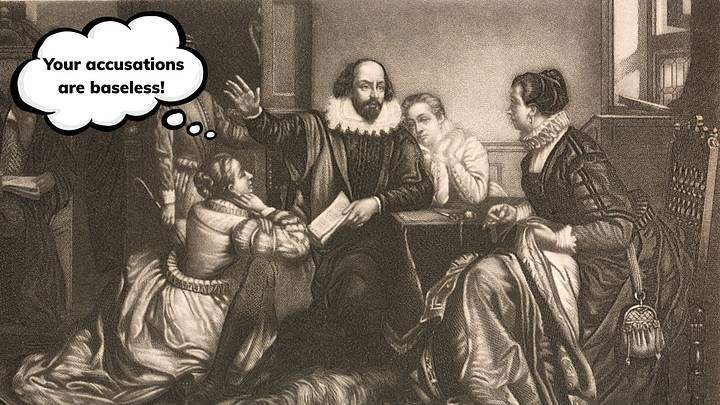
Shakespeare apparently coined the adjective baseless in The Tempest, using it to describe something that seems to have no foundation, or is otherwise groundless or unreasonable.
BEDAZZLE
Dazzle dates back to medieval times, when it originally was used to mean to temporarily lose one’s sight through staring at a bright light. Shakespeare picked up on that sense and attached an intensifying be– to the beginning of it when he coined the verb bedazzle in The Taming of the Shrew.
CHARACTERLESS
If you’re characterless, then you have no original or identifiable features. It’s a word Shakespeare invented to describe “mighty states” that are rendered “characterless … to dusty nothing” in Troilus and Cressida.
DISLOCATE
Although the verb itself is somewhat earlier, Shakespeare’s King Lear provides the earliest record we know about the medical use of the word dislocate to refer to the painful displacement of a bone or joint.
DROPLET
The suffix -let is used to form diminutive words in English (i.e. those that bear some sense of being small or undersized), as in the likes of booklet, leaflet, piglet and streamlet. Shakespeare attached it to the word drop to invent a droplet in his late tragedy Timon of Athens.
EVENTFUL
Shakespeare wrote of a “strange eventful history” in his comedy As You Like It, coining in the process this word for anything that is a particularly exciting or memorable experience.
FOOTFALL
Shakespeare coined the word footfall to refer to the sound or setting-down of a person’s feet as they walk. (The later use of the word to refer to the number of potential customers of a store, meanwhile, is a more modern invention dating from the 1970s.)
HOT-BLOODED
The use of the adjective hot-blooded to describe someone with strong or easily roused emotions can be dated back to Shakespeare’s Merry Wives of Windsor, in which he wrote of the work of “the hot-blooded Gods.”
LEAKY
“Thou art so leaky that we must leave thee to thy sinking,” mutters Mark Antony’s chief confidant Enobarbus in Antony and Cleopatra. Alongside another record of the word in Shakespeare’s The Tempest, his works provide the earliest known records of this relatively simple adjective, suggesting it may well have been one he invented himself.
LOW-RATED
English picked up the verb rate from French in medieval times, but it was Shakespeare who apparently first used it in the specific adjective “low-rated,” describing something not particularly widely admired, in Henry V.
MUDDY
The verb muddy, meaning to make something indistinct or confused, appears to have been another of Shakespeare’s inventions, which he first used in Hamlet.
NOISELESS
Shakespeare coined this synonym for silent in Act 4 of King Lear.
OUTSTAY
If you or anyone else happens to outstay their welcome, you can thank Shakespeare for coining this word in As You Like It.
PRICELESS
“What priceless wealth the heavens had him lent,” Shakespeare wrote in his narrative poem The Rape of Lucrece in 1594, giving us a new word for something of inestimable value or worth in the process.
SHOOTING STAR
Meteors that streak across the night sky have been known as falling stars since the 1400s at least. It was Shakespeare who apparently first called a meteor a shooting star; however, in Act 2 of Richard II.
SPLITTING
Next time you have a splitting headache, you know who to thank. Shakespeare was seemingly the first writer to use the verb splitting as an adjective, describing anything with the power to rend apart in Troilus and Cressida.
TARDINESS
The adjective tardy appears to have been adopted into English from French, but it was Shakespeare who thought to add the noun-forming suffix –ness onto the end of it, in the opening act of King Lear.
WIDOWMAKER
Now especially used in military context, to refer to potentially deadly weaponry or machinery, the earliest record of the noun widowmaker comes from Shakespeare’s retelling of the story of King John.