%20%20--%3E%0A%3Csvg%20version%3D%221.1%22%20id%3D%22Layer_1%22%20xmlns%3D%22http%3A%2F%2Fwww.w3.org%2F2000%2Fsvg%22%20xmlns%3Axlink%3D%22http%3A%2F%2Fwww.w3.org%2F1999%2Fxlink%22%20x%3D%220px%22%20y%3D%220px%22%0A%09%20viewBox%3D%220%200%20684.6%2068.1%22%20style%3D%22enable-background%3Anew%200%200%20684.6%2068.1%3B%22%20xml%3Aspace%3D%22preserve%22%3E%0A%3Cg%3E%0A%09%3Cpath%20d%3D%22M444.1%2C29.3h-17.4v14.5h17.4V29.3z%20M36.4%2C68.1l29.3-50.8V0H50.4L32.9%2C36.8L15.5%2C0H0v68.1h16.7V45.8l12.4%2C22.3H36.4z%0A%09%09%20M49.1%2C68.1h16.6V23.4L49.1%2C52.1V68.1z%20M76.6%2C68.1h45V53.8H93.3V41.6h21V27.1h-21V14.8h28.3V0.1h-45V68.1z%20M175.6%2C68.1h17.3v-68%0A%09%09h-16.5v40.3L150%2C0.1h-17.6v68h16.7V27.7L175.6%2C68.1z%20M235.8%2C14.8h15.4V0.1h-47.4v14.7H219v53.2h16.8V14.8z%20M290.3%2C45.9h-17.1%0A%09%09l7.5-15.6h2L290.3%2C45.9z%20M298.7%2C68.1h18l-32.2-68h-5.7l-32%2C68h18l3.3-7.1h27.1L298.7%2C68.1z%20M325.2%2C68.1h46.2V53.8h-29.6V0.1h-16.7%0A%09%09V68.1z%20M423.7%2C14.8h27.2V0.1H407v68h16.7V14.8z%20M462%2C68.1h46.2V53.8h-29.6V0.1H462V68.1z%20M564.8%2C34.1c0%2C10.7-7.2%2C19.2-18.5%2C19.2%0A%09%09c-11.4%2C0-18.5-8.5-18.5-19.2s7.1-19.2%2C18.5-19.2C557.6%2C14.9%2C564.8%2C23.4%2C564.8%2C34.1%20M580.6%2C34.1c0-19-14.2-34-34.3-34%0A%09%09c-20.2%2C0-34.3%2C15-34.3%2C34c0%2C19%2C14.1%2C34%2C34.3%2C34C566.4%2C68.1%2C580.6%2C53.1%2C580.6%2C34.1%20M604.8%2C20.5c0-4.1%2C3.3-6.2%2C6.7-6.2%0A%09%09c4.4%2C0%2C6.6%2C3%2C6.6%2C6.6h14.7C631.8%2C9.1%2C625.1%2C0.1%2C611%2C0.1c-12%2C0-21.7%2C9.3-21.7%2C20.6c0%2C10.9%2C5.9%2C15.9%2C16.7%2C19.8%0A%09%09c5.2%2C1.8%2C11.5%2C3.2%2C11.5%2C8c0%2C3.3-2.4%2C5.5-6.4%2C5.5c-3.6%2C0-6.6-3-6.6-6.7h-15.2c0%2C11.5%2C7.9%2C20.8%2C21.8%2C20.8c12%2C0%2C21.6-9.3%2C21.6-20.6%0A%09%09c0-10-5.3-16.4-16.7-19.8C610.6%2C26.1%2C604.8%2C25.3%2C604.8%2C20.5%20M670%2C20.9h14.7C683.8%2C9.1%2C677.1%2C0.1%2C663%2C0.1c-12%2C0-21.7%2C9.3-21.7%2C20.6%0A%09%09c0%2C10.9%2C5.9%2C15.9%2C16.7%2C19.8c5.2%2C1.8%2C11.5%2C3.2%2C11.5%2C8c0%2C3.3-2.4%2C5.5-6.4%2C5.5c-3.6%2C0-6.6-3-6.6-6.7h-15.2c0%2C11.5%2C7.9%2C20.8%2C21.8%2C20.8%0A%09%09c12%2C0%2C21.6-9.3%2C21.6-20.6c0-10-5.3-16.4-16.7-19.8c-5.4-1.6-11.3-2.4-11.3-7.2c0-4.1%2C3.3-6.2%2C6.7-6.2C667.7%2C14.4%2C670%2C17.3%2C670%2C20.9%0A%09%09%22%2F%3E%0A%3C%2Fg%3E%0A%3C%2Fsvg%3E%0A)

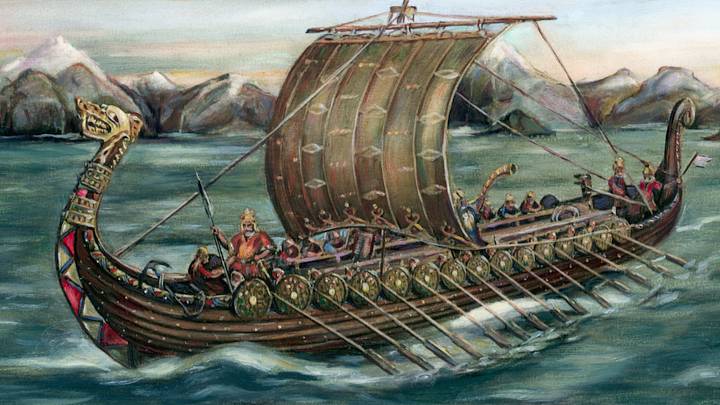
The English language is often considered one of the most difficult languages to learn because its development included multiple linguistic conquests. The language effectively began with the Anglo-Saxon arrival in England in the 5th century. They brought their Germanic culture and language with them, which formed the basis of Old English. However, repeated Viking invasions and the Norman conquest of 1066 introduced elements of the Norse and French languages into what became Middle English.
While those events might seem inconsequential in the grand scheme of things, they had a massive impact on the way that English developed. Many common words in English today come from the Vikings, and that kind of influence doesn't come without cultural transference. Greek mythology is visible in some of our modern phrases, but Norse mythology is actually present in the words we use to describe time, emotions, and even the Christian religion.
The following ten entries showcase some of the most impactful ways that Norse mythology continues to influence modern English. You may be surprised by how often you unconsciously reference Norse stories and beliefs in your everyday life!
- Days of the Week
- Summer and Winter
- Day and Night
- Thunder
- Oaf
- Hell
- Berserk
- Gun
- Fateful Descriptors
- Emotions and States of Being
Days of the Week

One of the first things English speakers may notice when learning a romance language is how different many of the days of the week are. For example, most romance languages include some version of "Sabbath day" and "God's day" for Saturday and Sunday, and the other days of the week usually correspond to Roman deities. However, English names for the days of the week have no connection with the Christian religion and only one reference to a Roman god.
This is because English follows the Germanic tradition when it comes to day names. The ancient Greeks and Romans named the days of the week after the seven celestial bodies they were able to observe: the sun, moon, Mars, Mercury, Jupiter, Venus, and Saturn. Through the process of cultural exchange, Germanic peoples kept some of these names while replacing others with their own gods. Norse traditions included days of the week based on Mani, Týr, Odin, Thor, and Frigg.
In English, the days of the week are Sunday (day of the Sun), Monday (day of the Moon), Tuesday (Týr's day), Wednesday (Wōden's day), Thursday (Thor's day), Friday (Frigg's day), and Saturday (Saturn's day). Though these names technically come from the Anglo-Saxons, not the Norse, they have a common religious and linguistic origin. Since there are few records about early Germanic traditions, we must turn to Norse mythology for more information about the Gods we honor in our language.
Summer and Winter

Similar to the days of the week, the names of the seasons in English come from a mixture of Proto-Germanic and Romantic origins. While Spring and Fall come from English colloquialisms (and Autumn derives from Latin origins), Summer and Winter are part of the Germanic tradition. The words descend from the Proto-Germanic words sumra and wintruz, which remained in both the Anglo-Saxon/English and Old Norse languages.
The Norse people divided their calendar into two parts (Sumarr and Vetr), which were personified in two 13th-century manuscripts called the Poetic Edda and the Prose Edda. Sumarr is described as the child of Svásudr, who "is of pleasant nature," and Vetr is a son of Vindsvalr, who has a temper that is "grim and chilly-breasted." The children, and thus the seasons, inherited their fathers' temperaments. While the English words "Summer" and "Winter" developed separately from the Norse, they still reference the personified seasons and their dispositions in the myths.
Day and Night

The final set of time-related words that made their way into English are day and night, which derive from the Proto-Germanic dages and nahts. While there is some debate, it has been theorized that these words developed from the concepts of burning and darkness. They were used to define the times when the sun was visible and the times when it was gone, though the idea of a day being the full 24-hour period emerged in the late Anglo-Saxon period.
Like Summer and Winter, Germanic mythology personified the day and night. Many Scandinavian cultures considered a new day to begin at sunset, and Norse mythology depicted night as existing before day did. Nótt (Night) is the daughter of a jötunn, or primordial being, named Nörvi, and she had three marriages that produced her children Audr, Jörd (the Earth), and Dagr (Day). Dagr is half Æsir, a term that describes Norse gods including Loki and Thor, which is why he is luminous while his mother is dark. In the story, Odin gave Nótt and Dagr chariots, which they ride around the Earth to create a way for mankind to measure time. Once again, these mythic explanations linger in our modern terminology.
Thunder

Thor is one of the most well-known figures from Norse mythology, and that popularity allowed his name to be associated with his powers linguistically. The word we now know as "Thunder" was originally introduced in Old English as þunor, a variant of the Norse Þórr. In both instances, the word could be used for both the sound that comes after lightning and the Norse God who controlled it.
As time went on, the word evolved. English speakers kept the Norse pronunciation (Thor) as the name of the god, while the meteorological phenomenon was allowed to evolve with the language. After the Norman Conquest, the letter "d" was added to the word to make it thonder, which eventually became "thunder" in modern English. While we no longer actively associate storms with Thor, his name continues to be evoked whenever we talk about the sounds they make.
Oaf

Norse mythology includes multiple mythological creatures, including the elves who inspired the modern English word "oaf." There were two kinds of elves in the myths, including the Dökkálfar (dark elves who live inside the Earth) and the Ljósálfar (light elves who live in Álfheimr). The common root in both words is álfar, which is cognate to the Old English ælf that still gets used in fantasy stories today.
While the word "elf" developed a positive connotation, appearing in many Anglo-Saxon names, another version of the word appeared in the English language centuries later. First appearing in the 1600s, the derivative word "oaf" was introduced as another word for a changeling. According to legend, fairies stole human infants and replaced them with their own children, who often had mental or physical impairments. Over time, the word "oaf" adapted to mean someone stupid or clumsy, keeping the negative implications of the changeling origin without the supernatural elements.
Hell

While we might expect the word "Hell" to come from ancient times, it is actually a relatively recent name for the Biblical afterlife. Going back to the original sources, the idea we now think of as Hell went by multiple names, including the Hebrew word sheol and the Greek words hadēs and tartarus. When Christian ideologies traveled north, they adopted Germanic terminology for the afterlife and defined the opposite of Heaven as Hell.
However, the Norse conception of Hel had little in common with the Christian Hell. Hel was the name of Loki's daughter, who is generally described as either being half-black, half-white or half-alive, half-dead. Odin required her to live in and rule over the underworld, which also became known as Hel or Helheim. However, this was not a realm of punishment. Hel was typically described in neutral terms, with both the goddess and the realm being integral parts of the natural order. Despite that, it's hard to separate the concept of Hell from its association with evil because the two concepts have spent so many years intertwined.
Berserk

"Berserk" is one of the most recent Norse additions to the English language, and one of the few to come directly from the mythological records. It comes from the Old Icelandic berserkr, which described warriors who possessed supernatural strength and durability in battle. The terminology was not common in other Germanic languages, only appearing in English in the early 19th century through literary references. "Berserk" and "berserker" were initially used interchangeably, but the word "berserk" soon became an adjective that describes a rational person becoming overcome by rage and acting recklessly.
Evidence about berserkers is limited and contradictory, appearing in both historical and mythological texts, which makes it difficult to define what the term meant to the Norse people. On the one hand, berserkers were described as devout worshippers of Odin and bodyguards for kings. On the other, they were uncontrollable forces of nature that collapsed after the battle ended. These contradictory depictions helped create the idea of berserkers as transformative figures like werewolves, who were mild-mannered until triggered by a fight. This depiction may not be accurate to the Norse tradition, but it fits the English usage well, as any person has the potential to "go berserk" under the right circumstances.
Gun

As shocking as it may seem, the word "gun" has been well-documented as a descendant of the Norse name Gunnhildr. The name consists of two etymological roots, with gunnr meaning war and hildr meaning battle maiden. Soldiers often gave their weapons female names, which appears to have been how Middle English began referring to cannons as gonnilde. As weaponry developed, the word was shortened to just gun.
The most prominent Gunnhildr in Norse records is listed as the wife of Erik Haraldsson, a Norse king from the 10th century. After Erik was deposed, Gunnhildr pushed her sons to rule Norway, resulting in excessive warfare and many of her children's deaths. Some legends also refer to her as a witch who used magic to influence the political landscape. The name remained popular in Scandinavian culture and migrated to England during periods of Viking rule, which may have been how early firearms got their name.
Fateful Descriptors

The words "weird" and "happy" both come from Germanic words about destiny. Weird can be traced back to the Proto-Germanic word wurthiz, which developed in Norse as urðr and in Old English as wyrd. Both words essentially refer to fate, though their meaning might more accurately be described as related to a person's place within the universe. Over time, the word was adapted into an adjective to describe witches (like the Weird Sisters in Macbeth) and pagan shamans, who often embodied the traits we now call weird.
Although it is generally considered rude to call someone "weird" in the modern day, it is far more acceptable to call them "happy," even though the two terms have similar origins. The Norse language used the word happ to describe luck, which we can still see in English words like "hapless" (unlucky), "happen" (something which occurs by chance), and "perhaps" (if fate allows). As other words like the Dutch luc were introduced into English, happ was transformed into an adjective. This originally described a person with good fortune, before its meaning changed to refer to the joy that might come from such good luck. Historically speaking, a legendary hero might accomplish a quest by hap and appreciate his wyrd, even if we might happily point out how weird that sounds.
Emotions and States of Being

The final category on this list includes multiple words that are more parallel to Norse mythology than directly derived from it. As an example, the word "anger" and its derivatives all come from the Norse word angr, meaning grief or affliction, which made its way into English in the 1200s. However, it also made its way into mythology in the form of Angrboda (giver-of-sorrows), the lover of Loki and mother of apocalyptic monsters. In a similar manner, the word "bold" comes from the Norse words ballr and balder, which also inspired the god Baldr's name.
In addition to describing the gods, some modern English words originally described how mortals felt in the presence of the Gods or other supernatural figures. For example, the word "awe" comes from the Norse agi, which referred to terror. In the myths, a dragon named Fafnir possessed the Helm of Awe (ægishjálmur), which caused such fear in his enemies that they would be physically paralyzed. Though this was initially negative, it was quickly adapted to religious contexts, where the fear of God was considered appropriate. In English, we have separated these aspects into different words, including "awful," "awesome," and "in awe."
The word "ugly" followed a similar path, originally referring to someone who was fearsome. It entered English in the 13th century as uglike, a variant of the Norse uggligr. However, it was not an insult at the time, as the similar term Yggr (The Terrible One) was used to describe Odin and, by association, the World Tree, Yggdrasil. It would take another few centuries before this word meant physically unattractive, as it does today.
Though they may hold drastically different meanings than they did originally, these common English words are keeping Norse culture and mythology alive and well.