%20%20--%3E%0A%3Csvg%20version%3D%221.1%22%20id%3D%22Layer_1%22%20xmlns%3D%22http%3A%2F%2Fwww.w3.org%2F2000%2Fsvg%22%20xmlns%3Axlink%3D%22http%3A%2F%2Fwww.w3.org%2F1999%2Fxlink%22%20x%3D%220px%22%20y%3D%220px%22%0A%09%20viewBox%3D%220%200%20684.6%2068.1%22%20style%3D%22enable-background%3Anew%200%200%20684.6%2068.1%3B%22%20xml%3Aspace%3D%22preserve%22%3E%0A%3Cg%3E%0A%09%3Cpath%20d%3D%22M444.1%2C29.3h-17.4v14.5h17.4V29.3z%20M36.4%2C68.1l29.3-50.8V0H50.4L32.9%2C36.8L15.5%2C0H0v68.1h16.7V45.8l12.4%2C22.3H36.4z%0A%09%09%20M49.1%2C68.1h16.6V23.4L49.1%2C52.1V68.1z%20M76.6%2C68.1h45V53.8H93.3V41.6h21V27.1h-21V14.8h28.3V0.1h-45V68.1z%20M175.6%2C68.1h17.3v-68%0A%09%09h-16.5v40.3L150%2C0.1h-17.6v68h16.7V27.7L175.6%2C68.1z%20M235.8%2C14.8h15.4V0.1h-47.4v14.7H219v53.2h16.8V14.8z%20M290.3%2C45.9h-17.1%0A%09%09l7.5-15.6h2L290.3%2C45.9z%20M298.7%2C68.1h18l-32.2-68h-5.7l-32%2C68h18l3.3-7.1h27.1L298.7%2C68.1z%20M325.2%2C68.1h46.2V53.8h-29.6V0.1h-16.7%0A%09%09V68.1z%20M423.7%2C14.8h27.2V0.1H407v68h16.7V14.8z%20M462%2C68.1h46.2V53.8h-29.6V0.1H462V68.1z%20M564.8%2C34.1c0%2C10.7-7.2%2C19.2-18.5%2C19.2%0A%09%09c-11.4%2C0-18.5-8.5-18.5-19.2s7.1-19.2%2C18.5-19.2C557.6%2C14.9%2C564.8%2C23.4%2C564.8%2C34.1%20M580.6%2C34.1c0-19-14.2-34-34.3-34%0A%09%09c-20.2%2C0-34.3%2C15-34.3%2C34c0%2C19%2C14.1%2C34%2C34.3%2C34C566.4%2C68.1%2C580.6%2C53.1%2C580.6%2C34.1%20M604.8%2C20.5c0-4.1%2C3.3-6.2%2C6.7-6.2%0A%09%09c4.4%2C0%2C6.6%2C3%2C6.6%2C6.6h14.7C631.8%2C9.1%2C625.1%2C0.1%2C611%2C0.1c-12%2C0-21.7%2C9.3-21.7%2C20.6c0%2C10.9%2C5.9%2C15.9%2C16.7%2C19.8%0A%09%09c5.2%2C1.8%2C11.5%2C3.2%2C11.5%2C8c0%2C3.3-2.4%2C5.5-6.4%2C5.5c-3.6%2C0-6.6-3-6.6-6.7h-15.2c0%2C11.5%2C7.9%2C20.8%2C21.8%2C20.8c12%2C0%2C21.6-9.3%2C21.6-20.6%0A%09%09c0-10-5.3-16.4-16.7-19.8C610.6%2C26.1%2C604.8%2C25.3%2C604.8%2C20.5%20M670%2C20.9h14.7C683.8%2C9.1%2C677.1%2C0.1%2C663%2C0.1c-12%2C0-21.7%2C9.3-21.7%2C20.6%0A%09%09c0%2C10.9%2C5.9%2C15.9%2C16.7%2C19.8c5.2%2C1.8%2C11.5%2C3.2%2C11.5%2C8c0%2C3.3-2.4%2C5.5-6.4%2C5.5c-3.6%2C0-6.6-3-6.6-6.7h-15.2c0%2C11.5%2C7.9%2C20.8%2C21.8%2C20.8%0A%09%09c12%2C0%2C21.6-9.3%2C21.6-20.6c0-10-5.3-16.4-16.7-19.8c-5.4-1.6-11.3-2.4-11.3-7.2c0-4.1%2C3.3-6.2%2C6.7-6.2C667.7%2C14.4%2C670%2C17.3%2C670%2C20.9%0A%09%09%22%2F%3E%0A%3C%2Fg%3E%0A%3C%2Fsvg%3E%0A)

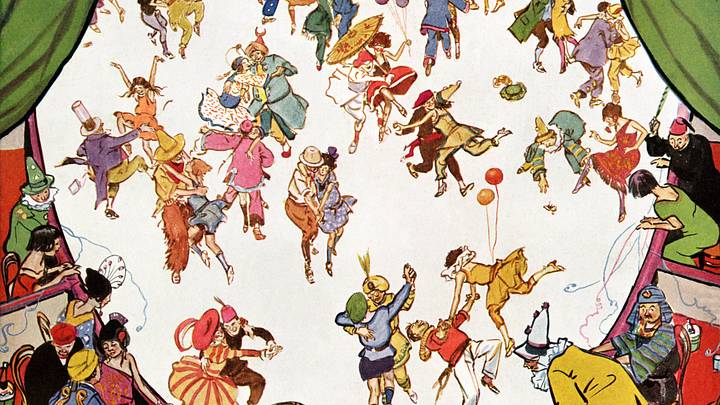
If you’ve ever attended a rather stoic and serious symposium, then you might be a little surprised to hear that you’ve actually attended a raucous ancient Greek drinking party. That’s because (etymologically speaking, at least) the name symposium comes from Greek roots literally meaning “drinking together,” and when the word was first used in English back in the early 1700s, that original meaning remained intact.
Elsewhere in the dictionary, though, there are all manner of other words for parties and partying, a great many of which have long since fallen out of use.
Carpet-Dance

Charles Dickens mentions a carpet-dance in his 1865 novel Our Mutual Friend. The term—which remains squarely stuck in the Victorian Era—describes an informal dance party, where people would gather to play music and dance together. The reference to a carpet here alludes to the fact that at larger, more formal gatherings the carpet would be taken up so that partygoers could dance on the hard boards beneath, while at a carpet-dance the carpet was left in place.
Drum-Major

In the 1700s, a drum was a wild gathering at a lavish private house (so-called because the party was presumably as loud and as raucous as a drum). By the mid-1700s, that name had been jokingly extended to a drum-major, presumably implying that this particular kind of party was even more wild and even more “major” than an ordinary drum.
Gander-Party

If a hen-party is a party for only women, then a gander-party is a party for only men. Just as the word stag has long been associated with male partygoers, gander too has a long history of male-only events, with a gander-mooner in 17th-century English being a man who takes advantage of his wife’s gander-moon (i.e., the month in which she recovers from childbirth) to play the romantic field.
Grog-Fight

In the mid-19th century, quaint and quiet tea parties became ironically known as tea-fights, and, based on that, raucous drinking parties came to be known as grog-fights, especially among members of the Victorian military. The phrase survived until the end of the 1800s, before largely falling out of use in the 20th century.
Hurricane

Used allusively for a gathering as wild and raucous as a gigantic storm, in 18th and 19th century slang a hurricane was a large fashionable party at a grand house—in particular one that was loud and crowded, and brought together a big group of high-society people. To go hurricaning, as a verb, likewise was to celebrate with just such a party.
Jollo

A jokey play on jolly or jollification, in 1930s slang a jollo was a drinking party. As old-fashioned and jazz-age as it might sound, the word survives chiefly in informal Australian English today.
Put the Bag On

In more modern slang, “to put the bag on” someone has come to be associated with drunkenness thanks to the bag being a slang name for the Breathalyzer. Almost 100 years ago, however, in 1930s America “to put the bag on” meant to participate in a raucous party, or else to become drunk at just such a shindig.
Rooty-Toot

The earliest recorded meaning of rooty-toot (among a host of ludicrously extended versions, like “root-toot-toot-tooy”) was onomatopoeic, referring to the sound of a grand fanfare or a blast of trumpets. By the 1930s, that meaning had extended to a jokey name for jazz music—and from there, a byword for any lively party or gathering of people where loud jazzy music is played. The use of the adjective rooting-tooting to mean boisterous or rip-roaring is likely from the same jazzy source.
Whoopee

Although it might have somewhat different connotations today, in the early 1900s a whoopee or a whoop-up was a rowdy and lively party—while “to make whoopee” (as opposed to its more familiar meaning today) was simply to party or celebrate in a wild and carefree manner.
Whooper-Dooper

In 1940s American slang, a whooper-dooper was a wild party, in particular one where large quantities of liquor were drunk.