%20%20--%3E%0A%3Csvg%20version%3D%221.1%22%20id%3D%22Layer_1%22%20xmlns%3D%22http%3A%2F%2Fwww.w3.org%2F2000%2Fsvg%22%20xmlns%3Axlink%3D%22http%3A%2F%2Fwww.w3.org%2F1999%2Fxlink%22%20x%3D%220px%22%20y%3D%220px%22%0A%09%20viewBox%3D%220%200%20684.6%2068.1%22%20style%3D%22enable-background%3Anew%200%200%20684.6%2068.1%3B%22%20xml%3Aspace%3D%22preserve%22%3E%0A%3Cg%3E%0A%09%3Cpath%20d%3D%22M444.1%2C29.3h-17.4v14.5h17.4V29.3z%20M36.4%2C68.1l29.3-50.8V0H50.4L32.9%2C36.8L15.5%2C0H0v68.1h16.7V45.8l12.4%2C22.3H36.4z%0A%09%09%20M49.1%2C68.1h16.6V23.4L49.1%2C52.1V68.1z%20M76.6%2C68.1h45V53.8H93.3V41.6h21V27.1h-21V14.8h28.3V0.1h-45V68.1z%20M175.6%2C68.1h17.3v-68%0A%09%09h-16.5v40.3L150%2C0.1h-17.6v68h16.7V27.7L175.6%2C68.1z%20M235.8%2C14.8h15.4V0.1h-47.4v14.7H219v53.2h16.8V14.8z%20M290.3%2C45.9h-17.1%0A%09%09l7.5-15.6h2L290.3%2C45.9z%20M298.7%2C68.1h18l-32.2-68h-5.7l-32%2C68h18l3.3-7.1h27.1L298.7%2C68.1z%20M325.2%2C68.1h46.2V53.8h-29.6V0.1h-16.7%0A%09%09V68.1z%20M423.7%2C14.8h27.2V0.1H407v68h16.7V14.8z%20M462%2C68.1h46.2V53.8h-29.6V0.1H462V68.1z%20M564.8%2C34.1c0%2C10.7-7.2%2C19.2-18.5%2C19.2%0A%09%09c-11.4%2C0-18.5-8.5-18.5-19.2s7.1-19.2%2C18.5-19.2C557.6%2C14.9%2C564.8%2C23.4%2C564.8%2C34.1%20M580.6%2C34.1c0-19-14.2-34-34.3-34%0A%09%09c-20.2%2C0-34.3%2C15-34.3%2C34c0%2C19%2C14.1%2C34%2C34.3%2C34C566.4%2C68.1%2C580.6%2C53.1%2C580.6%2C34.1%20M604.8%2C20.5c0-4.1%2C3.3-6.2%2C6.7-6.2%0A%09%09c4.4%2C0%2C6.6%2C3%2C6.6%2C6.6h14.7C631.8%2C9.1%2C625.1%2C0.1%2C611%2C0.1c-12%2C0-21.7%2C9.3-21.7%2C20.6c0%2C10.9%2C5.9%2C15.9%2C16.7%2C19.8%0A%09%09c5.2%2C1.8%2C11.5%2C3.2%2C11.5%2C8c0%2C3.3-2.4%2C5.5-6.4%2C5.5c-3.6%2C0-6.6-3-6.6-6.7h-15.2c0%2C11.5%2C7.9%2C20.8%2C21.8%2C20.8c12%2C0%2C21.6-9.3%2C21.6-20.6%0A%09%09c0-10-5.3-16.4-16.7-19.8C610.6%2C26.1%2C604.8%2C25.3%2C604.8%2C20.5%20M670%2C20.9h14.7C683.8%2C9.1%2C677.1%2C0.1%2C663%2C0.1c-12%2C0-21.7%2C9.3-21.7%2C20.6%0A%09%09c0%2C10.9%2C5.9%2C15.9%2C16.7%2C19.8c5.2%2C1.8%2C11.5%2C3.2%2C11.5%2C8c0%2C3.3-2.4%2C5.5-6.4%2C5.5c-3.6%2C0-6.6-3-6.6-6.7h-15.2c0%2C11.5%2C7.9%2C20.8%2C21.8%2C20.8%0A%09%09c12%2C0%2C21.6-9.3%2C21.6-20.6c0-10-5.3-16.4-16.7-19.8c-5.4-1.6-11.3-2.4-11.3-7.2c0-4.1%2C3.3-6.2%2C6.7-6.2C667.7%2C14.4%2C670%2C17.3%2C670%2C20.9%0A%09%09%22%2F%3E%0A%3C%2Fg%3E%0A%3C%2Fsvg%3E%0A)

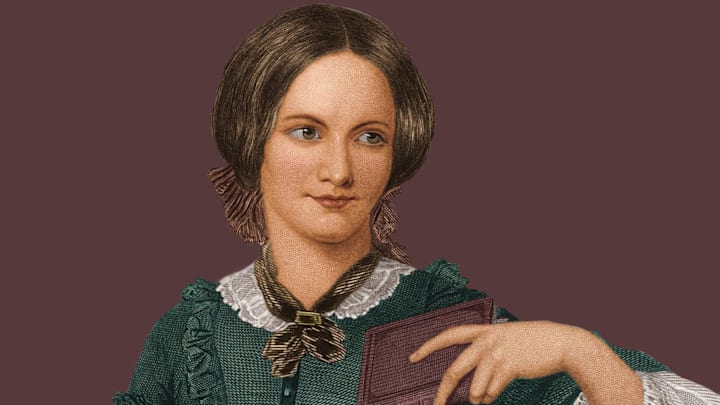
The Brontë sisters read everything they could get their hands on, which, in rural Yorkshire in the 1840s, was not nearly as much as they liked. Still, with the advent of the circulating library and a booming trade in books between friends and neighbors, the Brontë's found plenty of inspiration for their own groundbreaking novels.
Charlotte Brontë’s novel Jane Eyre, published under the masculine pen name Currer Bell in 1847, shocked the reading public. “It is a very remarkable book,” wrote one reviewer, “we have no remembrance of another combining such genuine power with such horrid taste.” The tone of this review is typical of the Victorian press and of the kinds of book-club chat that made it into Charlotte’s letters. Charlotte was as blunt and fair with her reviews, documenting her reading habits—what she loved and what she hated—as one of Victorian Britain’s most famous authors.
Let's turn the page on six books Charlotte Brontë loved, and six books she loathed.
LOVED IT

1. Waverly; or, ‘Tis Sixty Years Since by Sir Walter Scott
Charlotte’s favorite author was Sir Walter Scott, master of the historical novel. His series of over two dozen Waverly Novels, which began with the titular Waverly in 1814, was hugely successful. Scott’s depiction of the romantic affairs of Englishman Edward Waverly during the second Jacobite Rebellion captured the imaginations of many Victorian readers. Charlotte was no exception; she advised her friend Ellen Nussey, “For fiction—read Scott alone, all other novels after his are worthless.”
2. Vanity Fair by William Makepeace Thackeray
In 1850, Thackeray, already a literary giant, invited Charlotte to a dinner party at his Mayfair home, where she was too shy to speak. While the party was not a success, she had nothing but good things to say about Thackeray’s writings: “The more I read of Thackeray’s works, the more certain I am that he stands alone; alone in his sagacity, alone in his truth, alone in his feeling.” She sees the satirical novel Vanity Fair as “forcible, exciting in its force, still more impressive than exciting” with parts as awe-inspiring as an oracle.”
3. David Copperfield by Charles Dickens
Dickens was such a prolific author that Charlotte was sure to find something to love about his work. In fact, the two authors had similar tastes: David Copperfield is a semi-autobiographical novel about a young man’s journey of self-development that Dickens said was his “favorite child.” Charlotte agreed, even noting its similarity to Jane Eyre: “it seems to me very good—admirable in some parts. You said it had affinity to ‘Jane Eyre’: it has—now and then—only what an advantage has Dickens in his varied knowledge of men and things!”
4. Mary Barton by Elizabeth Gaskell
Gaskell, whose novel Mary Barton was published one year after Jane Eyre, became Charlotte’s close friend and, eventually, her biographer. Mary Barton is a social problem novel that highlights the inequalities of life in Victorian Britain. This novel takes place in Manchester, a mill town where laborers faced back-breaking work and poor wages. Charlotte felt passionate about the novel’s social critiques, so much so that she was disappointed Gaskell got to the subject first—this “clever though painful tale” anticipated Charlotte’s novel Shirley, “both in subject and incident.”
5. Uncle Tom’s Cabin by Harriet Beecher Stowe
Stowe’s American abolitionist novel was a sensation on both sides of the Atlantic. Its depiction of the cruelties of slavery impressed Charlotte, who sympathized with the novel’s message but shied away from the topic herself. She writes, “To manage these great matters rightly, they must be long and practically studied... not taken up as a business matter.” Stowe’s personal experience was, in Charlotte’s opinion, what made the novel feel authentic: “Mrs. Stowe had felt the iron of slavery enter into her heart from childhood upwards long before she ever thought of writing books. The feeling throughout her work is sincere.”
6. Madeleine, a Tale of Auvergne by Julia Kavanagh
Charlotte was impressed by this French novel penned by an Irish writer. Apparently, “founded on fact,” Madeleine is a historical novel that follows the life of a peasant girl in late eighteenth-century France. This was Kavanagh’s second novel, and she would go on to write fifteen more; many of her writings focused on women’s social roles. Charlotte writes that Madeleine “is a fine pearl in a simple setting. Julia Kavanagh has my esteem—I would rather know her than many far more brilliant personages.”
LOATHED IT

1. Pride and Prejudice by Jane Austen
While she often praised fellow novelists, Charlotte could be harsh in her criticisms. She felt that Jane Austen’s novels were too restrained. She objected to the opinion of G. H. Lewes, who said he would rather have written any Austen novel than one of Walter Scott’s. Given this slight to her favorite author, Charlotte responded with an especially contrarian view. She wrote that Pride and Prejudice was merely “an accurate daguerreotyped portrait of a common-place face”—in other words, it was a picture-perfect story that lacked imagination.
2. The Emigrant Family: or, The Story of an Australian Settler by Alexander Harris
This novel by Alexander Harris transports us to the penal colony of Australia, where it chronicles the struggles of a family attempting to start a new life abroad. Harris emigrated to Australia himself in 1825, and the novel is based on his own experiences. Charlotte disliked the novel despite its excellent “local coloring.” She writes, “I can hardly call it a good novel,” mainly because she thought Harris was unoriginal: “He creates nothing—he only copies.”
3. The Caxtons: A Family Picture by Edward George Bulwer-Lytton
Charlotte was critical of the fiction by statesman Edward Bulwer-Lytton, who might be best known for coining the dubious opening line, “It was a dark and stormy night.” She disliked Bulwer-Lytton’s 1849 novel The Caxtons, a portrait of domestic family life that follows the professional and romantic pursuits of narrator Pisistratus Caxton. Having nothing nice to say, Charlotte says nothing at all: “I think I will not write what I think.” Still, she can’t help comparing the effort to more worthy books: “Take a hundred—take a thousand of such works and weigh them in the balance against a page of Thackeray.”
4. Oliver Weld by Harriet Martineau
The manuscript for Harriet Martineau’s final novel, Oliver Weld, was so poorly received that it never saw the light of day. The novel was a utopian fiction set in a future England overrun by conflicts between town and country settlements, but its political and religious themes were controversial. Charlotte sent the manuscript to a publisher friend, but when it was returned, she agreed that the novel was “obnoxious from a business point of view.” She admits that she was “led to expect something very different” from Martineau, who reportedly destroyed the manuscript after its rejection.
5. Modeste Mignon by Honoré de Balzac
This novel, an installment in Balzac’s “Scenes from Private Life,” follows the romantic trials of a young woman who finds herself in a complicated set of affairs with a poet, a secretary, and a duke. Charlotte is conflicted about this novel. She admits that it’s well crafted, but something nags at her about the tone: “admire Balzac as we may—I think we do not like him.” Balzac, she decides, is an “ungenial acquaintance” and a bore.
6. Azeth the Egyptian by Eliza Lynn Linton
Linton’s historical adventure stories, set in ancient Egypt, capitalized on popular fascination with exotic archaeological discoveries. While Charlotte admits that she did not read Azeth the Egyptian, she did read Linton’s similar short story, “The Priest of Isis,” and denied being at all moved by the author’s “turgid and feeble” fantasies. In one of her harshest reviews, she writes, “it reminded me of some of the most inflated and emptiest parts of Bulwer’s novels: I found in it neither strength, sense, nor originality.”