%20%20--%3E%0A%3Csvg%20version%3D%221.1%22%20id%3D%22Layer_1%22%20xmlns%3D%22http%3A%2F%2Fwww.w3.org%2F2000%2Fsvg%22%20xmlns%3Axlink%3D%22http%3A%2F%2Fwww.w3.org%2F1999%2Fxlink%22%20x%3D%220px%22%20y%3D%220px%22%0A%09%20viewBox%3D%220%200%20684.6%2068.1%22%20style%3D%22enable-background%3Anew%200%200%20684.6%2068.1%3B%22%20xml%3Aspace%3D%22preserve%22%3E%0A%3Cg%3E%0A%09%3Cpath%20d%3D%22M444.1%2C29.3h-17.4v14.5h17.4V29.3z%20M36.4%2C68.1l29.3-50.8V0H50.4L32.9%2C36.8L15.5%2C0H0v68.1h16.7V45.8l12.4%2C22.3H36.4z%0A%09%09%20M49.1%2C68.1h16.6V23.4L49.1%2C52.1V68.1z%20M76.6%2C68.1h45V53.8H93.3V41.6h21V27.1h-21V14.8h28.3V0.1h-45V68.1z%20M175.6%2C68.1h17.3v-68%0A%09%09h-16.5v40.3L150%2C0.1h-17.6v68h16.7V27.7L175.6%2C68.1z%20M235.8%2C14.8h15.4V0.1h-47.4v14.7H219v53.2h16.8V14.8z%20M290.3%2C45.9h-17.1%0A%09%09l7.5-15.6h2L290.3%2C45.9z%20M298.7%2C68.1h18l-32.2-68h-5.7l-32%2C68h18l3.3-7.1h27.1L298.7%2C68.1z%20M325.2%2C68.1h46.2V53.8h-29.6V0.1h-16.7%0A%09%09V68.1z%20M423.7%2C14.8h27.2V0.1H407v68h16.7V14.8z%20M462%2C68.1h46.2V53.8h-29.6V0.1H462V68.1z%20M564.8%2C34.1c0%2C10.7-7.2%2C19.2-18.5%2C19.2%0A%09%09c-11.4%2C0-18.5-8.5-18.5-19.2s7.1-19.2%2C18.5-19.2C557.6%2C14.9%2C564.8%2C23.4%2C564.8%2C34.1%20M580.6%2C34.1c0-19-14.2-34-34.3-34%0A%09%09c-20.2%2C0-34.3%2C15-34.3%2C34c0%2C19%2C14.1%2C34%2C34.3%2C34C566.4%2C68.1%2C580.6%2C53.1%2C580.6%2C34.1%20M604.8%2C20.5c0-4.1%2C3.3-6.2%2C6.7-6.2%0A%09%09c4.4%2C0%2C6.6%2C3%2C6.6%2C6.6h14.7C631.8%2C9.1%2C625.1%2C0.1%2C611%2C0.1c-12%2C0-21.7%2C9.3-21.7%2C20.6c0%2C10.9%2C5.9%2C15.9%2C16.7%2C19.8%0A%09%09c5.2%2C1.8%2C11.5%2C3.2%2C11.5%2C8c0%2C3.3-2.4%2C5.5-6.4%2C5.5c-3.6%2C0-6.6-3-6.6-6.7h-15.2c0%2C11.5%2C7.9%2C20.8%2C21.8%2C20.8c12%2C0%2C21.6-9.3%2C21.6-20.6%0A%09%09c0-10-5.3-16.4-16.7-19.8C610.6%2C26.1%2C604.8%2C25.3%2C604.8%2C20.5%20M670%2C20.9h14.7C683.8%2C9.1%2C677.1%2C0.1%2C663%2C0.1c-12%2C0-21.7%2C9.3-21.7%2C20.6%0A%09%09c0%2C10.9%2C5.9%2C15.9%2C16.7%2C19.8c5.2%2C1.8%2C11.5%2C3.2%2C11.5%2C8c0%2C3.3-2.4%2C5.5-6.4%2C5.5c-3.6%2C0-6.6-3-6.6-6.7h-15.2c0%2C11.5%2C7.9%2C20.8%2C21.8%2C20.8%0A%09%09c12%2C0%2C21.6-9.3%2C21.6-20.6c0-10-5.3-16.4-16.7-19.8c-5.4-1.6-11.3-2.4-11.3-7.2c0-4.1%2C3.3-6.2%2C6.7-6.2C667.7%2C14.4%2C670%2C17.3%2C670%2C20.9%0A%09%09%22%2F%3E%0A%3C%2Fg%3E%0A%3C%2Fsvg%3E%0A)

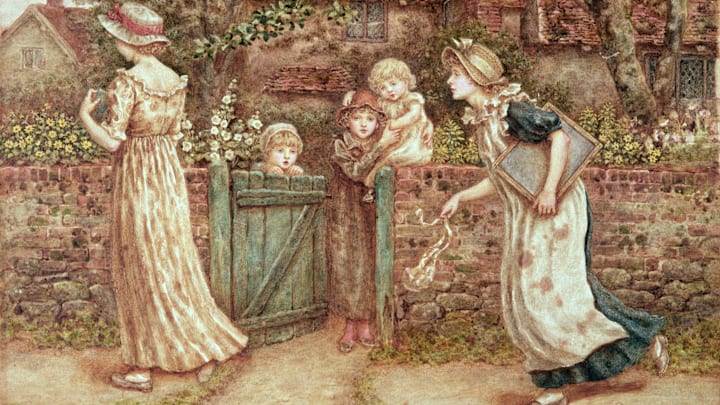
“Lucy Locket lost her pocket” sounds like a catchy little rhyme about a girl making a simple mistake. After all, we all lose things—and find them, much like Kitty Fisher in the story. But what if their story started before then? Dig a little deeper into the history of this 19th-century folksong, and you’ll find it’s far more twisted than its nursery rhyme label suggests.
Set to the same melody as "Jack and Jill" and "Yankee Doodle," "Lucy Locket" might seem like an innocent children’s song, but unlike those other tunes, it hints at far more grown-up matters, from flirtation to feuds. Behind the lighthearted lyrics lies a dark story of two real people who loaded—and lost—their pockets with what might be considered dirty money today. Historical accounts suggest the nursery rhyme may actually reference a scandalous tale involving two infamous 18th-century courtesans. Feeling disturbed? Before you ask for a penny for your troubles, let’s take another look at this nursery rhyme, this time with all the contemptible context.
Courtesans, Not Kids

Despite what depictions—and the song’s categorization as a nursery rhyme—might suggest, Lucy Locket and Kitty Fisher weren’t kids at all, but prostitutes. In 18th-century London, paid companionship was commonplace, and some women were better at getting men to open their pockets than others. Enter Lucy Cooper and Catherine Maria “Kitty” Fisher: two of the most prominent figures in the city’s scandalous social scene, famed for their charm, their high-profile flings, and, of course, their rivalry.
Lucy Cooper, better known as Lucy Locket, started as a barmaid but reportedly had a taste for aristocratic attention—her earnings weren’t behind the counter, but behind closed doors with a string of wealthy suitors in Covent Garden. Kitty Fisher, meanwhile, had gone from hat-monger to harlot, gaining fame for her beauty, her wit, and her sharp social instincts. Rumor has it the two were often at odds over suitors, stolen affection, or just the kind of gossip that spread like wildfire in polite society. Sounds about Bridgerton, right? But instead of being recounted in a column, their feud was immortalized in rhyme.
Turning the Pocket Inside Out
Many illustrations of Kitty Fisher show her with a small pouch, presumed to be Lucy’s “pocket.” But what if it wasn’t meant literally at all? Rather than a coin purse, historical interpretations suggest that Lucy’s “pocket” was actually a living, breathing person, or rather patron, whose misfortune became fodder for the rhyme.
Lucy Locket reportedly had a steady suitor who spent freely on her company…until his funds ran dry, and Lucy let him go. Left out in the cold, the cash-strapped chap soon turned his attention to Kitty Fisher, and thus she “found the pocket,” though, as the rhyme reminds us, there wasn’t a penny left in it.

The “ribbon” mentioned in the rhyme adds another layer of historical context. In the 18th century, women didn’t have sewn-in pockets; instead, they carried their belongings in cotton pouch-like pockets tied around the waist with ribbon or string and hidden beneath their skirts. What sounds like a simple tale about losing a pocket may have once referred to losing the entire pouch—and whatever money or secrets it held.
Essentially, "Lucy Locket" is Kitty’s catty clapback, mocking Lucy for letting their shared lover slip away, only for Kitty to take him off her hands. What sounds like a harmless nursery rhyme is really a playful chronicle of rivalry, flirtation, and the dodgy economics of 18th-century social life.