%20%20--%3E%0A%3Csvg%20version%3D%221.1%22%20id%3D%22Layer_1%22%20xmlns%3D%22http%3A%2F%2Fwww.w3.org%2F2000%2Fsvg%22%20xmlns%3Axlink%3D%22http%3A%2F%2Fwww.w3.org%2F1999%2Fxlink%22%20x%3D%220px%22%20y%3D%220px%22%0A%09%20viewBox%3D%220%200%20684.6%2068.1%22%20style%3D%22enable-background%3Anew%200%200%20684.6%2068.1%3B%22%20xml%3Aspace%3D%22preserve%22%3E%0A%3Cg%3E%0A%09%3Cpath%20d%3D%22M444.1%2C29.3h-17.4v14.5h17.4V29.3z%20M36.4%2C68.1l29.3-50.8V0H50.4L32.9%2C36.8L15.5%2C0H0v68.1h16.7V45.8l12.4%2C22.3H36.4z%0A%09%09%20M49.1%2C68.1h16.6V23.4L49.1%2C52.1V68.1z%20M76.6%2C68.1h45V53.8H93.3V41.6h21V27.1h-21V14.8h28.3V0.1h-45V68.1z%20M175.6%2C68.1h17.3v-68%0A%09%09h-16.5v40.3L150%2C0.1h-17.6v68h16.7V27.7L175.6%2C68.1z%20M235.8%2C14.8h15.4V0.1h-47.4v14.7H219v53.2h16.8V14.8z%20M290.3%2C45.9h-17.1%0A%09%09l7.5-15.6h2L290.3%2C45.9z%20M298.7%2C68.1h18l-32.2-68h-5.7l-32%2C68h18l3.3-7.1h27.1L298.7%2C68.1z%20M325.2%2C68.1h46.2V53.8h-29.6V0.1h-16.7%0A%09%09V68.1z%20M423.7%2C14.8h27.2V0.1H407v68h16.7V14.8z%20M462%2C68.1h46.2V53.8h-29.6V0.1H462V68.1z%20M564.8%2C34.1c0%2C10.7-7.2%2C19.2-18.5%2C19.2%0A%09%09c-11.4%2C0-18.5-8.5-18.5-19.2s7.1-19.2%2C18.5-19.2C557.6%2C14.9%2C564.8%2C23.4%2C564.8%2C34.1%20M580.6%2C34.1c0-19-14.2-34-34.3-34%0A%09%09c-20.2%2C0-34.3%2C15-34.3%2C34c0%2C19%2C14.1%2C34%2C34.3%2C34C566.4%2C68.1%2C580.6%2C53.1%2C580.6%2C34.1%20M604.8%2C20.5c0-4.1%2C3.3-6.2%2C6.7-6.2%0A%09%09c4.4%2C0%2C6.6%2C3%2C6.6%2C6.6h14.7C631.8%2C9.1%2C625.1%2C0.1%2C611%2C0.1c-12%2C0-21.7%2C9.3-21.7%2C20.6c0%2C10.9%2C5.9%2C15.9%2C16.7%2C19.8%0A%09%09c5.2%2C1.8%2C11.5%2C3.2%2C11.5%2C8c0%2C3.3-2.4%2C5.5-6.4%2C5.5c-3.6%2C0-6.6-3-6.6-6.7h-15.2c0%2C11.5%2C7.9%2C20.8%2C21.8%2C20.8c12%2C0%2C21.6-9.3%2C21.6-20.6%0A%09%09c0-10-5.3-16.4-16.7-19.8C610.6%2C26.1%2C604.8%2C25.3%2C604.8%2C20.5%20M670%2C20.9h14.7C683.8%2C9.1%2C677.1%2C0.1%2C663%2C0.1c-12%2C0-21.7%2C9.3-21.7%2C20.6%0A%09%09c0%2C10.9%2C5.9%2C15.9%2C16.7%2C19.8c5.2%2C1.8%2C11.5%2C3.2%2C11.5%2C8c0%2C3.3-2.4%2C5.5-6.4%2C5.5c-3.6%2C0-6.6-3-6.6-6.7h-15.2c0%2C11.5%2C7.9%2C20.8%2C21.8%2C20.8%0A%09%09c12%2C0%2C21.6-9.3%2C21.6-20.6c0-10-5.3-16.4-16.7-19.8c-5.4-1.6-11.3-2.4-11.3-7.2c0-4.1%2C3.3-6.2%2C6.7-6.2C667.7%2C14.4%2C670%2C17.3%2C670%2C20.9%0A%09%09%22%2F%3E%0A%3C%2Fg%3E%0A%3C%2Fsvg%3E%0A)

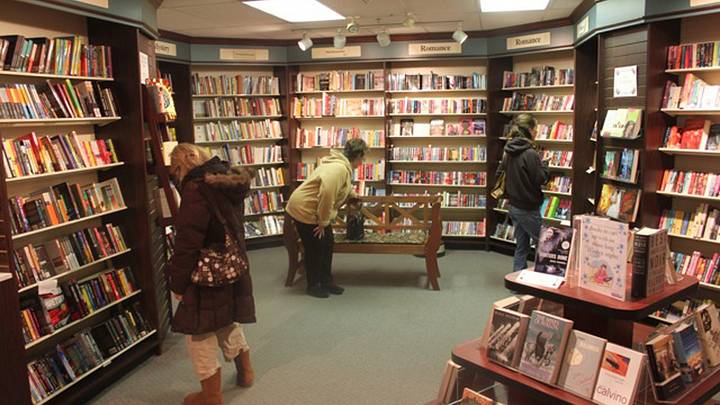
Before Amazon became the behemoth it is today and put many stores out of business, mega-bookstores were a huge part of our culture. In the 1990s, the bookstore was a place to hang out, obtain media that wasn't available in small indie bookshops, and, of course, to read. These big bookstores created warm, inviting spaces that made people want to stay.
Book lovers didn't know what they had in the '90s, but now we all long for the days when we could walk into a store and take in the heavenly aromas of new books, baked goods, and coffee. The bookstores that have managed to remain in business don't have the same vibe they once did. These are the things that every '90s bookstore had, and we wish would be brought back.

Overstuffed Armchairs
We can blame our standards for reading furniture on two things: Wishbone's big red chair and the armchairs at '90s bookstores. The big-box bookshops of the '90s had plush, ultra-comfy seating that encouraged people to read in store.
These armchairs, and some loveseats, were arranged in nooks or corners of the store, and it made you feel as if your dreams of a home library were coming true. Most bookstores today have removed the seats in exchange for more shelves, making the book-buying experience less magical and more transactional.

Banking Lamps
Another part of the '90s bookstore that created a welcoming ambience was the lamps in the reading nooks or at the tables. The lamps looked vintage and often had green, rectangular glass shades with brass bases. They provided enough extra light to read by without disturbing other customers.
It's rare to find reading lamps of any kind in modern bookstores because most have done away with the reading spots. The harsh, fluorescent lighting used today has stripped bookstores of their once cozy atmosphere.

A Map Section
Confession time: sometimes, when Google Maps has gotten us hopelessly lost, we all secretly miss paper maps deep down. At least if we got lost back then, it was our own fault for misreading the map. And being so dependent on technology has made us all a bit more directionally challenged.
In the '90s, bookstores had an entire wall of maps. You could find road maps, land maps, historical maps, and maps of different states and countries around the world. Going on a trip to New York City and want to know which subway trains to take to each tourist spot? There was a map for that!

Newspaper and Magazine Racks
Before everything went digital, the best place to get news from around the globe was a bookstore. Another whole wall could be filled with both local and foreign newspapers. Celebrity and entertainment news came from magazines before social media allowed us access to the private lives of the stars.
Bookstores in the '90s felt special because of this wealth of knowledge they contained; both historical and current events. And in a world where so much of the digital news can be faked or generated with AI, we miss old-fashioned newspapers.

CDs and Cassette Tapes
The big-box bookstores of the '90s didn't just carry reading material. They had all sorts of media, including the latest and most popular music. Rows and rows of CDs or cassette tapes filled the audio section of the bookstores, and it was where you went for the new N'SYNC album while your mom debated which Celine Dion album to purchase.
While you could go to places like Walmart or Target for your music, it felt different going to a bookstore. Call it snobby or elitist, but you took a bit of pride in knowing your music came from a "legitimate" source, rather than a retail store or, heaven forbid, the sketchy website that just launched.

Audio Listening Stations
What made buying music from the bookstore a better experience was the audio listening stations. '90s bookstores had little podiums with headphones where you could preview the songs on a new CD before buying it. This was ingenious because it helped you decide if the whole album was even worth your money.
Listening to music at these audio stations was a favorite pastime of kids and teens. We'd take turns with the headphones to listen to the songs we heard on the radio and the other tracks as well. It was a social activity to go to the bookstore and hang around the listening stations.

A Café
Barnes & Noble still has Starbucks in many of its locations, but the 1990s were when cafés inside bookstores first became a thing. It was a novel concept (pun intended) to get coffee and snacks in the same space where you bought your fiction and non-fiction.
Today’s bookstore cafés have become a dying breed. The ones that still exist have pared down their menus and offer basics. But in the boom of the '90s, the fancy pastries and drinks sold in bookstores made the whole experience feel like a luxury. The scents themselves were enough to make us splurge for a treat with our favorite reads.