%20%20--%3E%0A%3Csvg%20version%3D%221.1%22%20id%3D%22Layer_1%22%20xmlns%3D%22http%3A%2F%2Fwww.w3.org%2F2000%2Fsvg%22%20xmlns%3Axlink%3D%22http%3A%2F%2Fwww.w3.org%2F1999%2Fxlink%22%20x%3D%220px%22%20y%3D%220px%22%0A%09%20viewBox%3D%220%200%20684.6%2068.1%22%20style%3D%22enable-background%3Anew%200%200%20684.6%2068.1%3B%22%20xml%3Aspace%3D%22preserve%22%3E%0A%3Cg%3E%0A%09%3Cpath%20d%3D%22M444.1%2C29.3h-17.4v14.5h17.4V29.3z%20M36.4%2C68.1l29.3-50.8V0H50.4L32.9%2C36.8L15.5%2C0H0v68.1h16.7V45.8l12.4%2C22.3H36.4z%0A%09%09%20M49.1%2C68.1h16.6V23.4L49.1%2C52.1V68.1z%20M76.6%2C68.1h45V53.8H93.3V41.6h21V27.1h-21V14.8h28.3V0.1h-45V68.1z%20M175.6%2C68.1h17.3v-68%0A%09%09h-16.5v40.3L150%2C0.1h-17.6v68h16.7V27.7L175.6%2C68.1z%20M235.8%2C14.8h15.4V0.1h-47.4v14.7H219v53.2h16.8V14.8z%20M290.3%2C45.9h-17.1%0A%09%09l7.5-15.6h2L290.3%2C45.9z%20M298.7%2C68.1h18l-32.2-68h-5.7l-32%2C68h18l3.3-7.1h27.1L298.7%2C68.1z%20M325.2%2C68.1h46.2V53.8h-29.6V0.1h-16.7%0A%09%09V68.1z%20M423.7%2C14.8h27.2V0.1H407v68h16.7V14.8z%20M462%2C68.1h46.2V53.8h-29.6V0.1H462V68.1z%20M564.8%2C34.1c0%2C10.7-7.2%2C19.2-18.5%2C19.2%0A%09%09c-11.4%2C0-18.5-8.5-18.5-19.2s7.1-19.2%2C18.5-19.2C557.6%2C14.9%2C564.8%2C23.4%2C564.8%2C34.1%20M580.6%2C34.1c0-19-14.2-34-34.3-34%0A%09%09c-20.2%2C0-34.3%2C15-34.3%2C34c0%2C19%2C14.1%2C34%2C34.3%2C34C566.4%2C68.1%2C580.6%2C53.1%2C580.6%2C34.1%20M604.8%2C20.5c0-4.1%2C3.3-6.2%2C6.7-6.2%0A%09%09c4.4%2C0%2C6.6%2C3%2C6.6%2C6.6h14.7C631.8%2C9.1%2C625.1%2C0.1%2C611%2C0.1c-12%2C0-21.7%2C9.3-21.7%2C20.6c0%2C10.9%2C5.9%2C15.9%2C16.7%2C19.8%0A%09%09c5.2%2C1.8%2C11.5%2C3.2%2C11.5%2C8c0%2C3.3-2.4%2C5.5-6.4%2C5.5c-3.6%2C0-6.6-3-6.6-6.7h-15.2c0%2C11.5%2C7.9%2C20.8%2C21.8%2C20.8c12%2C0%2C21.6-9.3%2C21.6-20.6%0A%09%09c0-10-5.3-16.4-16.7-19.8C610.6%2C26.1%2C604.8%2C25.3%2C604.8%2C20.5%20M670%2C20.9h14.7C683.8%2C9.1%2C677.1%2C0.1%2C663%2C0.1c-12%2C0-21.7%2C9.3-21.7%2C20.6%0A%09%09c0%2C10.9%2C5.9%2C15.9%2C16.7%2C19.8c5.2%2C1.8%2C11.5%2C3.2%2C11.5%2C8c0%2C3.3-2.4%2C5.5-6.4%2C5.5c-3.6%2C0-6.6-3-6.6-6.7h-15.2c0%2C11.5%2C7.9%2C20.8%2C21.8%2C20.8%0A%09%09c12%2C0%2C21.6-9.3%2C21.6-20.6c0-10-5.3-16.4-16.7-19.8c-5.4-1.6-11.3-2.4-11.3-7.2c0-4.1%2C3.3-6.2%2C6.7-6.2C667.7%2C14.4%2C670%2C17.3%2C670%2C20.9%0A%09%09%22%2F%3E%0A%3C%2Fg%3E%0A%3C%2Fsvg%3E%0A)

The art and science of alchemy has fascinated philosophers, occultists, and scientists for thousands of years. References to this practice exist in ancient texts that appear across China, Europe, India, and the Muslim world, though each culture developed its own unique approaches to it. While often associated with philosophy and mysticism, alchemy helped lay the foundation for modern chemistry, and continues to have a hold on popular imagination today.
The term “alchemy” developed from the Arabic term al-kīmiyā, which derives from an Egyptian word for “black land.” The word alchemy, therefore, is technically a reference to the way that dark, barren earth can transform into lush vegetation.
By medieval times, the term had come to refer to a broad blend of occultism, philosophy, and science, and included the study of what comprised various materials and how they might be transformed into one another. Medieval alchemy’s aims also often included a quest to find an elixir that could defeat death—or in other words, to transform mortal humans into immortal ones.
Today, though, alchemy is often associated specifically with the practice of turning base metals into gold. Scientists still aren’t very close to finding the key to eternal life. But modern science has indeed found a way to convert base metals to gold—if you have access to a nuclear reactor, that is.
The Dawn of Nuclear-Powered Alchemy

By the early 20th century, scientists had concluded that base metals and gold were so fundamentally different at the atomic level that no chemical process could successfully turn one into the other. The old dream of the legendary Philosopher’s Stone, said to be a substance that could convert base metals to gold and also possibly could induce eternal life, seemed to have officially been laid to rest.
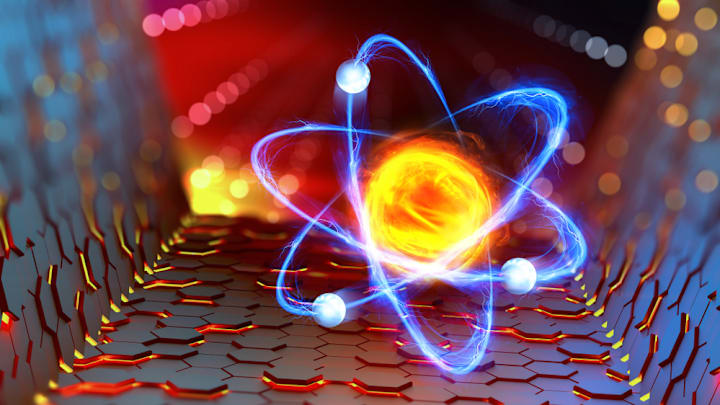
But in the early 20th century, a team led by Ernest Rutherford found that radioactive decay could successfully change one substance into another. By 1917, his team managed to use nuclear bombardment to transform nitrogen into oxygen. This was the first time artificial transmutation—or successfully changing one element into another—had been achieved. In the process, the team officially identified the existence of the proton and found that changing the number of protons in a substance was what transformed it into another substance entirely.
Over the next century, many different efforts to change disparate elements into gold would be made. In 1924, a Japanese scientist named Hantaro Nagaoka claimed that he was able to synthesize mercury into gold by bombarding the former metal with neutrons. Further experimentation found that nuclear reactors could successfully remove protons from mercury atoms, resulting in gold.
Then, in 1980, an American scientist named Glenn Seaborg led a project that successfully transmuted bismuth into gold using a particle accelerator, which removed enough protons and neutrons from the substance that a small amount of gold resulted.
Thanks to these experiments, we know that alchemy in the metals-into-gold sense is technically possible. Still, the process remains a bit impractical, as amount of energy required and the small amount of gold that results makes these experiments prohibitively expensive and difficult to replicate. Simply mining the Earth for gold is still much cheaper.
Is Alchemy the Key to Transitioning Away From Fossil Fuels?

Despite the cost, scientists have continued to experiment with nuclear-powered alchemy over the years. In 2025, the Large Hadron Collider, which is the world’s most powerful particle accelerator, successfully turned lead into gold.
That same year, a San Francisco-based startup named Marathon claimed that it planned on using nuclear fusion to create gold—not as a money-making venture in itself, but as a way to pay for the steep cost of nuclear fusion.
As a power source, nuclear fusion has been identified as one potential way to help transition the planet away from climate change-inducing fossil fuels. Nuclear fusion produces less waste and is less risky than nuclear fission, the process that led to the Chernobyl and Fukushima meltdowns, among other disasters. Yet it requires extremely high temperatures and is currently prohibitively expensive and potentially risky.
But manufacturing massive amounts of gold could be a way to offset these costs, at least according to the startup founders. Still, this vision would require massive investments and developments in the world of nuclear fusion. Fusion companies have indeed raised billions of dollars in recent years, but switching to nuclear fusion on a large scale remains a far-off and highly controversial possibility.
Alchemy has always been a tantalizing dream, of course, and one that ambitious scientists have long prematurely claimed to have cracked. But it would indeed be strangely poetic if alchemy wound up being the key not to generating massive wealth on its own, but rather to transitioning the world away from fossil fuels and prolonging the existence of the human race on Earth.