%20%20--%3E%0A%3Csvg%20version%3D%221.1%22%20id%3D%22Layer_1%22%20xmlns%3D%22http%3A%2F%2Fwww.w3.org%2F2000%2Fsvg%22%20xmlns%3Axlink%3D%22http%3A%2F%2Fwww.w3.org%2F1999%2Fxlink%22%20x%3D%220px%22%20y%3D%220px%22%0A%09%20viewBox%3D%220%200%20684.6%2068.1%22%20style%3D%22enable-background%3Anew%200%200%20684.6%2068.1%3B%22%20xml%3Aspace%3D%22preserve%22%3E%0A%3Cg%3E%0A%09%3Cpath%20d%3D%22M444.1%2C29.3h-17.4v14.5h17.4V29.3z%20M36.4%2C68.1l29.3-50.8V0H50.4L32.9%2C36.8L15.5%2C0H0v68.1h16.7V45.8l12.4%2C22.3H36.4z%0A%09%09%20M49.1%2C68.1h16.6V23.4L49.1%2C52.1V68.1z%20M76.6%2C68.1h45V53.8H93.3V41.6h21V27.1h-21V14.8h28.3V0.1h-45V68.1z%20M175.6%2C68.1h17.3v-68%0A%09%09h-16.5v40.3L150%2C0.1h-17.6v68h16.7V27.7L175.6%2C68.1z%20M235.8%2C14.8h15.4V0.1h-47.4v14.7H219v53.2h16.8V14.8z%20M290.3%2C45.9h-17.1%0A%09%09l7.5-15.6h2L290.3%2C45.9z%20M298.7%2C68.1h18l-32.2-68h-5.7l-32%2C68h18l3.3-7.1h27.1L298.7%2C68.1z%20M325.2%2C68.1h46.2V53.8h-29.6V0.1h-16.7%0A%09%09V68.1z%20M423.7%2C14.8h27.2V0.1H407v68h16.7V14.8z%20M462%2C68.1h46.2V53.8h-29.6V0.1H462V68.1z%20M564.8%2C34.1c0%2C10.7-7.2%2C19.2-18.5%2C19.2%0A%09%09c-11.4%2C0-18.5-8.5-18.5-19.2s7.1-19.2%2C18.5-19.2C557.6%2C14.9%2C564.8%2C23.4%2C564.8%2C34.1%20M580.6%2C34.1c0-19-14.2-34-34.3-34%0A%09%09c-20.2%2C0-34.3%2C15-34.3%2C34c0%2C19%2C14.1%2C34%2C34.3%2C34C566.4%2C68.1%2C580.6%2C53.1%2C580.6%2C34.1%20M604.8%2C20.5c0-4.1%2C3.3-6.2%2C6.7-6.2%0A%09%09c4.4%2C0%2C6.6%2C3%2C6.6%2C6.6h14.7C631.8%2C9.1%2C625.1%2C0.1%2C611%2C0.1c-12%2C0-21.7%2C9.3-21.7%2C20.6c0%2C10.9%2C5.9%2C15.9%2C16.7%2C19.8%0A%09%09c5.2%2C1.8%2C11.5%2C3.2%2C11.5%2C8c0%2C3.3-2.4%2C5.5-6.4%2C5.5c-3.6%2C0-6.6-3-6.6-6.7h-15.2c0%2C11.5%2C7.9%2C20.8%2C21.8%2C20.8c12%2C0%2C21.6-9.3%2C21.6-20.6%0A%09%09c0-10-5.3-16.4-16.7-19.8C610.6%2C26.1%2C604.8%2C25.3%2C604.8%2C20.5%20M670%2C20.9h14.7C683.8%2C9.1%2C677.1%2C0.1%2C663%2C0.1c-12%2C0-21.7%2C9.3-21.7%2C20.6%0A%09%09c0%2C10.9%2C5.9%2C15.9%2C16.7%2C19.8c5.2%2C1.8%2C11.5%2C3.2%2C11.5%2C8c0%2C3.3-2.4%2C5.5-6.4%2C5.5c-3.6%2C0-6.6-3-6.6-6.7h-15.2c0%2C11.5%2C7.9%2C20.8%2C21.8%2C20.8%0A%09%09c12%2C0%2C21.6-9.3%2C21.6-20.6c0-10-5.3-16.4-16.7-19.8c-5.4-1.6-11.3-2.4-11.3-7.2c0-4.1%2C3.3-6.2%2C6.7-6.2C667.7%2C14.4%2C670%2C17.3%2C670%2C20.9%0A%09%09%22%2F%3E%0A%3C%2Fg%3E%0A%3C%2Fsvg%3E%0A)

To compete at the Olympics, athletes must adhere to a wide range of rules. Some of these guidelines, about matters of safety and fairness, are common sense, while others leave you scratching your head in confusion.
Some rules are Olympic-wide, while others pertain to specific events and disciplines. For example, you wouldn't ask an Olympic skier to wear a skirt on the slopes, but it is a strict rule that female figure skaters must follow. You also wouldn't expect someone competing in a Luge Doubles event to carry a handkerchief with them as they shoot down the ice track, but it is required for wrestlers.
The International Sports Federations (IFs) are responsible for creating the rules that keep the Olympic Games running smoothly. These codes are enforced to promote order and precaution, but a few are extremely obscure.
Let's take a look at 10 Olympic rules so unusual they sound fake.
- WATER POLO PEDICURES
- KARATE CLEANLINESS
- EQUESTRIAN'S SILENT SADDLES
- GYMNASTIC EXPRESSION
- FIGURE SKATING FASHION
- BMX ETIQUETTE
- BASKETBALL HOOP HANG
- FENCING FORFEIT
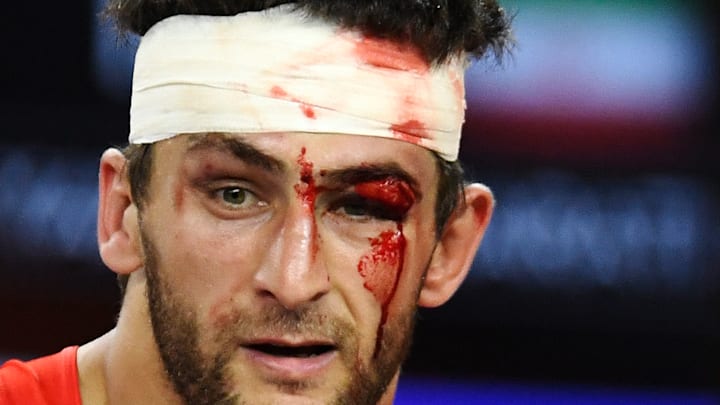
- WRESTLING BLOOD RAGS
- ATHLETES AND ALCOHOL
WATER POLO PEDICURES

You wouldn't think a pedicure would play a role in the Olympic Games, but it does. Water Polo players are required by official rules to clip their toenails before competing. This rule helps prevent underwater injuries, such as scratches, during gameplay.
KARATE CLEANLINESS

There are no bad hair days in women's karate! Under IFS guidelines, competitors must wash their hair before a bout. If judges determine that an athlete’s hair isn't sufficiently clean, they can be penalized. This rule was introduced to minimize the risk of infection that can arise from close contact between competitors.
EQUESTRIAN'S SILENT SADDLES

Equestrians are, under no circumstances, allowed to speak during their Olympic routine. Even the slightest noise can be grounds for penalization. This was the case for a competitor at the 1932 Olympics, who was believed to have made a clicking sound with his tongue. Although he insisted the noise came from his saddle, the judges still ranked him last.
GYMNASTIC EXPRESSION

Olympic gymnasts compete in colorful outfits and shimmering makeup, but the rulebook draws the line at nail polish that attracts attention. Competitors must remove bright nail polish before their events to avoid being penalized. While colorful polish is banned, neutral and clear polish is permitted.
FIGURE SKATING FASHION

Male and female figure skaters follow different rules on routine attire. Male figure skaters are required to wear pants, and female skaters wear skirts. If a female figure skater wears pants, she risks penalization.
Figure skaters also have to follow technical rules regarding their routines. Some moves, like backflips, are banned from the Olympics. Figure skaters are judged on their jumps, but landing with two feet, as in a backflip, doesn't count as a jump.
In 1998, Surya Bonaly did a backflip and stuck the landing! She didn't win gold that year, but she did become the only Olympic figure skater in history to land a backflip on one blade.
BMX ETIQUETTE

Even BMX riders, racing at top speeds, have to follow the rules. Aside from track guidelines, these athletes cannot compete in a BMX event unless their shirts are tucked in. Disregarding this rule could result in penalization and the loss of a gold medal opportunity.
BASKETBALL HOOP HANG

Olympic basketball players can dunk! In fact, it's encouraged. While there are no rules that disqualify dunking, basketball players who hang on the rim after the ball goes through the hoop are penalized with a technical foul. Hanging on the rim also qualifies as an non-unsportsmanlike techincal foul in the NBA.
FENCING FORFEIT

Fencing regulations require athletes to stay on the field when making a challenge or appeal, no matter how long it takes. If they leave the field, they automatically forfeit. Fencer Shin A-lam of South Korea remained on the field for almost an hour in 2012 as a decision was being made.
WRESTLING BLOOD RAGS

Wrestlers cannot compete unless they are carrying a handkerchief. Competitors are required to carry a handkerchief, not because judges are concerned about runny noses, but to wipe up blood during a match. This handkerchief has been affectionately nicknamed the “blood rag.”
Fans may not be aware that these precise rules exist in such intense competitions, but this is just one example. Speaking of cleanliness, Olympic boxers are instructed to remove all of their facial hair before an Olympic match.
ATHLETES AND ALCOHOL

There is no one-size-fits-all rule for alcohol at the Olympic Games. According to the International Olympic Committee, alcohol is permitted, and athletes are allowed to bring it onto the premises. However, regulations regarding alcohol vary by country; some nations enforce stricter rules for their teams than others. For example, Team USA is prohibited from drinking in the Olympic Village but may consume alcohol outside of it.