%20%20--%3E%0A%3Csvg%20version%3D%221.1%22%20id%3D%22Layer_1%22%20xmlns%3D%22http%3A%2F%2Fwww.w3.org%2F2000%2Fsvg%22%20xmlns%3Axlink%3D%22http%3A%2F%2Fwww.w3.org%2F1999%2Fxlink%22%20x%3D%220px%22%20y%3D%220px%22%0A%09%20viewBox%3D%220%200%20684.6%2068.1%22%20style%3D%22enable-background%3Anew%200%200%20684.6%2068.1%3B%22%20xml%3Aspace%3D%22preserve%22%3E%0A%3Cg%3E%0A%09%3Cpath%20d%3D%22M444.1%2C29.3h-17.4v14.5h17.4V29.3z%20M36.4%2C68.1l29.3-50.8V0H50.4L32.9%2C36.8L15.5%2C0H0v68.1h16.7V45.8l12.4%2C22.3H36.4z%0A%09%09%20M49.1%2C68.1h16.6V23.4L49.1%2C52.1V68.1z%20M76.6%2C68.1h45V53.8H93.3V41.6h21V27.1h-21V14.8h28.3V0.1h-45V68.1z%20M175.6%2C68.1h17.3v-68%0A%09%09h-16.5v40.3L150%2C0.1h-17.6v68h16.7V27.7L175.6%2C68.1z%20M235.8%2C14.8h15.4V0.1h-47.4v14.7H219v53.2h16.8V14.8z%20M290.3%2C45.9h-17.1%0A%09%09l7.5-15.6h2L290.3%2C45.9z%20M298.7%2C68.1h18l-32.2-68h-5.7l-32%2C68h18l3.3-7.1h27.1L298.7%2C68.1z%20M325.2%2C68.1h46.2V53.8h-29.6V0.1h-16.7%0A%09%09V68.1z%20M423.7%2C14.8h27.2V0.1H407v68h16.7V14.8z%20M462%2C68.1h46.2V53.8h-29.6V0.1H462V68.1z%20M564.8%2C34.1c0%2C10.7-7.2%2C19.2-18.5%2C19.2%0A%09%09c-11.4%2C0-18.5-8.5-18.5-19.2s7.1-19.2%2C18.5-19.2C557.6%2C14.9%2C564.8%2C23.4%2C564.8%2C34.1%20M580.6%2C34.1c0-19-14.2-34-34.3-34%0A%09%09c-20.2%2C0-34.3%2C15-34.3%2C34c0%2C19%2C14.1%2C34%2C34.3%2C34C566.4%2C68.1%2C580.6%2C53.1%2C580.6%2C34.1%20M604.8%2C20.5c0-4.1%2C3.3-6.2%2C6.7-6.2%0A%09%09c4.4%2C0%2C6.6%2C3%2C6.6%2C6.6h14.7C631.8%2C9.1%2C625.1%2C0.1%2C611%2C0.1c-12%2C0-21.7%2C9.3-21.7%2C20.6c0%2C10.9%2C5.9%2C15.9%2C16.7%2C19.8%0A%09%09c5.2%2C1.8%2C11.5%2C3.2%2C11.5%2C8c0%2C3.3-2.4%2C5.5-6.4%2C5.5c-3.6%2C0-6.6-3-6.6-6.7h-15.2c0%2C11.5%2C7.9%2C20.8%2C21.8%2C20.8c12%2C0%2C21.6-9.3%2C21.6-20.6%0A%09%09c0-10-5.3-16.4-16.7-19.8C610.6%2C26.1%2C604.8%2C25.3%2C604.8%2C20.5%20M670%2C20.9h14.7C683.8%2C9.1%2C677.1%2C0.1%2C663%2C0.1c-12%2C0-21.7%2C9.3-21.7%2C20.6%0A%09%09c0%2C10.9%2C5.9%2C15.9%2C16.7%2C19.8c5.2%2C1.8%2C11.5%2C3.2%2C11.5%2C8c0%2C3.3-2.4%2C5.5-6.4%2C5.5c-3.6%2C0-6.6-3-6.6-6.7h-15.2c0%2C11.5%2C7.9%2C20.8%2C21.8%2C20.8%0A%09%09c12%2C0%2C21.6-9.3%2C21.6-20.6c0-10-5.3-16.4-16.7-19.8c-5.4-1.6-11.3-2.4-11.3-7.2c0-4.1%2C3.3-6.2%2C6.7-6.2C667.7%2C14.4%2C670%2C17.3%2C670%2C20.9%0A%09%09%22%2F%3E%0A%3C%2Fg%3E%0A%3C%2Fsvg%3E%0A)

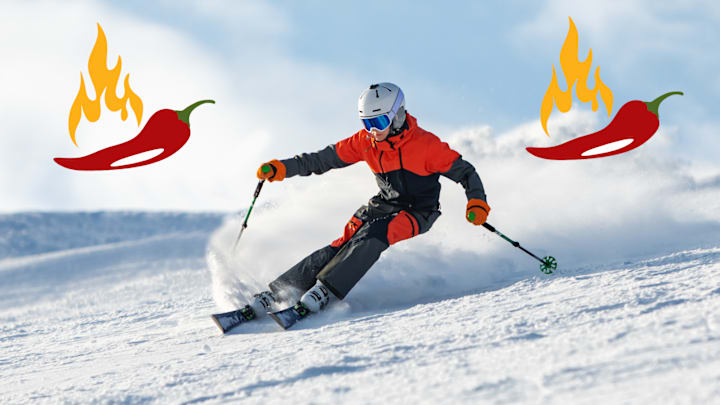
If you’re a winter sports fan, or an avid skier yourself, you might well be aware that downhill skiers have a bizarre habit for consuming hot sauce—and oddly, nor are they alone.
Consuming hot sauce is a habit that skiers and snowboarders now share with devotees of several other adrenaline-pumping and physically demanding sports and pursuits, including mountain bikers and even power lifters. But where has the curious habit come from?
It Helps in Preparation
Perhaps the simplest explanation for why hot sauce has become such a hot topic among skiers is that consuming spicy foods can give us a similar thrill-seeking release of adrenaline and other hormones as is experienced during high-intensity sports, just like skiing and mountain biking.
That’s not to say that skiers eat—and even drink—hot sauce just to get a cheap thrill, though. This rush of hormones produces a natural fight-or-flight-like response in our bodies, which heightens our senses and readies our bodies for action by raising our heart rate and oxygen levels, thereby increasing physical endurance, and making us better prepared to perform in stressful, threatening, or pressurized circumstances.
And in downhill skiing—in which a skier is often forced to make a fast-moving string of spur-of-the-moment decisions in response to their surroundings—it’s easy to understand why such a mentally and physically heightened state of readiness could prove hugely beneficial.
General Benefits of Hot Sauce
There are other positives to this fondness for hot sauce, too, however, besides just our own body chemistry. Spicy sauces are naturally thermogenic, for instance, meaning that they have the ability to raise our body temperature. Again, this would have an obviously positive effect in the icy environment of a snow-covered mountainside, and act as a cheap and simple source of internal heat, to see off the worst of the wintry conditions.
Hot sauce also contains capsaicin (the chemical that naturally gives chili peppers their heat), which has long been known to have pain-relieving properties and is even used in healing salves and ointments to ease aching joints and muscles. Consuming hot sauce might therefore also help to ease any bumps, knocks, or injuries endured while skiing, or ease any post-ski inflammation in our knees and other joints.

But there is also a more practical explanation here, too. Ski resorts are understandably often located in high-altitude locations—but altitude has long been known to have a negative effect on our sense of taste, with the drier atmosphere and lowered air pressure conspiring to reduce the sensitivity of our taste buds by as much as a third (which is also why food tends to taste a little muted on planes).
Dowsing your après-ski snack with hot sauce, ultimately, is a simple way of enhancing flavors in an environment that is not naturally conducive to consuming flavorful food.