%20%20--%3E%0A%3Csvg%20version%3D%221.1%22%20id%3D%22Layer_1%22%20xmlns%3D%22http%3A%2F%2Fwww.w3.org%2F2000%2Fsvg%22%20xmlns%3Axlink%3D%22http%3A%2F%2Fwww.w3.org%2F1999%2Fxlink%22%20x%3D%220px%22%20y%3D%220px%22%0A%09%20viewBox%3D%220%200%20684.6%2068.1%22%20style%3D%22enable-background%3Anew%200%200%20684.6%2068.1%3B%22%20xml%3Aspace%3D%22preserve%22%3E%0A%3Cg%3E%0A%09%3Cpath%20d%3D%22M444.1%2C29.3h-17.4v14.5h17.4V29.3z%20M36.4%2C68.1l29.3-50.8V0H50.4L32.9%2C36.8L15.5%2C0H0v68.1h16.7V45.8l12.4%2C22.3H36.4z%0A%09%09%20M49.1%2C68.1h16.6V23.4L49.1%2C52.1V68.1z%20M76.6%2C68.1h45V53.8H93.3V41.6h21V27.1h-21V14.8h28.3V0.1h-45V68.1z%20M175.6%2C68.1h17.3v-68%0A%09%09h-16.5v40.3L150%2C0.1h-17.6v68h16.7V27.7L175.6%2C68.1z%20M235.8%2C14.8h15.4V0.1h-47.4v14.7H219v53.2h16.8V14.8z%20M290.3%2C45.9h-17.1%0A%09%09l7.5-15.6h2L290.3%2C45.9z%20M298.7%2C68.1h18l-32.2-68h-5.7l-32%2C68h18l3.3-7.1h27.1L298.7%2C68.1z%20M325.2%2C68.1h46.2V53.8h-29.6V0.1h-16.7%0A%09%09V68.1z%20M423.7%2C14.8h27.2V0.1H407v68h16.7V14.8z%20M462%2C68.1h46.2V53.8h-29.6V0.1H462V68.1z%20M564.8%2C34.1c0%2C10.7-7.2%2C19.2-18.5%2C19.2%0A%09%09c-11.4%2C0-18.5-8.5-18.5-19.2s7.1-19.2%2C18.5-19.2C557.6%2C14.9%2C564.8%2C23.4%2C564.8%2C34.1%20M580.6%2C34.1c0-19-14.2-34-34.3-34%0A%09%09c-20.2%2C0-34.3%2C15-34.3%2C34c0%2C19%2C14.1%2C34%2C34.3%2C34C566.4%2C68.1%2C580.6%2C53.1%2C580.6%2C34.1%20M604.8%2C20.5c0-4.1%2C3.3-6.2%2C6.7-6.2%0A%09%09c4.4%2C0%2C6.6%2C3%2C6.6%2C6.6h14.7C631.8%2C9.1%2C625.1%2C0.1%2C611%2C0.1c-12%2C0-21.7%2C9.3-21.7%2C20.6c0%2C10.9%2C5.9%2C15.9%2C16.7%2C19.8%0A%09%09c5.2%2C1.8%2C11.5%2C3.2%2C11.5%2C8c0%2C3.3-2.4%2C5.5-6.4%2C5.5c-3.6%2C0-6.6-3-6.6-6.7h-15.2c0%2C11.5%2C7.9%2C20.8%2C21.8%2C20.8c12%2C0%2C21.6-9.3%2C21.6-20.6%0A%09%09c0-10-5.3-16.4-16.7-19.8C610.6%2C26.1%2C604.8%2C25.3%2C604.8%2C20.5%20M670%2C20.9h14.7C683.8%2C9.1%2C677.1%2C0.1%2C663%2C0.1c-12%2C0-21.7%2C9.3-21.7%2C20.6%0A%09%09c0%2C10.9%2C5.9%2C15.9%2C16.7%2C19.8c5.2%2C1.8%2C11.5%2C3.2%2C11.5%2C8c0%2C3.3-2.4%2C5.5-6.4%2C5.5c-3.6%2C0-6.6-3-6.6-6.7h-15.2c0%2C11.5%2C7.9%2C20.8%2C21.8%2C20.8%0A%09%09c12%2C0%2C21.6-9.3%2C21.6-20.6c0-10-5.3-16.4-16.7-19.8c-5.4-1.6-11.3-2.4-11.3-7.2c0-4.1%2C3.3-6.2%2C6.7-6.2C667.7%2C14.4%2C670%2C17.3%2C670%2C20.9%0A%09%09%22%2F%3E%0A%3C%2Fg%3E%0A%3C%2Fsvg%3E%0A)

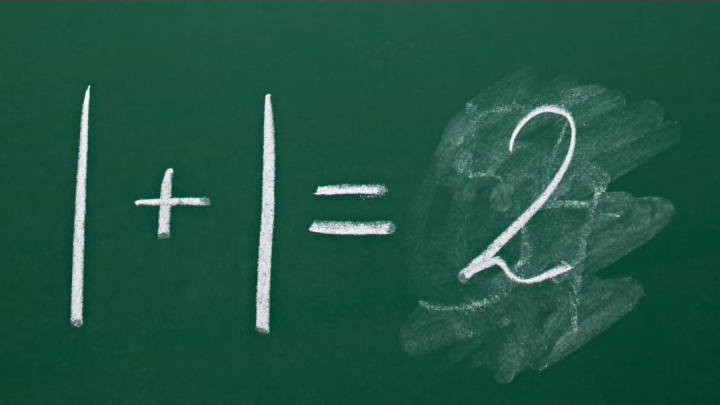
A growing number of mathematicians are skeptical that the equal sign, traditionally used to show exact relationships between sets of objects, holds up to new mathematical models, WIRED reports.
To understand their arguments, it’s important to understand set theory—a theory of mathematics that’s been around since at least the 1870s [PDF]. Take the classic formula 1+1=2. Say you have four pieces of fruit—an apple, an orange, and two bananas—and you put the apple and the orange on one side of a table and the two bananas on the other. In set theory, that’s an equation: One piece of fruit plus one piece of fruit on the left side of the table equals two pieces of fruit on the right side of the table. The two sets, or collections of objects, are the same size, so they’re equal.
But here’s where it gets complicated. What if you put an apple and a banana on the left side of the table and an orange and a banana on the other side? That’s clearly different from the first scenario, but set theory writes it as the same thing: 1+1=2. What if you switched the order of the first set of objects, so instead of having an apple and an orange, you had an orange and an apple? What if you had only bananas? There are potentially infinite scenarios, but set theory is limited to expressing them all in only one way.
“The problem is, there are many ways to pair up,” Joseph Campbell, a mathematics professor at Duke University, told Quanta Magazine. “We’ve forgotten them when we say ‘equals.’”
A better alternative is the idea of equivalence, some mathematicians say [PDF]. Equality is a strict relationship, but equivalence comes in different forms. The two-bananas-on-each-side-of-the-table scenario is considered strong equivalence—all of the elements in both sets are the same. The scenario where you have an apple and an orange on one side and two bananas on the other? That’s a slightly weaker form of equivalence.
A new wave of mathematicians is turning to the idea of category theory [PDF], which is based in understanding the relationships between different objects. Category theory is better than set theory at dealing with equivalence, and it’s also more universally applicable to different branches of mathematics.
But a switch to category theory won’t come overnight, according to Quanta. Interpreting equations using equivalence rather than equality is much more complicated, and it requires relearning and rewriting everything about mathematics—even down to algebra and arithmetic.
“This complicates matters enormously, in a way that makes it seem impossible to work with this new version of mathematics we’re imagining,” mathematician David Ayala told Quanta.
Several mathematicians are at the forefront of category theory research, but the field is still relatively young. So while the equal sign isn’t passé just yet, it’s likely that an oncoming mathematical revolution will change its meaning.
[h/t Wired]