%20%20--%3E%0A%3Csvg%20version%3D%221.1%22%20id%3D%22Layer_1%22%20xmlns%3D%22http%3A%2F%2Fwww.w3.org%2F2000%2Fsvg%22%20xmlns%3Axlink%3D%22http%3A%2F%2Fwww.w3.org%2F1999%2Fxlink%22%20x%3D%220px%22%20y%3D%220px%22%0A%09%20viewBox%3D%220%200%20684.6%2068.1%22%20style%3D%22enable-background%3Anew%200%200%20684.6%2068.1%3B%22%20xml%3Aspace%3D%22preserve%22%3E%0A%3Cg%3E%0A%09%3Cpath%20d%3D%22M444.1%2C29.3h-17.4v14.5h17.4V29.3z%20M36.4%2C68.1l29.3-50.8V0H50.4L32.9%2C36.8L15.5%2C0H0v68.1h16.7V45.8l12.4%2C22.3H36.4z%0A%09%09%20M49.1%2C68.1h16.6V23.4L49.1%2C52.1V68.1z%20M76.6%2C68.1h45V53.8H93.3V41.6h21V27.1h-21V14.8h28.3V0.1h-45V68.1z%20M175.6%2C68.1h17.3v-68%0A%09%09h-16.5v40.3L150%2C0.1h-17.6v68h16.7V27.7L175.6%2C68.1z%20M235.8%2C14.8h15.4V0.1h-47.4v14.7H219v53.2h16.8V14.8z%20M290.3%2C45.9h-17.1%0A%09%09l7.5-15.6h2L290.3%2C45.9z%20M298.7%2C68.1h18l-32.2-68h-5.7l-32%2C68h18l3.3-7.1h27.1L298.7%2C68.1z%20M325.2%2C68.1h46.2V53.8h-29.6V0.1h-16.7%0A%09%09V68.1z%20M423.7%2C14.8h27.2V0.1H407v68h16.7V14.8z%20M462%2C68.1h46.2V53.8h-29.6V0.1H462V68.1z%20M564.8%2C34.1c0%2C10.7-7.2%2C19.2-18.5%2C19.2%0A%09%09c-11.4%2C0-18.5-8.5-18.5-19.2s7.1-19.2%2C18.5-19.2C557.6%2C14.9%2C564.8%2C23.4%2C564.8%2C34.1%20M580.6%2C34.1c0-19-14.2-34-34.3-34%0A%09%09c-20.2%2C0-34.3%2C15-34.3%2C34c0%2C19%2C14.1%2C34%2C34.3%2C34C566.4%2C68.1%2C580.6%2C53.1%2C580.6%2C34.1%20M604.8%2C20.5c0-4.1%2C3.3-6.2%2C6.7-6.2%0A%09%09c4.4%2C0%2C6.6%2C3%2C6.6%2C6.6h14.7C631.8%2C9.1%2C625.1%2C0.1%2C611%2C0.1c-12%2C0-21.7%2C9.3-21.7%2C20.6c0%2C10.9%2C5.9%2C15.9%2C16.7%2C19.8%0A%09%09c5.2%2C1.8%2C11.5%2C3.2%2C11.5%2C8c0%2C3.3-2.4%2C5.5-6.4%2C5.5c-3.6%2C0-6.6-3-6.6-6.7h-15.2c0%2C11.5%2C7.9%2C20.8%2C21.8%2C20.8c12%2C0%2C21.6-9.3%2C21.6-20.6%0A%09%09c0-10-5.3-16.4-16.7-19.8C610.6%2C26.1%2C604.8%2C25.3%2C604.8%2C20.5%20M670%2C20.9h14.7C683.8%2C9.1%2C677.1%2C0.1%2C663%2C0.1c-12%2C0-21.7%2C9.3-21.7%2C20.6%0A%09%09c0%2C10.9%2C5.9%2C15.9%2C16.7%2C19.8c5.2%2C1.8%2C11.5%2C3.2%2C11.5%2C8c0%2C3.3-2.4%2C5.5-6.4%2C5.5c-3.6%2C0-6.6-3-6.6-6.7h-15.2c0%2C11.5%2C7.9%2C20.8%2C21.8%2C20.8%0A%09%09c12%2C0%2C21.6-9.3%2C21.6-20.6c0-10-5.3-16.4-16.7-19.8c-5.4-1.6-11.3-2.4-11.3-7.2c0-4.1%2C3.3-6.2%2C6.7-6.2C667.7%2C14.4%2C670%2C17.3%2C670%2C20.9%0A%09%09%22%2F%3E%0A%3C%2Fg%3E%0A%3C%2Fsvg%3E%0A)

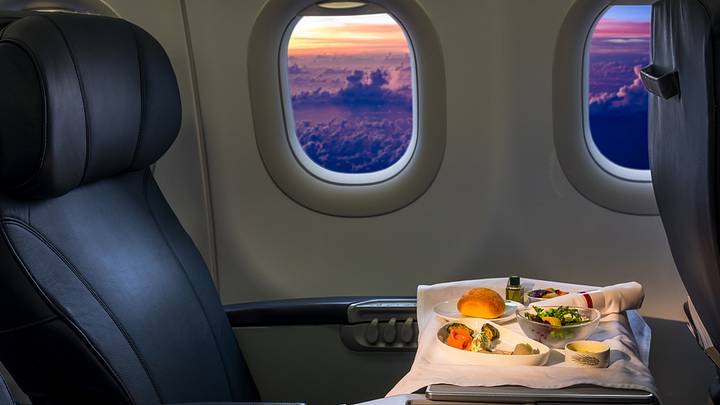
If you’re a frequent flyer, you might have noticed one unusual thing about spending time in the sky: your usual choice of travel snack or mid-flight meal might not taste quite as nice as it does when you’re back down on solid ground.
The fact that airline food isn’t the most appealing food in the world is a longstanding running joke, of course, but that’s not the only reason why some of those airplane freebies might not be up to par. Even sealed packets of your favorite brand of potato chips, peanuts, or cookies might not taste as you might expect them to as soon as you’re on board an airplane, suggesting that there’s something else going on besides the quality of the cooking. So why does food taste so different on planes?
The Science of Taste

To understand what’s happening here, we need to understand a little about how our sense of taste works. Taste, of course, is governed by the thousands of taste buds that cover the bumpy surfaces of our tongues.
When you put something in your mouth, a network of dozens of microscopic receptor cells inside each taste bud springs into life, and begins to relay all the information it detects relating to taste up through the nerves of the face and head and into our brains. There, this information is decoded and repackaged as the sensory experience of a particular flavor.
As odd as it might sound, though, taste isn’t wholly governed by what’s happening on our tongues. The full experience of taste incorporates information from several of our other senses too, including sight, touch, and smell; smell alone, in fact, has been estimated to account for as much as 80% of the overall experience of tasting something.
When our other senses are impaired, therefore, our sense of taste can be affected and impaired too—which is why things might taste a little off when you have a blocked nose.
How Pressure and Dryness Affect Taste on Planes

In essence, interference from other senses is precisely what is happening on board a plane as well. The air pressure and humidity in an airplane cabin begin to affect your senses as soon as the plane takes off; incredibly, the air on a plane at a high altitude can be drier than a desert, while the air pressure at a plane’s cruising altitude can be equivalent to that of being on a mountainside 8,000 feet above sea level.
The pressure can lower your blood oxygen levels, while the excessively dry air can dry out your nasal passages—both of which directly reduce the efficiency and sensitivity of your sense of smell, which in turn greatly reduces your ability to taste.
Other Reasons Why Food Might Taste Weird at 30,000 Feet

Amazingly, there is also growing research to suggest that background noise and auditory interference can affect flavor perception, too. So not only is your sense of taste being dulled by the atmosphere on board the plane—the droning of the engines, blowing of the air conditioner, and the constant chatter of your fellow passengers can all work to lower your ability to taste things. Altogether, this airborne assault on your senses can work to decrease your sense of taste by as much as 70%.
It’s worth noting, though, that not all tastes are affected equally. Acidic flavors, for instance, appear to be largely unaffected by air travel, while sweetness is reportedly reduced by only around 15-20%.
Salty flavors, though, can see their intensity drop by as much as a third as soon as you’re in the air—so that packet of pretzels or salted Pringles might well be worth keeping sealed until after you’ve landed.