%20%20--%3E%0A%3Csvg%20version%3D%221.1%22%20id%3D%22Layer_1%22%20xmlns%3D%22http%3A%2F%2Fwww.w3.org%2F2000%2Fsvg%22%20xmlns%3Axlink%3D%22http%3A%2F%2Fwww.w3.org%2F1999%2Fxlink%22%20x%3D%220px%22%20y%3D%220px%22%0A%09%20viewBox%3D%220%200%20684.6%2068.1%22%20style%3D%22enable-background%3Anew%200%200%20684.6%2068.1%3B%22%20xml%3Aspace%3D%22preserve%22%3E%0A%3Cg%3E%0A%09%3Cpath%20d%3D%22M444.1%2C29.3h-17.4v14.5h17.4V29.3z%20M36.4%2C68.1l29.3-50.8V0H50.4L32.9%2C36.8L15.5%2C0H0v68.1h16.7V45.8l12.4%2C22.3H36.4z%0A%09%09%20M49.1%2C68.1h16.6V23.4L49.1%2C52.1V68.1z%20M76.6%2C68.1h45V53.8H93.3V41.6h21V27.1h-21V14.8h28.3V0.1h-45V68.1z%20M175.6%2C68.1h17.3v-68%0A%09%09h-16.5v40.3L150%2C0.1h-17.6v68h16.7V27.7L175.6%2C68.1z%20M235.8%2C14.8h15.4V0.1h-47.4v14.7H219v53.2h16.8V14.8z%20M290.3%2C45.9h-17.1%0A%09%09l7.5-15.6h2L290.3%2C45.9z%20M298.7%2C68.1h18l-32.2-68h-5.7l-32%2C68h18l3.3-7.1h27.1L298.7%2C68.1z%20M325.2%2C68.1h46.2V53.8h-29.6V0.1h-16.7%0A%09%09V68.1z%20M423.7%2C14.8h27.2V0.1H407v68h16.7V14.8z%20M462%2C68.1h46.2V53.8h-29.6V0.1H462V68.1z%20M564.8%2C34.1c0%2C10.7-7.2%2C19.2-18.5%2C19.2%0A%09%09c-11.4%2C0-18.5-8.5-18.5-19.2s7.1-19.2%2C18.5-19.2C557.6%2C14.9%2C564.8%2C23.4%2C564.8%2C34.1%20M580.6%2C34.1c0-19-14.2-34-34.3-34%0A%09%09c-20.2%2C0-34.3%2C15-34.3%2C34c0%2C19%2C14.1%2C34%2C34.3%2C34C566.4%2C68.1%2C580.6%2C53.1%2C580.6%2C34.1%20M604.8%2C20.5c0-4.1%2C3.3-6.2%2C6.7-6.2%0A%09%09c4.4%2C0%2C6.6%2C3%2C6.6%2C6.6h14.7C631.8%2C9.1%2C625.1%2C0.1%2C611%2C0.1c-12%2C0-21.7%2C9.3-21.7%2C20.6c0%2C10.9%2C5.9%2C15.9%2C16.7%2C19.8%0A%09%09c5.2%2C1.8%2C11.5%2C3.2%2C11.5%2C8c0%2C3.3-2.4%2C5.5-6.4%2C5.5c-3.6%2C0-6.6-3-6.6-6.7h-15.2c0%2C11.5%2C7.9%2C20.8%2C21.8%2C20.8c12%2C0%2C21.6-9.3%2C21.6-20.6%0A%09%09c0-10-5.3-16.4-16.7-19.8C610.6%2C26.1%2C604.8%2C25.3%2C604.8%2C20.5%20M670%2C20.9h14.7C683.8%2C9.1%2C677.1%2C0.1%2C663%2C0.1c-12%2C0-21.7%2C9.3-21.7%2C20.6%0A%09%09c0%2C10.9%2C5.9%2C15.9%2C16.7%2C19.8c5.2%2C1.8%2C11.5%2C3.2%2C11.5%2C8c0%2C3.3-2.4%2C5.5-6.4%2C5.5c-3.6%2C0-6.6-3-6.6-6.7h-15.2c0%2C11.5%2C7.9%2C20.8%2C21.8%2C20.8%0A%09%09c12%2C0%2C21.6-9.3%2C21.6-20.6c0-10-5.3-16.4-16.7-19.8c-5.4-1.6-11.3-2.4-11.3-7.2c0-4.1%2C3.3-6.2%2C6.7-6.2C667.7%2C14.4%2C670%2C17.3%2C670%2C20.9%0A%09%09%22%2F%3E%0A%3C%2Fg%3E%0A%3C%2Fsvg%3E%0A)

In the episode of Charmed, "All Halliwell's Eve" (season 3, episode 4), the Halliwell sisters travel back in time to colonial America and find they cannot use their modern-day witches' powers. A witch of the time teaches them how to tap into the earth's ancient magic during All Hallow's Eve. She explains that the conical black hat helps a witch to channel her magic and center her spiritual energy. This sounds like a very cool, Wicca-type explanation for the witches' hat, but does it have any merit?
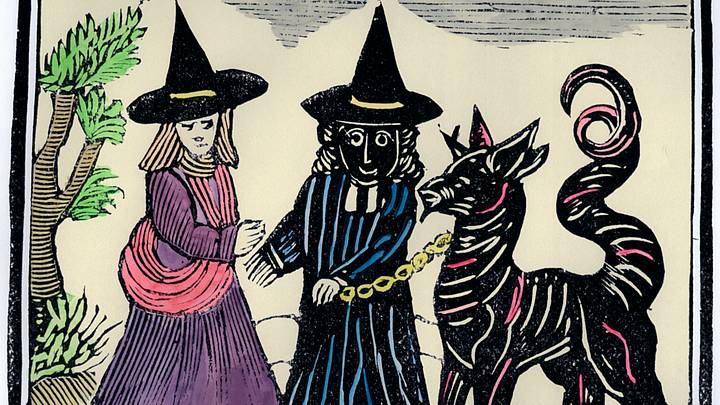
The theory that ancient witches or medicine women wore black, pointy hats to channel their magic falls apart when you realize that accused witches were, by vast majority, baptized Christians. Even those who used herbal medicine were almost always Protestant or Catholic. Then, how did witches become associated with the pointy hat? Because persecutors tended to lump several groups together when accusing people of devil worship.

Pointy Hats Were Common
As mundane as it sounds, cone-shaped hats were just a part of normal fashion in the 1600s. Men and women commonly wore conical hats with wide, flat brims in the colonial period. They were not signs that someone practiced witchcraft. And in a time when you could be accused of being in league with the devil for a freckle, it would have been ill-advised to wear something that shouted, "I'm a witch!" to all your neighbors.
Certain teachings of paganism do talk about a cone of power that helps focus your aura, but the pointy hat was not a symbol of this cone. And like what was said above, most "witches" were not pagans at all, but believing Christians who used knowledge of medicinal herbs in tandem with the Bible and prayer. But there was one group that often wore conical hats and threatened the status quo of the time, making them the perfect scapegoat for accusations of witchcraft: the Quakers.

The Quakers
The Religious Society of Friends, also known as Quakers, was a new religion in the mid-1600s. A lack of understanding about their beliefs led to their persecution by other Christian sects. The biggest issues people took with the Quakers were their ideas about equality. Quakers believed that everyone was equal in God's eyes, no matter their skin color or gender. The fact that they allowed women to preach and proselytize caused great scandal among the staunch patriarchal society.
Quaker women wore their conical hats often, and when they went out preaching, people began to associate the hat with women who didn't know their place. From there, it was easy for society to decide that these women were actually heretics working for the devil. The pointy hats that had been common could now identify you as a Quaker, and therefore, a devil-worshipping witch.

Religious Persecution
There are a few theories about the witch's hat's origins that also relate to religious persecution. In Europe, Jews were forced by the pope to wear a conical hat to identify them as Jewish since 1215 B.C.E. In the 1600s, Jews were allowed to live in England after 400 years of banishment, so their "Judenhuts," or identifying hats, began to be seen around the same time that the Quaker hats were popping up.
Some have also linked the pointed hat that the Spanish Inquisition made its prisoners wear to a witch's hat. Those captured by Inquisitors were accused of witchcraft or heresy. But the hat that they were made to wear as punishment looks more like a precursor to the dunce cap. There's no evidence that this hat is related to the witches' hat.

The Wicked Witch of the West
Witches might have been depicted with pointy hats occasionally during the time of witch trials. But it wasn't until the 20th century that the conical hat was cemented into our minds as essential attire for witches. The 1939 film The Wizard of Oz portrayed the Wicked Witch of the West (Margaret Hamilton) with her iconic black hat, green skin, and flying broomstick. She terrified enough children that she redefined what a witch is supposed to look like.
There are some historical reasons to link witches with pointy hats, but the biggest influence on our modern image of a witch shows the power that film has on our culture. Whether the witches' hat was a sign of a different religion to be suspicious of, or it was just a throwaway gift from Glinda to Elphaba in Wicked, it seems that witches and their hats won't be separated anytime soon.