%20%20--%3E%0A%3Csvg%20version%3D%221.1%22%20id%3D%22Layer_1%22%20xmlns%3D%22http%3A%2F%2Fwww.w3.org%2F2000%2Fsvg%22%20xmlns%3Axlink%3D%22http%3A%2F%2Fwww.w3.org%2F1999%2Fxlink%22%20x%3D%220px%22%20y%3D%220px%22%0A%09%20viewBox%3D%220%200%20684.6%2068.1%22%20style%3D%22enable-background%3Anew%200%200%20684.6%2068.1%3B%22%20xml%3Aspace%3D%22preserve%22%3E%0A%3Cg%3E%0A%09%3Cpath%20d%3D%22M444.1%2C29.3h-17.4v14.5h17.4V29.3z%20M36.4%2C68.1l29.3-50.8V0H50.4L32.9%2C36.8L15.5%2C0H0v68.1h16.7V45.8l12.4%2C22.3H36.4z%0A%09%09%20M49.1%2C68.1h16.6V23.4L49.1%2C52.1V68.1z%20M76.6%2C68.1h45V53.8H93.3V41.6h21V27.1h-21V14.8h28.3V0.1h-45V68.1z%20M175.6%2C68.1h17.3v-68%0A%09%09h-16.5v40.3L150%2C0.1h-17.6v68h16.7V27.7L175.6%2C68.1z%20M235.8%2C14.8h15.4V0.1h-47.4v14.7H219v53.2h16.8V14.8z%20M290.3%2C45.9h-17.1%0A%09%09l7.5-15.6h2L290.3%2C45.9z%20M298.7%2C68.1h18l-32.2-68h-5.7l-32%2C68h18l3.3-7.1h27.1L298.7%2C68.1z%20M325.2%2C68.1h46.2V53.8h-29.6V0.1h-16.7%0A%09%09V68.1z%20M423.7%2C14.8h27.2V0.1H407v68h16.7V14.8z%20M462%2C68.1h46.2V53.8h-29.6V0.1H462V68.1z%20M564.8%2C34.1c0%2C10.7-7.2%2C19.2-18.5%2C19.2%0A%09%09c-11.4%2C0-18.5-8.5-18.5-19.2s7.1-19.2%2C18.5-19.2C557.6%2C14.9%2C564.8%2C23.4%2C564.8%2C34.1%20M580.6%2C34.1c0-19-14.2-34-34.3-34%0A%09%09c-20.2%2C0-34.3%2C15-34.3%2C34c0%2C19%2C14.1%2C34%2C34.3%2C34C566.4%2C68.1%2C580.6%2C53.1%2C580.6%2C34.1%20M604.8%2C20.5c0-4.1%2C3.3-6.2%2C6.7-6.2%0A%09%09c4.4%2C0%2C6.6%2C3%2C6.6%2C6.6h14.7C631.8%2C9.1%2C625.1%2C0.1%2C611%2C0.1c-12%2C0-21.7%2C9.3-21.7%2C20.6c0%2C10.9%2C5.9%2C15.9%2C16.7%2C19.8%0A%09%09c5.2%2C1.8%2C11.5%2C3.2%2C11.5%2C8c0%2C3.3-2.4%2C5.5-6.4%2C5.5c-3.6%2C0-6.6-3-6.6-6.7h-15.2c0%2C11.5%2C7.9%2C20.8%2C21.8%2C20.8c12%2C0%2C21.6-9.3%2C21.6-20.6%0A%09%09c0-10-5.3-16.4-16.7-19.8C610.6%2C26.1%2C604.8%2C25.3%2C604.8%2C20.5%20M670%2C20.9h14.7C683.8%2C9.1%2C677.1%2C0.1%2C663%2C0.1c-12%2C0-21.7%2C9.3-21.7%2C20.6%0A%09%09c0%2C10.9%2C5.9%2C15.9%2C16.7%2C19.8c5.2%2C1.8%2C11.5%2C3.2%2C11.5%2C8c0%2C3.3-2.4%2C5.5-6.4%2C5.5c-3.6%2C0-6.6-3-6.6-6.7h-15.2c0%2C11.5%2C7.9%2C20.8%2C21.8%2C20.8%0A%09%09c12%2C0%2C21.6-9.3%2C21.6-20.6c0-10-5.3-16.4-16.7-19.8c-5.4-1.6-11.3-2.4-11.3-7.2c0-4.1%2C3.3-6.2%2C6.7-6.2C667.7%2C14.4%2C670%2C17.3%2C670%2C20.9%0A%09%09%22%2F%3E%0A%3C%2Fg%3E%0A%3C%2Fsvg%3E%0A)

Some historical events are so disturbing and unfathomable that we tend to process them as fiction.
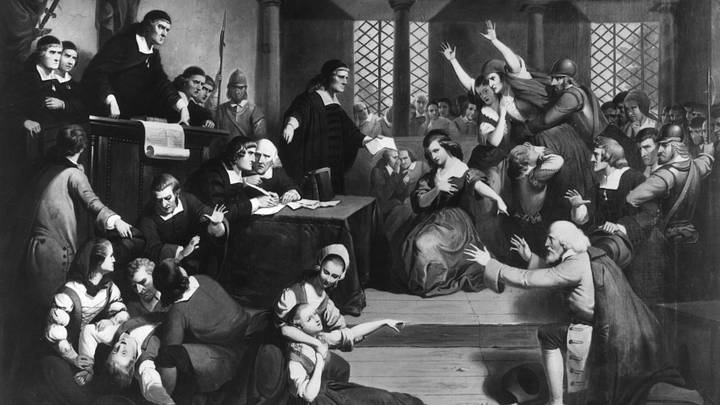
Among the most unsettling are the Salem Witch Trials, which led to the execution of 20 people (15 women and five men) in colonial Massachusetts between 1692 and 1693, with five more dying in jail.
The trials, inaccurately associated with burning young women at the stake, were actually "a series of hearings and prosecutions of people accused of witchcraft," according to Smithsonian Magazine. Of the more than 200 accused, those found guilty were not burned alive but hanged, and in one case, crushed to death for refusing to enter a plea.
We know how many people were put to death as a result of suspected "witchcraft," but what sparked these suspicions?
THE ACCUSERS AND THE ACCUSED

Witchcraft was a felony in the colonies, punishable by death. The panic began with paranoia and the sermons of Samuel Parris, minister of the Salem Village Puritan church, who warned of the "work of the devil." His daughter and niece were the first to be "afflicted," according to the Boston Public Library. Nine-year-old Elizabeth “Betty” Parris and 11-year-old Abigail Williams experienced "unexplained fits," believed to be signs of possession caused by witchcraft.
Notes from Parris's September 11 sermon read: "Yea, & in our Land (in this, & some neighboring Places) how many, what Multitudes, of Witches & Wizards has the Devil instigated with utmost violence to attempt the overthrow of Religion?"
Parris was run out of town and replaced after the trials concluded.
Tituba, the family’s servant, was the first to be accused and also confessed to practicing witchcraft. She went on to accuse several other women in Salem Village. Then came the warrants. The wealthy Putnam family insisted the accused be arrested. Their daughter Ann claimed to be among the afflicted and, years later, became the only one to admit she had lied.
“I desire to lie in the dust, and earnestly beg forgiveness of God, and from all those unto whom I have given just cause of sorrow and offence, whose relations were taken away or accused.”
History records that several teenage girls afflicted with these so-called fits were diagnosed with "bewitchment" by Dr. William Griggs.
The accused, the youngest just four years old, were either publicly hanged, escaped or pardoned, or died in prison due to unrelenting conditions. One, Sarah Goode, gave birth in jail; her infant passed away before she was hanged. In 1710, her husband received 30 pounds in restitution, one of many compensated for the colony's mistake.
George Jacobs Sr., one of the executed, offered a memorable defense during his trial:
"You tax me for a wizard, you may as well tax me for a buzzard. I have done no harm."
Another, Giles Corey, a wealthy Salem farmer, pleaded not guilty but refused to stand trial. As punishment, he was pressed: heavy weights placed on his chest until he either confessed or died. Corey suffered through two days of crushing before passing away; his last words were supposedly, "more weight."
If the afflicted experienced fits believed to be caused by witchcraft, what made someone a suspect?
SUSPECTED OF WITCHCRAFT

Lucile Scott, author of An American Covenant: A Story of Women, Mysticism and the Making of Modern America, told History that "at a certain point, accusations in Salem flew so freely, anyone, no matter their Puritan purity, might find themselves facing the gallows."
Men and women could be accused; all it took was an unhealthy dose of jealousy or resentment. Still, certain people were singled out.
Healers and midwives, given their skills to remedy and assist in childbirth, were commonly suspected of witchcraft. Beggars were also subject to blame. Unmarried women and women who argued with neighbors were used as scapegoats for death and misfortune, according to the Salem Witch Museum, and men who defended their wives also risked execution.
As panic spread and accusations piled up, the alleged "witches" were coerced into confessing.
Eventually, Massachusetts governor Sir William Phips banned the use of "spectral evidence" and dissolved the witchcraft court, ending the trials.
This is only a small part of the hysteria that surrounded the Salem Witch Trials. If you were living in the world of witches and wizards that consumed 1692, would you have survived?