%20%20--%3E%0A%3Csvg%20version%3D%221.1%22%20id%3D%22Layer_1%22%20xmlns%3D%22http%3A%2F%2Fwww.w3.org%2F2000%2Fsvg%22%20xmlns%3Axlink%3D%22http%3A%2F%2Fwww.w3.org%2F1999%2Fxlink%22%20x%3D%220px%22%20y%3D%220px%22%0A%09%20viewBox%3D%220%200%20684.6%2068.1%22%20style%3D%22enable-background%3Anew%200%200%20684.6%2068.1%3B%22%20xml%3Aspace%3D%22preserve%22%3E%0A%3Cg%3E%0A%09%3Cpath%20d%3D%22M444.1%2C29.3h-17.4v14.5h17.4V29.3z%20M36.4%2C68.1l29.3-50.8V0H50.4L32.9%2C36.8L15.5%2C0H0v68.1h16.7V45.8l12.4%2C22.3H36.4z%0A%09%09%20M49.1%2C68.1h16.6V23.4L49.1%2C52.1V68.1z%20M76.6%2C68.1h45V53.8H93.3V41.6h21V27.1h-21V14.8h28.3V0.1h-45V68.1z%20M175.6%2C68.1h17.3v-68%0A%09%09h-16.5v40.3L150%2C0.1h-17.6v68h16.7V27.7L175.6%2C68.1z%20M235.8%2C14.8h15.4V0.1h-47.4v14.7H219v53.2h16.8V14.8z%20M290.3%2C45.9h-17.1%0A%09%09l7.5-15.6h2L290.3%2C45.9z%20M298.7%2C68.1h18l-32.2-68h-5.7l-32%2C68h18l3.3-7.1h27.1L298.7%2C68.1z%20M325.2%2C68.1h46.2V53.8h-29.6V0.1h-16.7%0A%09%09V68.1z%20M423.7%2C14.8h27.2V0.1H407v68h16.7V14.8z%20M462%2C68.1h46.2V53.8h-29.6V0.1H462V68.1z%20M564.8%2C34.1c0%2C10.7-7.2%2C19.2-18.5%2C19.2%0A%09%09c-11.4%2C0-18.5-8.5-18.5-19.2s7.1-19.2%2C18.5-19.2C557.6%2C14.9%2C564.8%2C23.4%2C564.8%2C34.1%20M580.6%2C34.1c0-19-14.2-34-34.3-34%0A%09%09c-20.2%2C0-34.3%2C15-34.3%2C34c0%2C19%2C14.1%2C34%2C34.3%2C34C566.4%2C68.1%2C580.6%2C53.1%2C580.6%2C34.1%20M604.8%2C20.5c0-4.1%2C3.3-6.2%2C6.7-6.2%0A%09%09c4.4%2C0%2C6.6%2C3%2C6.6%2C6.6h14.7C631.8%2C9.1%2C625.1%2C0.1%2C611%2C0.1c-12%2C0-21.7%2C9.3-21.7%2C20.6c0%2C10.9%2C5.9%2C15.9%2C16.7%2C19.8%0A%09%09c5.2%2C1.8%2C11.5%2C3.2%2C11.5%2C8c0%2C3.3-2.4%2C5.5-6.4%2C5.5c-3.6%2C0-6.6-3-6.6-6.7h-15.2c0%2C11.5%2C7.9%2C20.8%2C21.8%2C20.8c12%2C0%2C21.6-9.3%2C21.6-20.6%0A%09%09c0-10-5.3-16.4-16.7-19.8C610.6%2C26.1%2C604.8%2C25.3%2C604.8%2C20.5%20M670%2C20.9h14.7C683.8%2C9.1%2C677.1%2C0.1%2C663%2C0.1c-12%2C0-21.7%2C9.3-21.7%2C20.6%0A%09%09c0%2C10.9%2C5.9%2C15.9%2C16.7%2C19.8c5.2%2C1.8%2C11.5%2C3.2%2C11.5%2C8c0%2C3.3-2.4%2C5.5-6.4%2C5.5c-3.6%2C0-6.6-3-6.6-6.7h-15.2c0%2C11.5%2C7.9%2C20.8%2C21.8%2C20.8%0A%09%09c12%2C0%2C21.6-9.3%2C21.6-20.6c0-10-5.3-16.4-16.7-19.8c-5.4-1.6-11.3-2.4-11.3-7.2c0-4.1%2C3.3-6.2%2C6.7-6.2C667.7%2C14.4%2C670%2C17.3%2C670%2C20.9%0A%09%09%22%2F%3E%0A%3C%2Fg%3E%0A%3C%2Fsvg%3E%0A)

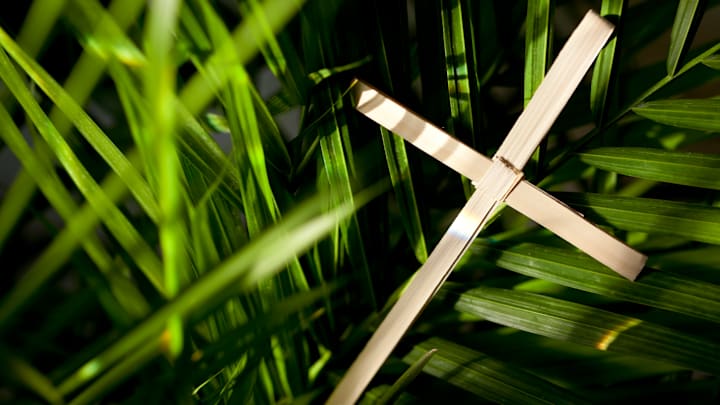
Palm Sunday marks the start of Holy Week, one of the most sacred times in the Christian calendar.
On this day, churches distribute palm branches to worshippers as part of a long-standing tradition. These palms are typically gathered from regions where palm trees grow and are prepared to be blessed and handed out during services. The act of distributing them connects modern believers to an ancient moment remembered in Scripture.
We know how they're sourced and when they are distributed, but what do they symbolize?
HISTORY OF PALM SUNDAY

The origins of Palm Sunday can be traced back to the biblical story of Jesus' entry into Jerusalem, when crowds greeted Him by spreading palm branches along the road before Him. This gesture was not random; it reflected a cultural understanding in earlier times. In ancient traditions, palms were a symbol of celebration. For example, in Greek culture, victorious athletes were associated with palm branches as a sign of triumph.
Palms are also present throughout the Old Testament. They were part of religious celebrations, such as festivals where people rejoiced before God using branches from trees, including palms. Additionally, historical accounts describe the use of palm branches during moments of national victory, when enemies were defeated, and freedom was restored.
By the time Jesus arrived in Jerusalem, palms already carried deep meaning. When the crowd welcomed Him with these branches and shouts of praise, they were acknowledging Him in a way that reflected joy and expectation. This moment became central to Christian remembrance and is reenacted each year on Palm Sunday.
WHAT PALM SUNDAY SYMBOLIZES

Palm Sunday is rich in symbolism that extends beyond a single occurrence. The palm branch itself represents victory, as we've discussed, but in a spiritual sense rather than a military one. In the Gospel, the use of palms points towards Jesus' ultimate triumph, not through power or force, but sacrifice.
The cries of "Hosanna," meaning a plea for salvation, add another layer of meaning. They express both praise and a deep human need for redemption. Today, as believers hold palm branches, they reflect on their personal longing for salvation and the hope that faith provides.
Palm Sunday also serves as a transition. While it begins as a celebration, it leads directly into the events of Holy Week (Good Friday, Holy Saturday, Resurection Sunday), and all the suffering and sacrifice. This contrast highlights the full story of faith, in that you cannot reach victory without both joy and struggle.
PALM SUNDAY TODAY

Palm Sunday is more than a simple tradition involving leaves and processions. It's a meaningful connection to history, faith, and symbolism that has been passed down for centuries. From their ancient roots as signs of victory to their role in Christian worship today, palm branches remind believers of both celebration and sacrifice.
As Holy Week begins, Palm Sunday invites reflection on what it truly means to welcome hope, recognize a need for salvation, and prepare for the promise of renewal on Easter Sunday.