%20%20--%3E%0A%3Csvg%20version%3D%221.1%22%20id%3D%22Layer_1%22%20xmlns%3D%22http%3A%2F%2Fwww.w3.org%2F2000%2Fsvg%22%20xmlns%3Axlink%3D%22http%3A%2F%2Fwww.w3.org%2F1999%2Fxlink%22%20x%3D%220px%22%20y%3D%220px%22%0A%09%20viewBox%3D%220%200%20684.6%2068.1%22%20style%3D%22enable-background%3Anew%200%200%20684.6%2068.1%3B%22%20xml%3Aspace%3D%22preserve%22%3E%0A%3Cg%3E%0A%09%3Cpath%20d%3D%22M444.1%2C29.3h-17.4v14.5h17.4V29.3z%20M36.4%2C68.1l29.3-50.8V0H50.4L32.9%2C36.8L15.5%2C0H0v68.1h16.7V45.8l12.4%2C22.3H36.4z%0A%09%09%20M49.1%2C68.1h16.6V23.4L49.1%2C52.1V68.1z%20M76.6%2C68.1h45V53.8H93.3V41.6h21V27.1h-21V14.8h28.3V0.1h-45V68.1z%20M175.6%2C68.1h17.3v-68%0A%09%09h-16.5v40.3L150%2C0.1h-17.6v68h16.7V27.7L175.6%2C68.1z%20M235.8%2C14.8h15.4V0.1h-47.4v14.7H219v53.2h16.8V14.8z%20M290.3%2C45.9h-17.1%0A%09%09l7.5-15.6h2L290.3%2C45.9z%20M298.7%2C68.1h18l-32.2-68h-5.7l-32%2C68h18l3.3-7.1h27.1L298.7%2C68.1z%20M325.2%2C68.1h46.2V53.8h-29.6V0.1h-16.7%0A%09%09V68.1z%20M423.7%2C14.8h27.2V0.1H407v68h16.7V14.8z%20M462%2C68.1h46.2V53.8h-29.6V0.1H462V68.1z%20M564.8%2C34.1c0%2C10.7-7.2%2C19.2-18.5%2C19.2%0A%09%09c-11.4%2C0-18.5-8.5-18.5-19.2s7.1-19.2%2C18.5-19.2C557.6%2C14.9%2C564.8%2C23.4%2C564.8%2C34.1%20M580.6%2C34.1c0-19-14.2-34-34.3-34%0A%09%09c-20.2%2C0-34.3%2C15-34.3%2C34c0%2C19%2C14.1%2C34%2C34.3%2C34C566.4%2C68.1%2C580.6%2C53.1%2C580.6%2C34.1%20M604.8%2C20.5c0-4.1%2C3.3-6.2%2C6.7-6.2%0A%09%09c4.4%2C0%2C6.6%2C3%2C6.6%2C6.6h14.7C631.8%2C9.1%2C625.1%2C0.1%2C611%2C0.1c-12%2C0-21.7%2C9.3-21.7%2C20.6c0%2C10.9%2C5.9%2C15.9%2C16.7%2C19.8%0A%09%09c5.2%2C1.8%2C11.5%2C3.2%2C11.5%2C8c0%2C3.3-2.4%2C5.5-6.4%2C5.5c-3.6%2C0-6.6-3-6.6-6.7h-15.2c0%2C11.5%2C7.9%2C20.8%2C21.8%2C20.8c12%2C0%2C21.6-9.3%2C21.6-20.6%0A%09%09c0-10-5.3-16.4-16.7-19.8C610.6%2C26.1%2C604.8%2C25.3%2C604.8%2C20.5%20M670%2C20.9h14.7C683.8%2C9.1%2C677.1%2C0.1%2C663%2C0.1c-12%2C0-21.7%2C9.3-21.7%2C20.6%0A%09%09c0%2C10.9%2C5.9%2C15.9%2C16.7%2C19.8c5.2%2C1.8%2C11.5%2C3.2%2C11.5%2C8c0%2C3.3-2.4%2C5.5-6.4%2C5.5c-3.6%2C0-6.6-3-6.6-6.7h-15.2c0%2C11.5%2C7.9%2C20.8%2C21.8%2C20.8%0A%09%09c12%2C0%2C21.6-9.3%2C21.6-20.6c0-10-5.3-16.4-16.7-19.8c-5.4-1.6-11.3-2.4-11.3-7.2c0-4.1%2C3.3-6.2%2C6.7-6.2C667.7%2C14.4%2C670%2C17.3%2C670%2C20.9%0A%09%09%22%2F%3E%0A%3C%2Fg%3E%0A%3C%2Fsvg%3E%0A)

The 2000s were a wild time for horror because the genre was being pulled in multiple different directions at once. You had the rise of movies like the Saw and Final Destination franchises, which pushed gore to its limit, but you also had this wave of sophisticated and atmosphere-heavy psychological thrillers with horror elements.
It was also the decade where international horror really broke through to the mainstream, like with Japanese Horror (or J-Horror), and Hollywood was trying to keep up. Unlike the slasher-heavy 80s or the elevated indie-horror of the 2010s and 2020s, the 2000s felt nihilistic.
Digital cameras were starting to become a thing, which gave movies like 28 Days Later and Rec a very real feel. 2000s horror was all about getting under your skin and staying there, so here are the best of that decade.
American Psycho (2000)
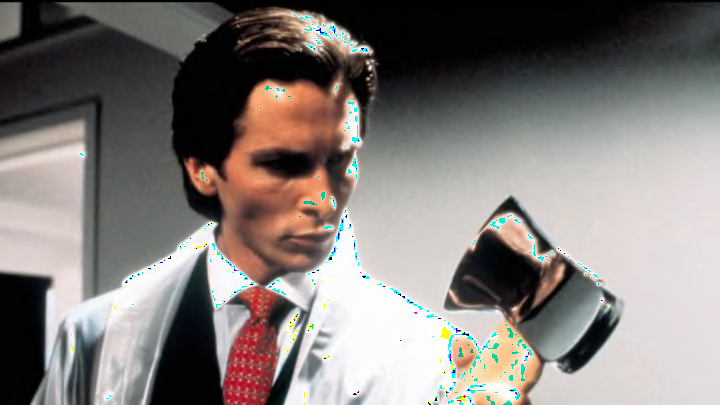
Mary Harron’s American Psycho is a hilarious and horrifying critique of 1980s corporate greed and superficiality. A lot of people today seem to misinterpret Patrick Bateman as someone to look up to, but the movie makes it very clear that he’s losing his mind.
The monologues about music are hilarious because he sounds like someone trying desperately to seem profound while saying nothing useful.
Christian Bale’s performance is a big reason the movie is as iconic as it is. The scene where he kills Jared Leto’s character while dancing is a perfect example of the film’s tonal tightrope walk.
The Others (2001)
The Others is set in a foggy mansion on the Channel Islands right after World War II. It stars Nicole Kidman as Grace, a devout mother who is protecting her two children from a rare disease that makes them photosensitive (meaning they’ll literally burn in sunlight). When a group of strange servants arrives, Grace begins to suspect the house is haunted.
The twist (which we won’t spoil) at the end is one of the greats because it completely recontextualizes the entire movie, making you want to watch it again immediately to see all the clues you missed.
28 Days Later (2002)
Danny Boyle basically revamped the zombie genre with 28 Days Later, even though he technically called it an "infection" movie. It starts with Cillian Murphy waking up from a coma in a deserted London after a virus has wiped out society.
The movie didn’t have the slow-walking zombies of the 70s. These were fast and absolutely relentless. It was shot on low-end Canon digital cameras, which gave it a grainy look that made it feel like a news report from the end of the world.
Recently, the franchise has seen a massive revival, with 28 Years Later (2025), 28 Years Later: The Bone Temple (2026), and hopefully the upcoming third and final one of this new trilogy.
Identity (2003)
In Identity, a group of ten strangers, including an ex-cop (John Cusack) and a convict (Ray Liotta), get stranded at a remote Nevada motel during a massive rainstorm. One by one, they start being murdered in ways that seem to follow a countdown. It’s directed by James Mangold, who contributes a real noir feel to the movie.
The big twist in the final act is one of the most audacious of this genre. Spoiler alert: It reveals that the characters aren't strangers at a motel; they are actually different personalities inside the mind of a serial killer on trial. Everything that was shown previously wasn’t real.
While some might find it polarizing, it was a fresh take on the formula that kept people guessing. Nor does the twist undermine the rest of the movie, especially on a rewatch, thanks in large part to the great performances from a stacked cast.
Saw (2004)
Long before it became a franchise known for “torture porn" and progressively worse installments, the original Saw was a clever, low-budget indie thriller. Directed by James Wan and written by Leigh Whannell (who also stars as Adam), the movie was shot in just 18 days on a tiny budget.
Most of the film takes place in a single, filthy bathroom where two men are chained to pipes and given instructions by the Jigsaw killer to escape. What was great about the first one was its focus on psychological choice over just violence and gore, something the future movies ironically prioritized.
The Descent (2005)
The Descent follows a group of six women who go on a spelunking trip in the mountains, only to get trapped in an unmapped cave system.
If the claustrophobia and rising tensions between the friends weren't enough, they soon realize they aren't alone in the dark. There are also the Crawlers, who are blind humanoid creatures that hunt using sound, and are also some of the scariest creature designs of the 2000s.
The film was actually shot entirely on sets in London because, obviously, real caves are too dangerous to film in, but you’d never know it by looking at the movie.
The Host (2006)
Bong Joon-ho’s The Host is a great example of how to do a monster movie without losing the human touch that makes you care about the characters in these types of films.
In the movie, a massive mutated creature emerges from a river in Seoul and kidnaps a young girl, and then her family has to band together to save her. It’s a weird and wonderful blend of creature-feature horror, some family comedy, and political satire aimed at the US military's presence in South Korea.
The monster itself has a unique design, foregoing the beast-like look for a clumsy and fleshy biological mistake. Unlike many monster movies that may hide the creature in the shadows, it shows it in broad daylight within the first ten minutes and lets the chaos unfold publicly.
[Rec] (2007)
If you want to know how to do found footage correctly, look no further than [Rec]. This Spanish horror film follows a TV reporter and her cameraman as they shadow a group of firefighters on a routine call to an apartment building. Things go south immediately when the building is quarantined by the police because of a mysterious infection that turns the residents into violent monsters.
The directors used a lot of improvisation to keep the energy high, and the acting real. The actors weren't always told what was about to happen, for example. The final ten minutes in the darkened attic, shot entirely through night vision, are one of the most stressful sequences in all of horror.
Cloverfield (2008)
Cloverfield was a massive cultural event, one of the reasons being the genius mystery box marketing campaign that didn't even reveal the title of the movie in its first trailer. As for the movie, it’s a first-person found footage account of a giant monster attack on New York City, seen through the lens of a group of friends trying to rescue someone during the chaos.
It’s kind of like Godzilla meets The Blair Witch Project, and it works surprisingly well. Directed by Matt Reeves, the camera moves like an actual panicked person is holding it, not like someone pretending to be shaky. You only see the monster in bits and pieces until the very end, which keeps the suspense high.
Drag Me to Hell (2009)
After years of making Spider-Man movies, Sam Raimi returned to his Evil Dead roots with Drag Me to Hell. It’s a hilariously mean-spirited horror-comedy about a bank loan officer who refuses an extension to an old woman, only to be hit with a three-day curse that ends with her being dragged to hell.
The movie is packed with Raimi’s signature style, such as rapid-fire zooms and frantic camerawork. It was a good reminder that nobody does fun horror like Raimi.