%20%20--%3E%0A%3Csvg%20version%3D%221.1%22%20id%3D%22Layer_1%22%20xmlns%3D%22http%3A%2F%2Fwww.w3.org%2F2000%2Fsvg%22%20xmlns%3Axlink%3D%22http%3A%2F%2Fwww.w3.org%2F1999%2Fxlink%22%20x%3D%220px%22%20y%3D%220px%22%0A%09%20viewBox%3D%220%200%20684.6%2068.1%22%20style%3D%22enable-background%3Anew%200%200%20684.6%2068.1%3B%22%20xml%3Aspace%3D%22preserve%22%3E%0A%3Cg%3E%0A%09%3Cpath%20d%3D%22M444.1%2C29.3h-17.4v14.5h17.4V29.3z%20M36.4%2C68.1l29.3-50.8V0H50.4L32.9%2C36.8L15.5%2C0H0v68.1h16.7V45.8l12.4%2C22.3H36.4z%0A%09%09%20M49.1%2C68.1h16.6V23.4L49.1%2C52.1V68.1z%20M76.6%2C68.1h45V53.8H93.3V41.6h21V27.1h-21V14.8h28.3V0.1h-45V68.1z%20M175.6%2C68.1h17.3v-68%0A%09%09h-16.5v40.3L150%2C0.1h-17.6v68h16.7V27.7L175.6%2C68.1z%20M235.8%2C14.8h15.4V0.1h-47.4v14.7H219v53.2h16.8V14.8z%20M290.3%2C45.9h-17.1%0A%09%09l7.5-15.6h2L290.3%2C45.9z%20M298.7%2C68.1h18l-32.2-68h-5.7l-32%2C68h18l3.3-7.1h27.1L298.7%2C68.1z%20M325.2%2C68.1h46.2V53.8h-29.6V0.1h-16.7%0A%09%09V68.1z%20M423.7%2C14.8h27.2V0.1H407v68h16.7V14.8z%20M462%2C68.1h46.2V53.8h-29.6V0.1H462V68.1z%20M564.8%2C34.1c0%2C10.7-7.2%2C19.2-18.5%2C19.2%0A%09%09c-11.4%2C0-18.5-8.5-18.5-19.2s7.1-19.2%2C18.5-19.2C557.6%2C14.9%2C564.8%2C23.4%2C564.8%2C34.1%20M580.6%2C34.1c0-19-14.2-34-34.3-34%0A%09%09c-20.2%2C0-34.3%2C15-34.3%2C34c0%2C19%2C14.1%2C34%2C34.3%2C34C566.4%2C68.1%2C580.6%2C53.1%2C580.6%2C34.1%20M604.8%2C20.5c0-4.1%2C3.3-6.2%2C6.7-6.2%0A%09%09c4.4%2C0%2C6.6%2C3%2C6.6%2C6.6h14.7C631.8%2C9.1%2C625.1%2C0.1%2C611%2C0.1c-12%2C0-21.7%2C9.3-21.7%2C20.6c0%2C10.9%2C5.9%2C15.9%2C16.7%2C19.8%0A%09%09c5.2%2C1.8%2C11.5%2C3.2%2C11.5%2C8c0%2C3.3-2.4%2C5.5-6.4%2C5.5c-3.6%2C0-6.6-3-6.6-6.7h-15.2c0%2C11.5%2C7.9%2C20.8%2C21.8%2C20.8c12%2C0%2C21.6-9.3%2C21.6-20.6%0A%09%09c0-10-5.3-16.4-16.7-19.8C610.6%2C26.1%2C604.8%2C25.3%2C604.8%2C20.5%20M670%2C20.9h14.7C683.8%2C9.1%2C677.1%2C0.1%2C663%2C0.1c-12%2C0-21.7%2C9.3-21.7%2C20.6%0A%09%09c0%2C10.9%2C5.9%2C15.9%2C16.7%2C19.8c5.2%2C1.8%2C11.5%2C3.2%2C11.5%2C8c0%2C3.3-2.4%2C5.5-6.4%2C5.5c-3.6%2C0-6.6-3-6.6-6.7h-15.2c0%2C11.5%2C7.9%2C20.8%2C21.8%2C20.8%0A%09%09c12%2C0%2C21.6-9.3%2C21.6-20.6c0-10-5.3-16.4-16.7-19.8c-5.4-1.6-11.3-2.4-11.3-7.2c0-4.1%2C3.3-6.2%2C6.7-6.2C667.7%2C14.4%2C670%2C17.3%2C670%2C20.9%0A%09%09%22%2F%3E%0A%3C%2Fg%3E%0A%3C%2Fsvg%3E%0A)

Some casual filmgoers might say that Martin Scorsese's filmography primarily contains gangster movies, but that overlooks just how varied his 50-plus-year career actually has been. Sure, his films often return to familiar themes of guilt, faith, masculinity, and people destroying themselves in pursuit of something they believe will make them whole.
But much of that comes from his upbringing in Manhattan, where chronic asthma kept him indoors watching movies while the surrounding neighborhood exposed him to street violence and the complicated world of Italian-American identity.
His career has moved from the raw New York stories of the 1970s to the crime epics of the '90s, and he has also made increasingly ambitious historical and spiritual explorations in the decades since.
For a filmmaker so associated with restless energy, his later work has often been focused on looking backward, and along those lines, confronting mortality and questioning the people and things he once found fascinating.
Scorsese has dozens of acclaimed movies, and these are his ten highest-rated ones on Rotten Tomatoes. This list focuses on his narrative features, so you won't find documentaries like Rolling Thunder Revue and The Last Waltz on here.
10. The King of Comedy (1982) – 89%
The King of Comedy has aged pretty well for the current times. In the movie, Robert De Niro plays Rupert Pupkin, an aspiring comedian whose delusions of grandeur lead him to believe that fame is pretty much owed to him.
His obsession with a talk-show host gradually crosses beyond every type of acceptable fan behavior, and this makes the film a great examination of celebrity culture and parasocial relationships that is as relevant now as ever.
Pupkin doesn't really see himself as someone doing anything wrong, and considers his increasingly outrageous behavior to be simply what it takes to get his big break. The film also takes some sharp swings at the entertainment industry's obsession with fame and the people willing to exploit it.
9. After Hours (1985) – 90%
After Hours starts off as a perfectly ordinary night out, but then turns into an increasingly elaborate nightmare for the main character, Paul (played by Griffin Dunne) as his attempt to meet a woman in Manhattan sends him from one bizarre encounter to another.
Every attempt to fix his latest problem creates three more, and the story keeps making things worse until the entire city seems to be conspiring against him. Although the movie is technically a comedy, it creates some genuine dread and suspense throughout Paul's increasingly desperate attempts to achieve a task as simple as getting home.
Its strange characters and surreal atmosphere make it feel like a fever dream. After the cancellation of The Last Temptation of Christ, Scorsese was left looking for another project, and this relatively inexpensive film gave him an opportunity to rediscover the experimental side of his earlier work.
8. The Departed (2006) – 91%
Scorsese finally won his long-overdue Best Director Oscar for The Departed, which is a crime thriller built around an elaborate game of double identities. Leonardo DiCaprio plays an undercover police officer who infiltrates a Boston crime syndicate, while Matt Damon is part of that same crime syndicate and works his way through the police. Both are trying to identify the other, which creates a narratively tense cat-and-mouse story.
The movie leverages its multiple opportunities to play with paranoia and the psychological toll of living a double life, especially through DiCaprio’s character.
Its sharp dialogue and relentless momentum make it one of Scorsese's most accessible thrillers. It's also a remake of the Hong Kong film Infernal Affairs, though Scorsese transforms this adaptation into something of his own that is arguably even better.
7. Alice Doesn't Live Here Anymore (1974) – 92%
One of the best examples of why Scorsese shouldn't be pigeonholed into a specific genre is Alice Doesn't Live Here Anymore. The movie is a character-driven story about a recently widowed woman trying to rebuild her life. Ellen Burstyn stars as the titular Alice, who leaves her home and heads toward California in pursuit of her dream of becoming a singer.
It’s a great change of pace from the male-dominated stories that would become associated with Scorsese's early career. Burstyn's performance is amazing, and it won her the Academy Award for Best Actress. The movie also does a great job of finding drama in everyday interactions rather than relying on violence or spectacle.
6. Mean Streets (1973) – 92%
Mean Streets may occasionally feel like a slow burn, especially for viewers expecting the pacing found in other Scorsese crime flicks, but the movie is a very rewarding experience.
Set in New York's Little Italy, the film follows Charlie (played by Harvey Keitel), a small-time criminal trying to balance his life. His biggest problem is Johnny Boy (Robert De Niro), a friend whose inability to control himself repeatedly brings trouble to everyone around him.
Unlike the polished and almost grand crime worlds of his later gangster classics, Mean Streets shows organized crime at its lowest level, focusing on cramped apartments, fights over petty debts, and people who aren't half as powerful as they imagine themselves to be.
The movie also dedicates a pretty good portion of the film's soundtrack to classic rock, pop, and soul music, using songs by The Rolling Stones and The Ronettes to express the characters' psychology and the energy of their surroundings.
5. Raging Bull (1980) – 92%
Raging Bull is one of Scorsese's most technically impressive films, and Thelma Schoonmaker's editing gets the big credit for making its boxing sequences so visceral.
Rather than just presenting the fights as straightforward sporting spectacles, the film uses subjective camera movements and very different visual perspectives to place viewers inside the main character’s increasingly distorted experience.
Robert De Niro's performance as the troubled boxer is great, but the character is hardly someone the audience is expected to admire. He is paranoid, jealous, controlling, and abusive, and thankfully, the movie doesn’t soften those elements at all, nor does it turn his self-destruction into a heroic tragedy.
4. Hugo (2011) – 93%
Hugo is probably the most unexpected entry in Scorsese's filmography. It’s a whimsical adventure about an orphan living inside a Paris train station, and the film at first appears to be a straightforward family movie.
But as Hugo's attempts to repair an automaton lead him to a mysterious toy-shop owner, the story transforms into something more personal—a heartfelt tribute to the history of cinema and the people who helped invent its visual language.
The use of 3D is a major part of the experience, and this film is frequently mentioned alongside the original Avatar as one of the medium's most impressive applications of its time. The story also introduces audiences to filmmaker and magician Georges Méliès, whose pioneering technical work helped establish the possibilities of cinematic fantasy.
For a director who has spent decades championing film preservation, Hugo is easily one of his most affectionate projects.
3. Killers of the Flower Moon (2023) – 93%
Scorsese's most recent movie is also one of his most poignant (and acclaimed). Based on the true story of the murders of members of the Osage Nation in the 1920s, Killers of the Flower Moon showcases these events with a level of patience and moral complexity that makes it difficult to watch at times.
Lily Gladstone’s performance is exceptional and conveys enormous emotional depth while relying on silence and subtle expressions. The cinematography also gives the Oklahoma landscape a striking presence and captures its beauty, while never allowing viewers to forget the violence taking place within it. The film's final stretch is particularly compelling, as it finds an unusual way to confront the responsibility of telling someone else's history.
2. Goodfellas (1990) – 93%
Few movies have shaped the modern crime genre as much as Goodfellas. While following Henry Hill's (Ray Liotta) rise through the ranks of the Mafia, the movie shows a version of organized crime that slowly reveals the falsity beneath its surface.
Unlike The Godfather, which portrayed the Mafia through the lens of family legacy and Shakespearean ambition, Goodfellas treats it more like a cutthroat corporate workplace. Everyone is chasing money, status, and/or power, and loyalty tends to last only as long as it's profitable or useful.
The film's violence is often sudden and brutal, and its relatively few on-screen deaths make a lasting impression just because of how casually they take place. And did you know that the movie shares 27 cast members with The Sopranos? Its influence on the genre can’t be overstated.
1. The Irishman (2019) – 95%
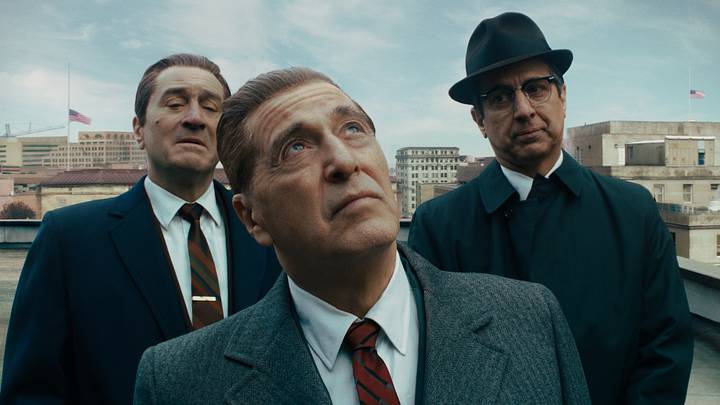
The Irishman is a perfectly fitting choice for being the highest-rated film in Scorsese's filmography, especially considering how thoroughly it reexamines the gangster stories that made him so beloved.
The movie has Robert De Niro playing a truck driver who becomes involved with organized crime and eventually develops a close relationship with labor union leader Jimmy Hoffa (Al Pacino). Joe Pesci, meanwhile, gives us one of the most understated performances of his career as Russell Bufalino. Unlike the explosive and volatile criminals he played in Goodfellas and Casino that viewers came to love and enjoy watching, Pesci's character here is frightening in far more subtle ways.
There’s not a scene wasted in its three-and-a-half-hour-long runtime. Guilt and mortality, which are recurring themes throughout Scorsese's work, become especially prominent as De Niro’s character approaches the end of his life with very little left to show for it. It's a perfect reflection on the director's own filmography.