%20%20--%3E%0A%3Csvg%20version%3D%221.1%22%20id%3D%22Layer_1%22%20xmlns%3D%22http%3A%2F%2Fwww.w3.org%2F2000%2Fsvg%22%20xmlns%3Axlink%3D%22http%3A%2F%2Fwww.w3.org%2F1999%2Fxlink%22%20x%3D%220px%22%20y%3D%220px%22%0A%09%20viewBox%3D%220%200%20684.6%2068.1%22%20style%3D%22enable-background%3Anew%200%200%20684.6%2068.1%3B%22%20xml%3Aspace%3D%22preserve%22%3E%0A%3Cg%3E%0A%09%3Cpath%20d%3D%22M444.1%2C29.3h-17.4v14.5h17.4V29.3z%20M36.4%2C68.1l29.3-50.8V0H50.4L32.9%2C36.8L15.5%2C0H0v68.1h16.7V45.8l12.4%2C22.3H36.4z%0A%09%09%20M49.1%2C68.1h16.6V23.4L49.1%2C52.1V68.1z%20M76.6%2C68.1h45V53.8H93.3V41.6h21V27.1h-21V14.8h28.3V0.1h-45V68.1z%20M175.6%2C68.1h17.3v-68%0A%09%09h-16.5v40.3L150%2C0.1h-17.6v68h16.7V27.7L175.6%2C68.1z%20M235.8%2C14.8h15.4V0.1h-47.4v14.7H219v53.2h16.8V14.8z%20M290.3%2C45.9h-17.1%0A%09%09l7.5-15.6h2L290.3%2C45.9z%20M298.7%2C68.1h18l-32.2-68h-5.7l-32%2C68h18l3.3-7.1h27.1L298.7%2C68.1z%20M325.2%2C68.1h46.2V53.8h-29.6V0.1h-16.7%0A%09%09V68.1z%20M423.7%2C14.8h27.2V0.1H407v68h16.7V14.8z%20M462%2C68.1h46.2V53.8h-29.6V0.1H462V68.1z%20M564.8%2C34.1c0%2C10.7-7.2%2C19.2-18.5%2C19.2%0A%09%09c-11.4%2C0-18.5-8.5-18.5-19.2s7.1-19.2%2C18.5-19.2C557.6%2C14.9%2C564.8%2C23.4%2C564.8%2C34.1%20M580.6%2C34.1c0-19-14.2-34-34.3-34%0A%09%09c-20.2%2C0-34.3%2C15-34.3%2C34c0%2C19%2C14.1%2C34%2C34.3%2C34C566.4%2C68.1%2C580.6%2C53.1%2C580.6%2C34.1%20M604.8%2C20.5c0-4.1%2C3.3-6.2%2C6.7-6.2%0A%09%09c4.4%2C0%2C6.6%2C3%2C6.6%2C6.6h14.7C631.8%2C9.1%2C625.1%2C0.1%2C611%2C0.1c-12%2C0-21.7%2C9.3-21.7%2C20.6c0%2C10.9%2C5.9%2C15.9%2C16.7%2C19.8%0A%09%09c5.2%2C1.8%2C11.5%2C3.2%2C11.5%2C8c0%2C3.3-2.4%2C5.5-6.4%2C5.5c-3.6%2C0-6.6-3-6.6-6.7h-15.2c0%2C11.5%2C7.9%2C20.8%2C21.8%2C20.8c12%2C0%2C21.6-9.3%2C21.6-20.6%0A%09%09c0-10-5.3-16.4-16.7-19.8C610.6%2C26.1%2C604.8%2C25.3%2C604.8%2C20.5%20M670%2C20.9h14.7C683.8%2C9.1%2C677.1%2C0.1%2C663%2C0.1c-12%2C0-21.7%2C9.3-21.7%2C20.6%0A%09%09c0%2C10.9%2C5.9%2C15.9%2C16.7%2C19.8c5.2%2C1.8%2C11.5%2C3.2%2C11.5%2C8c0%2C3.3-2.4%2C5.5-6.4%2C5.5c-3.6%2C0-6.6-3-6.6-6.7h-15.2c0%2C11.5%2C7.9%2C20.8%2C21.8%2C20.8%0A%09%09c12%2C0%2C21.6-9.3%2C21.6-20.6c0-10-5.3-16.4-16.7-19.8c-5.4-1.6-11.3-2.4-11.3-7.2c0-4.1%2C3.3-6.2%2C6.7-6.2C667.7%2C14.4%2C670%2C17.3%2C670%2C20.9%0A%09%09%22%2F%3E%0A%3C%2Fg%3E%0A%3C%2Fsvg%3E%0A)

For someone who left behind so little concrete biographical evidence, William Shakespeare has inspired an astonishing number of films attempting to explain him. Over the years, cinema has returned to Shakespeare not just as a playwright, but as a problem to be solved. Who was he? Where did the work come from? How does a single life produce language that still feels inexhaustible centuries later?
Cinema’s fascination with The Bard falls into a couple of composite lanes: reverent biopic, speculative, and outright fantasy. The best examples don’t try to solve mysteries or answer historical questions, but they use Shakespeare as a canvas to project our own feelings about art, identity, and legacy.
Below are the most notable films that have tried to capture the essence of Shakespeare. Not his plays, but the man, the myth, and the gravitational hold he still seems to have on us.
- Hamnet (2025)
- Shakespeare in Love (1998)
- Anonymous (2011)
- All Is True (2018)
- A Waste of Shame (2005)
- Bill (2015)
Hamnet (2025)
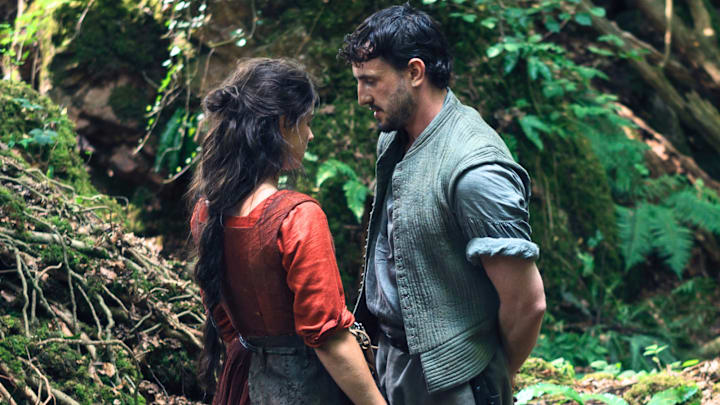
Maggie O’Farrell’s novel Hamnet, which has been made into a film by the incomparable Chloé Zhao, is now part of cinema’s attempt to tell Shakespeare’s story. But its focus is not on mythologizing Shakespeare’s genius and further separating him from us, but on making him more accessible by portraying him as a husband, father, and as a man shaped by grief.
Hamnet doesn’t treat Shakespeare as an icon to revere, but as a human being who suffers just like us. In doing so, it puts itself in the running for most interesting films about Shakespeare. It’s one that’s less concerned with reinforcing the idea that he is the greatest writer in the English language and more interested in showing us the man he was, alongside the brilliance he gave the world.
Shakespeare in Love (1998)
Perhaps the most influential modern Shakespeare biopic, Shakespeare in Love treats authorship as romantic improvisation. The film imagines Shakespeare falling in love as he writes Romeo and Juliet.
Throughout its runtime, you see Shakespeare merging inspiration and experience into his craft. It is a film that is aware of itself. It romanticizes creativity as a mess of coincidence, desire, and romance. It’s a great movie, but unfortunately, its reputation is sullied by the fact that it is one of the more controversial Best Picture winners at the Oscars. That said, Gwyneth Paltrow is truly fantastic as Shakespeare’s fictional lover in her Academy Award-winning performance.
Anonymous (2011)
No film tries harder to dethrone Shakespeare’s brilliance than Roland Emmerich’s Anonymous. Embracing the Oxfordian theory that someone else wrote his plays, the film turns literary history into a political thriller. Whatever its historical credibility, the film is revealing in how deeply uncomfortable some remain with the idea that genius might emerge from obscurity rather than aristocracy.
All Is True (2018)
Kenneth Branagh’s All Is True is a bit more subtle than most Shakespeare films. Set in the winter of Shakespeare’s life, it focuses on a man returning home burdened by memory, tension, and the ghost of his son Hamnet. If you watch it with the right kind of eyes, it can serve as a companion to Hamnet, as it emphasizes emotional fallout over literary achievement.
A Waste of Shame (2005)
This BBC production takes a more academic approach, dramatizing Shakespeare’s relationship with the so-called Dark Lady of the sonnets. While constrained by its format, it reflects a long-standing impulse to treat the sonnets as psychological evidence, reading poetry as confession rather than performance.
Bill (2015)
At the opposite end of the spectrum, Bill offers a deliberately absurd take on Shakespeare’s so-called lost years. The film turns biography into slapstick, acknowledging how speculative most Shakespearean storytelling already is, admitting that most Shakespeare stories are just guesswork anyway—it just doesn’t feel the need to act sophisticated about it.
What connects these films, and what Hamnet has deepened, is the understanding that Shakespeare lives on not because his life can be neatly explained. Each generation reshapes him to suit its own questions about creativity, class, and grief, and the best films do not claim to uncover the real Shakespeare. They accept that the mystery is something we inherit, and that the work survives precisely because the man remains a mystery.
Sometimes, the less we know about the artist, the more magical the art becomes, and it further mythologizes the man who created it. The most magical part about Shakespeare isn’t that he was a genius (although he most certainly was); it is that he was a person, just like us, who taught us how to feel generations ago, and his ripple effects will continue for generations to come.