%20%20--%3E%0A%3Csvg%20version%3D%221.1%22%20id%3D%22Layer_1%22%20xmlns%3D%22http%3A%2F%2Fwww.w3.org%2F2000%2Fsvg%22%20xmlns%3Axlink%3D%22http%3A%2F%2Fwww.w3.org%2F1999%2Fxlink%22%20x%3D%220px%22%20y%3D%220px%22%0A%09%20viewBox%3D%220%200%20684.6%2068.1%22%20style%3D%22enable-background%3Anew%200%200%20684.6%2068.1%3B%22%20xml%3Aspace%3D%22preserve%22%3E%0A%3Cg%3E%0A%09%3Cpath%20d%3D%22M444.1%2C29.3h-17.4v14.5h17.4V29.3z%20M36.4%2C68.1l29.3-50.8V0H50.4L32.9%2C36.8L15.5%2C0H0v68.1h16.7V45.8l12.4%2C22.3H36.4z%0A%09%09%20M49.1%2C68.1h16.6V23.4L49.1%2C52.1V68.1z%20M76.6%2C68.1h45V53.8H93.3V41.6h21V27.1h-21V14.8h28.3V0.1h-45V68.1z%20M175.6%2C68.1h17.3v-68%0A%09%09h-16.5v40.3L150%2C0.1h-17.6v68h16.7V27.7L175.6%2C68.1z%20M235.8%2C14.8h15.4V0.1h-47.4v14.7H219v53.2h16.8V14.8z%20M290.3%2C45.9h-17.1%0A%09%09l7.5-15.6h2L290.3%2C45.9z%20M298.7%2C68.1h18l-32.2-68h-5.7l-32%2C68h18l3.3-7.1h27.1L298.7%2C68.1z%20M325.2%2C68.1h46.2V53.8h-29.6V0.1h-16.7%0A%09%09V68.1z%20M423.7%2C14.8h27.2V0.1H407v68h16.7V14.8z%20M462%2C68.1h46.2V53.8h-29.6V0.1H462V68.1z%20M564.8%2C34.1c0%2C10.7-7.2%2C19.2-18.5%2C19.2%0A%09%09c-11.4%2C0-18.5-8.5-18.5-19.2s7.1-19.2%2C18.5-19.2C557.6%2C14.9%2C564.8%2C23.4%2C564.8%2C34.1%20M580.6%2C34.1c0-19-14.2-34-34.3-34%0A%09%09c-20.2%2C0-34.3%2C15-34.3%2C34c0%2C19%2C14.1%2C34%2C34.3%2C34C566.4%2C68.1%2C580.6%2C53.1%2C580.6%2C34.1%20M604.8%2C20.5c0-4.1%2C3.3-6.2%2C6.7-6.2%0A%09%09c4.4%2C0%2C6.6%2C3%2C6.6%2C6.6h14.7C631.8%2C9.1%2C625.1%2C0.1%2C611%2C0.1c-12%2C0-21.7%2C9.3-21.7%2C20.6c0%2C10.9%2C5.9%2C15.9%2C16.7%2C19.8%0A%09%09c5.2%2C1.8%2C11.5%2C3.2%2C11.5%2C8c0%2C3.3-2.4%2C5.5-6.4%2C5.5c-3.6%2C0-6.6-3-6.6-6.7h-15.2c0%2C11.5%2C7.9%2C20.8%2C21.8%2C20.8c12%2C0%2C21.6-9.3%2C21.6-20.6%0A%09%09c0-10-5.3-16.4-16.7-19.8C610.6%2C26.1%2C604.8%2C25.3%2C604.8%2C20.5%20M670%2C20.9h14.7C683.8%2C9.1%2C677.1%2C0.1%2C663%2C0.1c-12%2C0-21.7%2C9.3-21.7%2C20.6%0A%09%09c0%2C10.9%2C5.9%2C15.9%2C16.7%2C19.8c5.2%2C1.8%2C11.5%2C3.2%2C11.5%2C8c0%2C3.3-2.4%2C5.5-6.4%2C5.5c-3.6%2C0-6.6-3-6.6-6.7h-15.2c0%2C11.5%2C7.9%2C20.8%2C21.8%2C20.8%0A%09%09c12%2C0%2C21.6-9.3%2C21.6-20.6c0-10-5.3-16.4-16.7-19.8c-5.4-1.6-11.3-2.4-11.3-7.2c0-4.1%2C3.3-6.2%2C6.7-6.2C667.7%2C14.4%2C670%2C17.3%2C670%2C20.9%0A%09%09%22%2F%3E%0A%3C%2Fg%3E%0A%3C%2Fsvg%3E%0A)

Artificial intelligence has evolved at a rapid pace in recent years, becoming a ubiquitous part of many people’s lives in the process. The AI boom has also been accompanied by a rise in fears about AI-induced job loss, AI-induced psychosis, and AI’s environmental impact, among other issues.
While this moment is unprecedented in reality, it certainly is not in the realm of the imagination. Writers, creators, and filmmakers have long been inspired by fears, visions, and dreams about how AI could reshape our world.
Some of these films have been outlandishly off-the-mark—we’re still quite far from mainstream hoverboards and flying cars, after all—but others appear almost capable of predicting the future, or perhaps even inadvertently helping to shape it, as science fiction sometimes can. Here are five films that seemingly foresaw aspects of AI’s arrival and impact.
Her
The movie Her tells the story of Theodore, a man who develops a deep relationship with an AI program named Samantha in the wake of a divorce. What starts out as a distraction eventually turns into a romantic bond, and things get even more nuanced when Samantha seems to develop a semblance of autonomy.
When the movie came out in 2013, it felt deeply futuristic. Nowadays, though, it feels all-too-relevant in a world populated by chatbots capable of shaping their personalities around the needs and desires of the people who use them.
Today, many people have developed deep relationships with their chatbots, even grieving when updates happen that seem to change the personalities of their AI programs. Others are in committed relationships with their AI chatbots, some of which make Theodore's relationship with Samantha look like a fling.
2001: A Space Odyssey
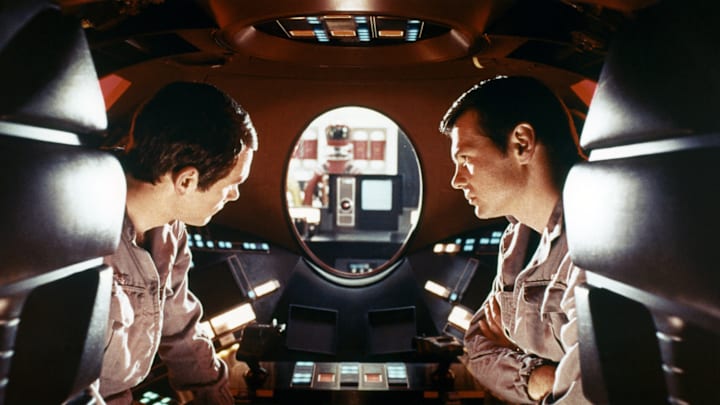
When the film 2001: A Space Odyssey came out in 1968, it was one of the most influential early onscreen depictions of what AI could actually look like in practice—and was also one of the first to speculate about its dangers.
The film follows a spaceship on its way to Jupiter that relies on a computer system named HAL 9000, which is able to speak and process information. Eventually, it begins to take control of the situation and endangers the astronauts on the ship by prioritizing the success of the mission over their safety.
The movie’s surrealist, experimental style set the tone for science fiction films for decades to come—and also implanted countless moviegoers’ minds with fears about what would happen if AI really was allowed to make its own decisions. Today, those fears have become all too realistic as AI is increasingly given control over things like driving, surgery, and yes, even space travel.
Robot & Frank
Robot & Frank is a comedy that follows an aging ex-thief named Frank whose son buys him a robot designed to care for him in order to avoid having to visit him so much. Frank, who is suffering from the early stages of dementia, winds up enlisting the robot to help him commit various small-scale heists around his town.
Today, there are indeed robots designed to help the elderly, including AI chatbots specifically intended to communicate with seniors. There are also rudimentary robots engineered to help the elderly sit and stand, among other basic tasks.
While robots that possess both humanoid bodies and the intelligence of chatbots haven't yet gone mainstream, movies like Robot & Frank explore the possible unintended consequences—and indeed, the potential benefits—of allowing AI-powered systems to interact unsupervised with vulnerable people. Additionally, the world has seen a spike in AI-powered crime in recent years, making Frank’s adventures all the more realistic.
Ex Machina
The film Ex Machina follows a programmer who wins a week at a mountain estate owned by a billionaire tech mogul. It turns out that the house is also inhabited by Ava, an artificial intelligence-powered robot. The programmer is tasked with interviewing her to find out if she can pass as a human.
But Ava winds up having more of a mind of her own than anyone imagined. What happens next raises a number of ethical and ontological questions that anyone interested in the implications of AI today certainly will find themselves navigating.
After all, AI’s very existence raises large questions about the rights of AI, what could happen if humans abuse or mistreat it, and what could result from it gaining a semblance of consciousness. Ex Machina explores all of these themes, and what it comes up with is bone-chilling and all too applicable to today’s world.
Minority Report
The 2002 movie Minority Report is based on a 1956 science fiction novel by Philip K. Dick, which makes its prescience all the more impressive. It tells the story of psychic mutants who are plugged into a machine meant to allow police to stop crimes before they happen. When the head of the program finds himself under suspicion, he begins to unveil a deep-rooted conspiracy.
Today, AI is indeed being used by police to try to predict future crimes, among other applications. Yet AI in policing and law has been plagued with issues, such as racial biases and inaccuracies that can put innocent people at risk. While Minority Report’s use of psychics in police investigations may not be relevant today, some of the film's predictions about corruption and technology in policing are extremely, and disturbingly, on the nose.