%20%20--%3E%0A%3Csvg%20version%3D%221.1%22%20id%3D%22Layer_1%22%20xmlns%3D%22http%3A%2F%2Fwww.w3.org%2F2000%2Fsvg%22%20xmlns%3Axlink%3D%22http%3A%2F%2Fwww.w3.org%2F1999%2Fxlink%22%20x%3D%220px%22%20y%3D%220px%22%0A%09%20viewBox%3D%220%200%20684.6%2068.1%22%20style%3D%22enable-background%3Anew%200%200%20684.6%2068.1%3B%22%20xml%3Aspace%3D%22preserve%22%3E%0A%3Cg%3E%0A%09%3Cpath%20d%3D%22M444.1%2C29.3h-17.4v14.5h17.4V29.3z%20M36.4%2C68.1l29.3-50.8V0H50.4L32.9%2C36.8L15.5%2C0H0v68.1h16.7V45.8l12.4%2C22.3H36.4z%0A%09%09%20M49.1%2C68.1h16.6V23.4L49.1%2C52.1V68.1z%20M76.6%2C68.1h45V53.8H93.3V41.6h21V27.1h-21V14.8h28.3V0.1h-45V68.1z%20M175.6%2C68.1h17.3v-68%0A%09%09h-16.5v40.3L150%2C0.1h-17.6v68h16.7V27.7L175.6%2C68.1z%20M235.8%2C14.8h15.4V0.1h-47.4v14.7H219v53.2h16.8V14.8z%20M290.3%2C45.9h-17.1%0A%09%09l7.5-15.6h2L290.3%2C45.9z%20M298.7%2C68.1h18l-32.2-68h-5.7l-32%2C68h18l3.3-7.1h27.1L298.7%2C68.1z%20M325.2%2C68.1h46.2V53.8h-29.6V0.1h-16.7%0A%09%09V68.1z%20M423.7%2C14.8h27.2V0.1H407v68h16.7V14.8z%20M462%2C68.1h46.2V53.8h-29.6V0.1H462V68.1z%20M564.8%2C34.1c0%2C10.7-7.2%2C19.2-18.5%2C19.2%0A%09%09c-11.4%2C0-18.5-8.5-18.5-19.2s7.1-19.2%2C18.5-19.2C557.6%2C14.9%2C564.8%2C23.4%2C564.8%2C34.1%20M580.6%2C34.1c0-19-14.2-34-34.3-34%0A%09%09c-20.2%2C0-34.3%2C15-34.3%2C34c0%2C19%2C14.1%2C34%2C34.3%2C34C566.4%2C68.1%2C580.6%2C53.1%2C580.6%2C34.1%20M604.8%2C20.5c0-4.1%2C3.3-6.2%2C6.7-6.2%0A%09%09c4.4%2C0%2C6.6%2C3%2C6.6%2C6.6h14.7C631.8%2C9.1%2C625.1%2C0.1%2C611%2C0.1c-12%2C0-21.7%2C9.3-21.7%2C20.6c0%2C10.9%2C5.9%2C15.9%2C16.7%2C19.8%0A%09%09c5.2%2C1.8%2C11.5%2C3.2%2C11.5%2C8c0%2C3.3-2.4%2C5.5-6.4%2C5.5c-3.6%2C0-6.6-3-6.6-6.7h-15.2c0%2C11.5%2C7.9%2C20.8%2C21.8%2C20.8c12%2C0%2C21.6-9.3%2C21.6-20.6%0A%09%09c0-10-5.3-16.4-16.7-19.8C610.6%2C26.1%2C604.8%2C25.3%2C604.8%2C20.5%20M670%2C20.9h14.7C683.8%2C9.1%2C677.1%2C0.1%2C663%2C0.1c-12%2C0-21.7%2C9.3-21.7%2C20.6%0A%09%09c0%2C10.9%2C5.9%2C15.9%2C16.7%2C19.8c5.2%2C1.8%2C11.5%2C3.2%2C11.5%2C8c0%2C3.3-2.4%2C5.5-6.4%2C5.5c-3.6%2C0-6.6-3-6.6-6.7h-15.2c0%2C11.5%2C7.9%2C20.8%2C21.8%2C20.8%0A%09%09c12%2C0%2C21.6-9.3%2C21.6-20.6c0-10-5.3-16.4-16.7-19.8c-5.4-1.6-11.3-2.4-11.3-7.2c0-4.1%2C3.3-6.2%2C6.7-6.2C667.7%2C14.4%2C670%2C17.3%2C670%2C20.9%0A%09%09%22%2F%3E%0A%3C%2Fg%3E%0A%3C%2Fsvg%3E%0A)

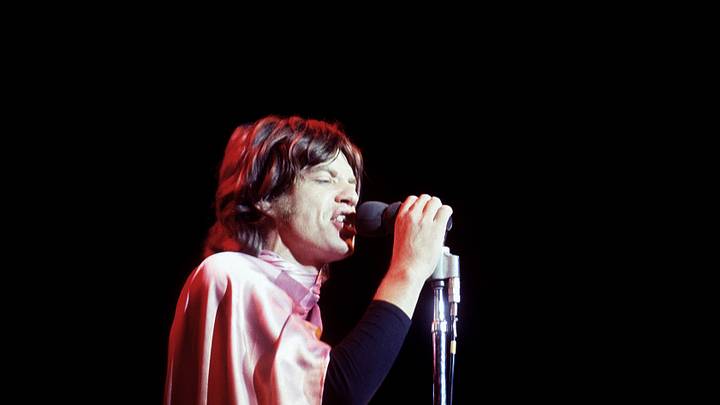
If Woodstock was the high point of 1960s idealism, Altamont has been called its death knell. Weirdly, these two events happened less than four months apart from one another—Woodstock took place from August 15 to 18, 1969, and the Altamont Speedway Free Festival took place on December 6 of that same year.
If Woodstock appeared to—albeit imperfectly—make the case that counterculture ideals like free love and music for everyone could work in practice, Altamont seemed to showcase the exact opposite. Along with the Manson Family murders, it helped to destroy the hopefulness that had defined the movement in popular imagination in one single day. Here are five facts about the festival that helped end of the era of peace and love.
- Altamont Was Supposed to Help the Rolling Stones Make Money
- Altamont’s Venue Changed Two Days Before
- The Hells Angels Were Hired to Do Security
- The Grateful Dead Refused to Perform
- Four People Died at Altamont
Altamont Was Supposed to Help the Rolling Stones Make Money

Altamont was supposed to be the West Coast’s answer to Woodstock—as well as a cure to the Rolling Stones’ money woes.
In 1969, the Stones were facing major financial troubles. Royalties from their previous albums were being eaten up by their former business manager Allen Klein’s company, and they hadn’t toured since 1966. Keith Richards was struggling with heroin addiction, Brian Jones had a drug conviction that didn’t allow him to travel, and the film projects the band had worked on over the past few years had floundered. In desperation, the band decided to go on tour and fired Jones, who died just three weeks after the band let him go.
Tickets for their now-legendary 1969 tour were famously expensive, but Mick Jagger conceptualized a grand finale that the band and their promoters thought would cement the Stones’ legacy while also bringing in some cash.
His vision: the band would headline a gigantic free concert that would be filmed and turned into the grand finale of a movie about their tour. That concert—the Altamont Speedway Free Festival—did turn out to be unforgettable, though not for reasons anyone expected or wanted.
Altamont’s Venue Changed Two Days Before

Woodstock itself was famously plagued by several venue changes, but the place that ended up hosting it—Max Yasgur’s 600-acre dairy farm—wound up being ideal for the huge crowds that wound up coming.
Meanwhile, the original venue for the Rolling Stones’ final tour stop was supposed to be San Francisco’s Golden Gate Park. When city authorities nipped that one in the bud due to (very justified) fears about the crowd, the Sears Point Raceway was chosen.
However, the raceway’s owners demanded a portion of the profits from the movie the Stones planned to make. At Mick Jagger’s insistence, the venue was changed to Dick Carter’s Altamont Speedway just two days before the event. The Altamont Speedway was smaller than planned and there was no time to build an elevated stage, so the crowd would be looking down on the performers from the hillside, creating perfect conditions for a crowd crush.
Carter himself was nearing bankruptcy and his venue had few facilities, but the concert went full speed ahead. A perfect storm of desperation was brewing quickly, fueled by the shadows of greed and scarcity.
The Hells Angels Were Hired to Do Security

Another decision that helped spell Altamont’s doom was the decision to hire members of the famous motorcycle gang Hells Angels as security. Just a few days before the festival, leaders of the San Francisco, Oakland, and San Jose Hells Angels chapters were asked to keep festivalgoers under control in exchange for $500, paid in beer.
The Angels had previously acted as informal security for some Grateful Dead concerts and other events associated with the counterculture, so there was some precedent for this—but not when it came to using the Angels to secure a festival of Altamont’s size and energy.
The morning of the festival, several dozen Hells Angels showed up to supervise an event that wound up attracting nearly 300,000 people. Many Angels immediately joined attendees in downing plenty of alcohol, speed, and LSD. Soon enough, fights began to break out between the Angels and festivalgoers. At one point, Marty Balin—the co-lead singer of Jefferson Airplane—jumped off the stage to stop the Angels from beating someone up, and he himself was punched and knocked out.
The Grateful Dead Refused to Perform

The Grateful Dead were one of the biggest names on the festival lineup. But when they arrived at Altamont and heard about the violence and chaos going on in the crowd, they decided it was unsafe to perform and left. This resulted in a two-hour gap that created space for even more chaos in the crowd ahead of the Rolling Stones’ set.
Four People Died at Altamont

By the time the Rolling Stones got onstage, things had reached a fever pitch. Mick Jagger—who had been punched in the head by a fan immediately after getting out of his helicopter earlier that day—had to ask the crowd to calm down multiple times during the beginning of their set. It all came to a head during the Stones’ performance of “Under My Thumb,” when a young Black man named Meredith Hunter was stabbed to death by Hells Angels.
According to some Angels nearby, the altercation had started when Hunter had been standing on some equipment and wouldn’t get off when the Angels told him to. Some accounts have suggested that some of the Angels may have commented on the fact that he was at the concert with his white girlfriend.
Footage of the incident shows Hunter pulling out a revolver before being killed by a Hells Angel named Alan Passaro, who was later acquitted on grounds of self-defense. The murder was filmed and wound up being featured in the documentary about the concert, Gimme Shelter.
Tragically, some accounts claim that Hunter could have been saved if he had been able to be transported to a hospital—but the pilot of the helicopter onsite allegedly refused to leave the premises due to the fact that the aircraft was reserved for the Rolling Stones.
Three other people died during the festival. Two were killed in a hit-and-run in the parking lot while sitting around a campfire, and another died by accidentally drowning in a nearby canal. Countless others were treated for bad trips and other injuries in the medical tent, including one who suffered from a fractured pelvis after leaping from an overpass nearby.
All of these events were eventually discussed in Gimme Shelter, the film that the Rolling Stones had envisioned when they set out on their tour earlier that year. No one could have imagined that the film would capture what some have called the exact moment when 1960s idealism collapsed under the stark weight of human nature—or perhaps, rather, of human greed, celebrity worship, and carelessness.
“It was a complete mess, and we were partly to blame for not checking it out,” Mick Jagger said in an interview in 1989. “You expected everyone in San Francisco—because they were so mellow, nice, and organized—that it was going to be all those things. But of course, it wasn’t.”