%20%20--%3E%0A%3Csvg%20version%3D%221.1%22%20id%3D%22Layer_1%22%20xmlns%3D%22http%3A%2F%2Fwww.w3.org%2F2000%2Fsvg%22%20xmlns%3Axlink%3D%22http%3A%2F%2Fwww.w3.org%2F1999%2Fxlink%22%20x%3D%220px%22%20y%3D%220px%22%0A%09%20viewBox%3D%220%200%20684.6%2068.1%22%20style%3D%22enable-background%3Anew%200%200%20684.6%2068.1%3B%22%20xml%3Aspace%3D%22preserve%22%3E%0A%3Cg%3E%0A%09%3Cpath%20d%3D%22M444.1%2C29.3h-17.4v14.5h17.4V29.3z%20M36.4%2C68.1l29.3-50.8V0H50.4L32.9%2C36.8L15.5%2C0H0v68.1h16.7V45.8l12.4%2C22.3H36.4z%0A%09%09%20M49.1%2C68.1h16.6V23.4L49.1%2C52.1V68.1z%20M76.6%2C68.1h45V53.8H93.3V41.6h21V27.1h-21V14.8h28.3V0.1h-45V68.1z%20M175.6%2C68.1h17.3v-68%0A%09%09h-16.5v40.3L150%2C0.1h-17.6v68h16.7V27.7L175.6%2C68.1z%20M235.8%2C14.8h15.4V0.1h-47.4v14.7H219v53.2h16.8V14.8z%20M290.3%2C45.9h-17.1%0A%09%09l7.5-15.6h2L290.3%2C45.9z%20M298.7%2C68.1h18l-32.2-68h-5.7l-32%2C68h18l3.3-7.1h27.1L298.7%2C68.1z%20M325.2%2C68.1h46.2V53.8h-29.6V0.1h-16.7%0A%09%09V68.1z%20M423.7%2C14.8h27.2V0.1H407v68h16.7V14.8z%20M462%2C68.1h46.2V53.8h-29.6V0.1H462V68.1z%20M564.8%2C34.1c0%2C10.7-7.2%2C19.2-18.5%2C19.2%0A%09%09c-11.4%2C0-18.5-8.5-18.5-19.2s7.1-19.2%2C18.5-19.2C557.6%2C14.9%2C564.8%2C23.4%2C564.8%2C34.1%20M580.6%2C34.1c0-19-14.2-34-34.3-34%0A%09%09c-20.2%2C0-34.3%2C15-34.3%2C34c0%2C19%2C14.1%2C34%2C34.3%2C34C566.4%2C68.1%2C580.6%2C53.1%2C580.6%2C34.1%20M604.8%2C20.5c0-4.1%2C3.3-6.2%2C6.7-6.2%0A%09%09c4.4%2C0%2C6.6%2C3%2C6.6%2C6.6h14.7C631.8%2C9.1%2C625.1%2C0.1%2C611%2C0.1c-12%2C0-21.7%2C9.3-21.7%2C20.6c0%2C10.9%2C5.9%2C15.9%2C16.7%2C19.8%0A%09%09c5.2%2C1.8%2C11.5%2C3.2%2C11.5%2C8c0%2C3.3-2.4%2C5.5-6.4%2C5.5c-3.6%2C0-6.6-3-6.6-6.7h-15.2c0%2C11.5%2C7.9%2C20.8%2C21.8%2C20.8c12%2C0%2C21.6-9.3%2C21.6-20.6%0A%09%09c0-10-5.3-16.4-16.7-19.8C610.6%2C26.1%2C604.8%2C25.3%2C604.8%2C20.5%20M670%2C20.9h14.7C683.8%2C9.1%2C677.1%2C0.1%2C663%2C0.1c-12%2C0-21.7%2C9.3-21.7%2C20.6%0A%09%09c0%2C10.9%2C5.9%2C15.9%2C16.7%2C19.8c5.2%2C1.8%2C11.5%2C3.2%2C11.5%2C8c0%2C3.3-2.4%2C5.5-6.4%2C5.5c-3.6%2C0-6.6-3-6.6-6.7h-15.2c0%2C11.5%2C7.9%2C20.8%2C21.8%2C20.8%0A%09%09c12%2C0%2C21.6-9.3%2C21.6-20.6c0-10-5.3-16.4-16.7-19.8c-5.4-1.6-11.3-2.4-11.3-7.2c0-4.1%2C3.3-6.2%2C6.7-6.2C667.7%2C14.4%2C670%2C17.3%2C670%2C20.9%0A%09%09%22%2F%3E%0A%3C%2Fg%3E%0A%3C%2Fsvg%3E%0A)

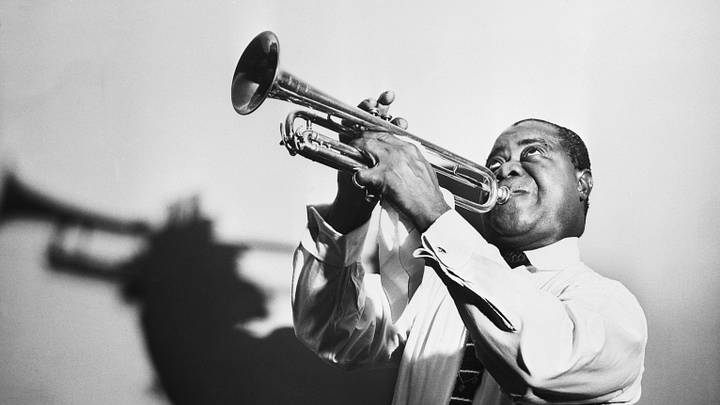
Louis Armstrong is one of the most influential figures in the history of jazz music. He popularized improvisational solos, wrote over 50 songs, and broke barriers as a Black man with widespread popularity in the early-to-mid 20th century. Over the course of his career, Armstrong recorded thousands of tracks—19 of which have been inducted into the Grammy Hall of Fame—and appeared in dozens of films, leaving an indelible mark on the entertainment landscape.
In addition to his talent as an entertainer, Louis Armstrong was known for his dedication to his community. Having grown up in an area of New Orleans known as "the Battlefield," he knew from experience how much a neighborhood could influence a person. He loved his home in Corona, New York, but was unable to fully let go of New Orleans, even claiming in 1949 that being crowned King of Mardi Gras was "a thing I've dreamed of all my life."
One lasting element from his time in New Orleans was his most prominent nickname. While his birth name is well known, many of his closest friends and colleagues knew him better as "Satchmo." Read on to learn more about where this nickname came from and how it grew with him over the course of his life.
The Many Nicknames of Louis Armstrong
In the book Louis Armstrong: An Extravagant Life by Laurence Bergreen, Armstrong explained that nicknames were a huge part of New Orleans culture. In his words, "it was a pleasure to nickname someone and be named yourself." As he grew up, he acquired a series of nicknames, including Dipper and Gatemouth, but the one that would be most influential on his life was "Satchelmouth."
There are conflicting stories about why this nickname developed. The simplest explanation is that he had a large mouth, and Satchelmouth was just one name that grew out of that theme. A more sensational story claims that Armstrong would hide any money he earned in his mouth to protect it from thieves while he and other boys sang on street corners. This connects to both his lifelong love of music and his complicated relationship with money, which may help explain why it stuck around so long.
According to the Louis Armstrong House Museum, the next development in Armstrong's nickname journey came in 1932 when the editor for Melody Maker magazine tried to greet him by his nickname. However, he had only heard the name through recordings and accidentally misheard it as "Satchmo." When he addressed Armstrong using the incorrect name, Armstrong reportedly found it hilarious and decided to tell his friends to call him that instead.
How "Satchmo" Became a Legend

It wasn't long before the name Satchmo was everywhere. Armstrong used it to introduce himself and had it engraved on his instruments. The press used it as shorthand when they wrote about his latest music and tours. Eventually, it even became part of Armstrong's official marketing, appearing in the titles of his 1954 autobiography (Satchmo: My Life in New Orleans) and 1957 tour documentary (Satchmo the Great). When he began to tour internationally—as part of a government program that the State Department called "Jazz Diplomacy"—his nickname was once again adapted to honor him as "Ambassador Satch."
Even after he passed away, the name Satchmo continues to represent Louis Armstrong's legacy. The Louis Armstrong Educational Foundation currently owns the trademark for the nickname, which they use for their charitable programs. These include the SATCHMO Award, which recognizes jazz musicians for "their important and lasting contributions in the world of jazz education," and the "Satchmo's Kids" program, which helps fund music programs in schools.
While the nickname may have started as a misunderstanding, it was one which Louis Armstrong eagerly embraced and used for the rest of his life. The name "Satchmo" represented Armstrong's childhood community, his jovial nature, and his identity as a real person in spite of his unprecedented celebrity.