%20%20--%3E%0A%3Csvg%20version%3D%221.1%22%20id%3D%22Layer_1%22%20xmlns%3D%22http%3A%2F%2Fwww.w3.org%2F2000%2Fsvg%22%20xmlns%3Axlink%3D%22http%3A%2F%2Fwww.w3.org%2F1999%2Fxlink%22%20x%3D%220px%22%20y%3D%220px%22%0A%09%20viewBox%3D%220%200%20684.6%2068.1%22%20style%3D%22enable-background%3Anew%200%200%20684.6%2068.1%3B%22%20xml%3Aspace%3D%22preserve%22%3E%0A%3Cg%3E%0A%09%3Cpath%20d%3D%22M444.1%2C29.3h-17.4v14.5h17.4V29.3z%20M36.4%2C68.1l29.3-50.8V0H50.4L32.9%2C36.8L15.5%2C0H0v68.1h16.7V45.8l12.4%2C22.3H36.4z%0A%09%09%20M49.1%2C68.1h16.6V23.4L49.1%2C52.1V68.1z%20M76.6%2C68.1h45V53.8H93.3V41.6h21V27.1h-21V14.8h28.3V0.1h-45V68.1z%20M175.6%2C68.1h17.3v-68%0A%09%09h-16.5v40.3L150%2C0.1h-17.6v68h16.7V27.7L175.6%2C68.1z%20M235.8%2C14.8h15.4V0.1h-47.4v14.7H219v53.2h16.8V14.8z%20M290.3%2C45.9h-17.1%0A%09%09l7.5-15.6h2L290.3%2C45.9z%20M298.7%2C68.1h18l-32.2-68h-5.7l-32%2C68h18l3.3-7.1h27.1L298.7%2C68.1z%20M325.2%2C68.1h46.2V53.8h-29.6V0.1h-16.7%0A%09%09V68.1z%20M423.7%2C14.8h27.2V0.1H407v68h16.7V14.8z%20M462%2C68.1h46.2V53.8h-29.6V0.1H462V68.1z%20M564.8%2C34.1c0%2C10.7-7.2%2C19.2-18.5%2C19.2%0A%09%09c-11.4%2C0-18.5-8.5-18.5-19.2s7.1-19.2%2C18.5-19.2C557.6%2C14.9%2C564.8%2C23.4%2C564.8%2C34.1%20M580.6%2C34.1c0-19-14.2-34-34.3-34%0A%09%09c-20.2%2C0-34.3%2C15-34.3%2C34c0%2C19%2C14.1%2C34%2C34.3%2C34C566.4%2C68.1%2C580.6%2C53.1%2C580.6%2C34.1%20M604.8%2C20.5c0-4.1%2C3.3-6.2%2C6.7-6.2%0A%09%09c4.4%2C0%2C6.6%2C3%2C6.6%2C6.6h14.7C631.8%2C9.1%2C625.1%2C0.1%2C611%2C0.1c-12%2C0-21.7%2C9.3-21.7%2C20.6c0%2C10.9%2C5.9%2C15.9%2C16.7%2C19.8%0A%09%09c5.2%2C1.8%2C11.5%2C3.2%2C11.5%2C8c0%2C3.3-2.4%2C5.5-6.4%2C5.5c-3.6%2C0-6.6-3-6.6-6.7h-15.2c0%2C11.5%2C7.9%2C20.8%2C21.8%2C20.8c12%2C0%2C21.6-9.3%2C21.6-20.6%0A%09%09c0-10-5.3-16.4-16.7-19.8C610.6%2C26.1%2C604.8%2C25.3%2C604.8%2C20.5%20M670%2C20.9h14.7C683.8%2C9.1%2C677.1%2C0.1%2C663%2C0.1c-12%2C0-21.7%2C9.3-21.7%2C20.6%0A%09%09c0%2C10.9%2C5.9%2C15.9%2C16.7%2C19.8c5.2%2C1.8%2C11.5%2C3.2%2C11.5%2C8c0%2C3.3-2.4%2C5.5-6.4%2C5.5c-3.6%2C0-6.6-3-6.6-6.7h-15.2c0%2C11.5%2C7.9%2C20.8%2C21.8%2C20.8%0A%09%09c12%2C0%2C21.6-9.3%2C21.6-20.6c0-10-5.3-16.4-16.7-19.8c-5.4-1.6-11.3-2.4-11.3-7.2c0-4.1%2C3.3-6.2%2C6.7-6.2C667.7%2C14.4%2C670%2C17.3%2C670%2C20.9%0A%09%09%22%2F%3E%0A%3C%2Fg%3E%0A%3C%2Fsvg%3E%0A)

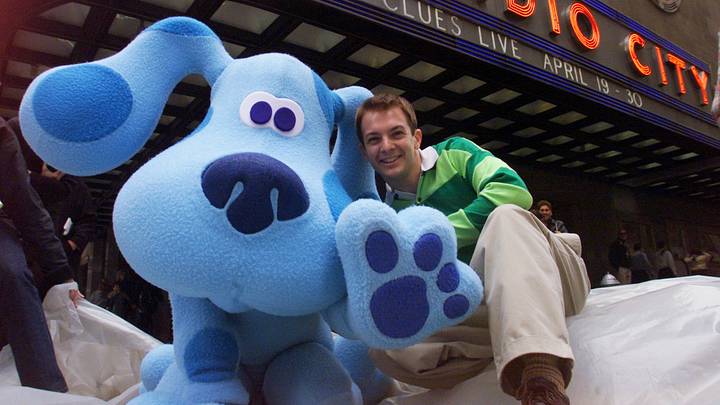
If you were a '90s kid and love solving mysteries and puzzles, there's a good chance you grew up watching Blue's Clues. The aptly named puppy, Blue, would leave clues around the house for her owner, Steve, to find and then figure out what she wanted. And while people like to mock interactive preschool shows for being super obvious, Blue's Clues was innovative for its time in the way it let kids be part of the program.
Blue's Clues was unique among educational shows, not just for pioneering the wave of interactive programs in the '90s and early 2000s, but also because it intentionally aired episodes repetitively. And it wasn't because the people at Nick Jr. were lazy or the Blue's Clues team was behind on filming. The reason Blue's Clues would air the same episode five days in a row came down to science.
Child Psychology & Blue's Clues
When it came to television for young children, many adults in the 1990s didn't think it was necessary. Toddlers and preschool-aged children wouldn't have the attention span needed for a 20-minute show, and it would be a waste of money. But the creators of Blue's Clues, Traci Paige Johnson, Angela C. Santomero, and Todd Kessler, along with a child psychologist, set out to prove that assumption wrong.
Dan Anderson, a child psychologist at the University of Massachusetts, used his research to help create a television show that could truly engage a young audience. He knew that Blue's Clues was interactive, with pauses for the audience to shout out answers and feel like they helped Steve find clues. But getting children to actually interact with the show was the challenge. Anderson suggested playing the same episode repeatedly.

A Risk Worth Taking
Every parent knows the struggle of reading the same picture book over and over to their young kids. They crave the familiarity of something they already know, while still learning and developing language and reading skills. Anderson realized that, to get preschoolers comfortable with the interactive parts of the show, they would need to be familiar with it. At his suggestion, the Blue's Clues creators took the idea to Nick Jr.
Brown Johnson, the senior vice president of Nick Jr. at the time, knew it was a risk to replay the same episode for five days, but he was willing to try. As it turned out, Blue's Clues was worth the risk. Millions of kids tuned in every day, Monday through Friday, re-watching the same episode and gaining new insights each time. Kids who were silent through the first watch were happily jumping up and down with glee after finding all three clues by the end of the week.

"We just figured out Blue's clues!"
Blue's Clues wasn't just any old television show made for kids. It was very intentional about the skills being taught to its young audience. Recognizing that preschoolers did have the attention spans to actively participate, and knowing that kids learn best through repetition, the Blue's Clues creative team worked to make sure it aired often enough for kids to get the most out of each episode.
The result was a generation of kids who learned to look for solutions to everyday problems, and who fell in love with a little blue puppy. The Blue's Clues audience grew up knowing they were capable puzzle-solvers and were "really smart." It turned out to be a truly great idea to repeatedly hear the message that "you can do anything that you want to do."