%20%20--%3E%0A%3Csvg%20version%3D%221.1%22%20id%3D%22Layer_1%22%20xmlns%3D%22http%3A%2F%2Fwww.w3.org%2F2000%2Fsvg%22%20xmlns%3Axlink%3D%22http%3A%2F%2Fwww.w3.org%2F1999%2Fxlink%22%20x%3D%220px%22%20y%3D%220px%22%0A%09%20viewBox%3D%220%200%20684.6%2068.1%22%20style%3D%22enable-background%3Anew%200%200%20684.6%2068.1%3B%22%20xml%3Aspace%3D%22preserve%22%3E%0A%3Cg%3E%0A%09%3Cpath%20d%3D%22M444.1%2C29.3h-17.4v14.5h17.4V29.3z%20M36.4%2C68.1l29.3-50.8V0H50.4L32.9%2C36.8L15.5%2C0H0v68.1h16.7V45.8l12.4%2C22.3H36.4z%0A%09%09%20M49.1%2C68.1h16.6V23.4L49.1%2C52.1V68.1z%20M76.6%2C68.1h45V53.8H93.3V41.6h21V27.1h-21V14.8h28.3V0.1h-45V68.1z%20M175.6%2C68.1h17.3v-68%0A%09%09h-16.5v40.3L150%2C0.1h-17.6v68h16.7V27.7L175.6%2C68.1z%20M235.8%2C14.8h15.4V0.1h-47.4v14.7H219v53.2h16.8V14.8z%20M290.3%2C45.9h-17.1%0A%09%09l7.5-15.6h2L290.3%2C45.9z%20M298.7%2C68.1h18l-32.2-68h-5.7l-32%2C68h18l3.3-7.1h27.1L298.7%2C68.1z%20M325.2%2C68.1h46.2V53.8h-29.6V0.1h-16.7%0A%09%09V68.1z%20M423.7%2C14.8h27.2V0.1H407v68h16.7V14.8z%20M462%2C68.1h46.2V53.8h-29.6V0.1H462V68.1z%20M564.8%2C34.1c0%2C10.7-7.2%2C19.2-18.5%2C19.2%0A%09%09c-11.4%2C0-18.5-8.5-18.5-19.2s7.1-19.2%2C18.5-19.2C557.6%2C14.9%2C564.8%2C23.4%2C564.8%2C34.1%20M580.6%2C34.1c0-19-14.2-34-34.3-34%0A%09%09c-20.2%2C0-34.3%2C15-34.3%2C34c0%2C19%2C14.1%2C34%2C34.3%2C34C566.4%2C68.1%2C580.6%2C53.1%2C580.6%2C34.1%20M604.8%2C20.5c0-4.1%2C3.3-6.2%2C6.7-6.2%0A%09%09c4.4%2C0%2C6.6%2C3%2C6.6%2C6.6h14.7C631.8%2C9.1%2C625.1%2C0.1%2C611%2C0.1c-12%2C0-21.7%2C9.3-21.7%2C20.6c0%2C10.9%2C5.9%2C15.9%2C16.7%2C19.8%0A%09%09c5.2%2C1.8%2C11.5%2C3.2%2C11.5%2C8c0%2C3.3-2.4%2C5.5-6.4%2C5.5c-3.6%2C0-6.6-3-6.6-6.7h-15.2c0%2C11.5%2C7.9%2C20.8%2C21.8%2C20.8c12%2C0%2C21.6-9.3%2C21.6-20.6%0A%09%09c0-10-5.3-16.4-16.7-19.8C610.6%2C26.1%2C604.8%2C25.3%2C604.8%2C20.5%20M670%2C20.9h14.7C683.8%2C9.1%2C677.1%2C0.1%2C663%2C0.1c-12%2C0-21.7%2C9.3-21.7%2C20.6%0A%09%09c0%2C10.9%2C5.9%2C15.9%2C16.7%2C19.8c5.2%2C1.8%2C11.5%2C3.2%2C11.5%2C8c0%2C3.3-2.4%2C5.5-6.4%2C5.5c-3.6%2C0-6.6-3-6.6-6.7h-15.2c0%2C11.5%2C7.9%2C20.8%2C21.8%2C20.8%0A%09%09c12%2C0%2C21.6-9.3%2C21.6-20.6c0-10-5.3-16.4-16.7-19.8c-5.4-1.6-11.3-2.4-11.3-7.2c0-4.1%2C3.3-6.2%2C6.7-6.2C667.7%2C14.4%2C670%2C17.3%2C670%2C20.9%0A%09%09%22%2F%3E%0A%3C%2Fg%3E%0A%3C%2Fsvg%3E%0A)

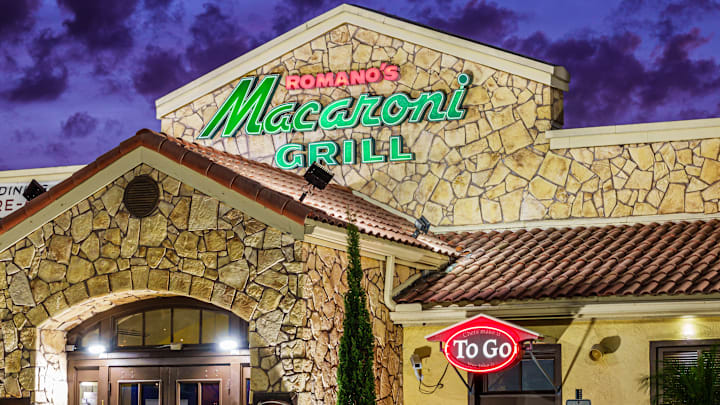
If your family went out for a fancy feast in the ‘90s, chances are these chain restaurants were part of your regular rotation. Whether it was a birthday celebration or a last-minute night out, these spots were everywhere—serving up everything from oversized pasta plates at Macaroni Grill to all-you-can-eat buffets at Souplantation and over-the-top themed experiences like the infamous Rainforest Cafe.
At their peak, they dominated malls, suburbs, and highway exits across the country, becoming as much a part of the outing as the order itself. But the food scene has changed, and these once-inescapable spots are no longer part of the everyday dining circuit. Here are eight iconic chains that used to be everywhere in the 1990s and early 2000s but are now relics of a distant restaurant past.
- Souplantation
- Don Pablo's
- Lone Star Steakhouse
- Rainforest Cafe
- Boston Market
- Joe's Crab Shack
- Romano's Macaroni Grill
- Fuddruckers
Souplantation

West Coasters remember all too well the ritual of heading to Souplantation (known as Sweet Tomatoes outside of California) for its comforting salad bar, steaming bowls of soup, and—best of all—unlimited focaccia and muffins. But its buffet-style, self-service model didn’t survive the COVID-19 pandemic, and the chain permanently closed all 97 locations in May 2020.
Don Pablo's

A festive Mexican dinner in the late ’90s and early 2000s often meant a trip to Chi-Chi’s or Don Pablo’s. At its peak, Don Pablo’s was the second-largest Tex-Mex chain in the U.S., with around 120 locations after opening its first restaurant in Lubbock, Texas. Known for its tacos, fajitas, and homemade flour tortillas, it became a go-to spot for casual celebrations. But the success didn’t last: the restaurant chain filed for bankruptcy in the 2000s, and its final location closed in 2019.
Lone Star Steakhouse

For a certain generation of diners, Lone Star Steakhouse was synonymous with a laid-back, Texas-style night out. With its honky-tonk atmosphere, affordable steaks, enormous salads, and casual, no-frills charm, the chain expanded rapidly to more than 250 locations at its height after launching in 1989. But the 2008 financial crisis hit hard, cutting into diners’ budgets and forcing dozens of shutdowns, and losses continued in the years that followed. By 2016, the brand had dwindled to just a handful of locations, and after filing for bankruptcy in 2017, most of the rest disappeared. Today, it no longer operates in the continental U.S., with its only remaining location in Guam.
Rainforest Cafe

During its heyday, Rainforest Cafe was more than just a restaurant: animatronic animals, indoor thunderstorms, and jungle-themed dining made it as much an experience as an eatery. Founded in 1994 at the Mall of America, the chain quickly took off in the mid-’90s, expanding to high-profile spots like Downtown Disney and drawing crowds with its immersive, family-friendly appeal. But as themed dining fell out of favor, many locations closed over the years, leaving only 16 in the U.S.—though it still evokes nostalgia among Millennials and Gen Z today.
Boston Market

Rotisserie chicken, cornbread, and homestyle sides made Boston Market a go-to for easy, comforting dinners throughout the early ’90s and into the 2000s. Originally known as Boston Chicken, the chain expanded from its New England roots to more than 1,000 locations nationwide, capitalizing on a surge in demand for quick, home-style meals.
However, financial struggles and shifting dining habits took a toll: after years of closures that reduced its footprint from approximately 300 locations to just a few dozen by 2023, the company's owner filed for bankruptcy, leaving its once-ubiquitous presence largely a thing of the past. As of 2026, only a small number of locations remain across the country, though the brand looks to expand internationally with a new outpost in India.
Joe's Crab Shack

Buckets of crab, buttery shrimp, and beachy, kitschy décor made Joe's Crab Shack a go-to for messy, hands-on seafood feasts in the ’90s and 2000s. Known for its paper-covered tables, bibs, and occasional line-dancing servers, the chain leaned into a playful, coastal dining experience that didn't actually require a seaside setting. But rising seafood costs and shifting trends hurt business, and after filing for bankruptcy in 2017, the chain rapidly contracted. Today, only around a dozen locations remain, down from nearly 150 during its heyday.
Romano's Macaroni Grill

The name Macaroni Grill practically conjures up images of open kitchens, oversized pasta portions, and the crinkle of butcher paper—where servers and diners alike would scribble names and doodles—back when it was a go-to Italian chain in the early 2000s. Inspired by rustic Italian-American fare, the restaurant grew to hundreds of outposts at its height, serving dishes like Penne Rustica and brick-oven pizzas alongside complimentary rosemary bread and olive oil. As with many casual-dining chains, mounting debt led to a bankruptcy filing in 2017 and a wave of closures. The chain now operates in just seven states—California, Colorado, Florida, Illinois, Ohio, Texas, and Utah—with a couple of airport locations.
Fuddruckers

Build-your-own burgers and a toppings bar stacked with everything from unlimited cheese sauce to pickles and peppers made Fuddruckers a standout in the fast-casual boom of the ’80s and ’90s. Known for its freshly baked buns and oversized patties, which ranged from bison to beef, the chain expanded to hundreds of locations at its peak. Following financial strain from the 2008 crisis, Fuddruckers filed for bankruptcy in 2010. After its parent company, Luby's, sold Fuddruckers in 2021, the once-expansive chain has been pared down to roughly 50 locations.