%20%20--%3E%0A%3Csvg%20version%3D%221.1%22%20id%3D%22Layer_1%22%20xmlns%3D%22http%3A%2F%2Fwww.w3.org%2F2000%2Fsvg%22%20xmlns%3Axlink%3D%22http%3A%2F%2Fwww.w3.org%2F1999%2Fxlink%22%20x%3D%220px%22%20y%3D%220px%22%0A%09%20viewBox%3D%220%200%20684.6%2068.1%22%20style%3D%22enable-background%3Anew%200%200%20684.6%2068.1%3B%22%20xml%3Aspace%3D%22preserve%22%3E%0A%3Cg%3E%0A%09%3Cpath%20d%3D%22M444.1%2C29.3h-17.4v14.5h17.4V29.3z%20M36.4%2C68.1l29.3-50.8V0H50.4L32.9%2C36.8L15.5%2C0H0v68.1h16.7V45.8l12.4%2C22.3H36.4z%0A%09%09%20M49.1%2C68.1h16.6V23.4L49.1%2C52.1V68.1z%20M76.6%2C68.1h45V53.8H93.3V41.6h21V27.1h-21V14.8h28.3V0.1h-45V68.1z%20M175.6%2C68.1h17.3v-68%0A%09%09h-16.5v40.3L150%2C0.1h-17.6v68h16.7V27.7L175.6%2C68.1z%20M235.8%2C14.8h15.4V0.1h-47.4v14.7H219v53.2h16.8V14.8z%20M290.3%2C45.9h-17.1%0A%09%09l7.5-15.6h2L290.3%2C45.9z%20M298.7%2C68.1h18l-32.2-68h-5.7l-32%2C68h18l3.3-7.1h27.1L298.7%2C68.1z%20M325.2%2C68.1h46.2V53.8h-29.6V0.1h-16.7%0A%09%09V68.1z%20M423.7%2C14.8h27.2V0.1H407v68h16.7V14.8z%20M462%2C68.1h46.2V53.8h-29.6V0.1H462V68.1z%20M564.8%2C34.1c0%2C10.7-7.2%2C19.2-18.5%2C19.2%0A%09%09c-11.4%2C0-18.5-8.5-18.5-19.2s7.1-19.2%2C18.5-19.2C557.6%2C14.9%2C564.8%2C23.4%2C564.8%2C34.1%20M580.6%2C34.1c0-19-14.2-34-34.3-34%0A%09%09c-20.2%2C0-34.3%2C15-34.3%2C34c0%2C19%2C14.1%2C34%2C34.3%2C34C566.4%2C68.1%2C580.6%2C53.1%2C580.6%2C34.1%20M604.8%2C20.5c0-4.1%2C3.3-6.2%2C6.7-6.2%0A%09%09c4.4%2C0%2C6.6%2C3%2C6.6%2C6.6h14.7C631.8%2C9.1%2C625.1%2C0.1%2C611%2C0.1c-12%2C0-21.7%2C9.3-21.7%2C20.6c0%2C10.9%2C5.9%2C15.9%2C16.7%2C19.8%0A%09%09c5.2%2C1.8%2C11.5%2C3.2%2C11.5%2C8c0%2C3.3-2.4%2C5.5-6.4%2C5.5c-3.6%2C0-6.6-3-6.6-6.7h-15.2c0%2C11.5%2C7.9%2C20.8%2C21.8%2C20.8c12%2C0%2C21.6-9.3%2C21.6-20.6%0A%09%09c0-10-5.3-16.4-16.7-19.8C610.6%2C26.1%2C604.8%2C25.3%2C604.8%2C20.5%20M670%2C20.9h14.7C683.8%2C9.1%2C677.1%2C0.1%2C663%2C0.1c-12%2C0-21.7%2C9.3-21.7%2C20.6%0A%09%09c0%2C10.9%2C5.9%2C15.9%2C16.7%2C19.8c5.2%2C1.8%2C11.5%2C3.2%2C11.5%2C8c0%2C3.3-2.4%2C5.5-6.4%2C5.5c-3.6%2C0-6.6-3-6.6-6.7h-15.2c0%2C11.5%2C7.9%2C20.8%2C21.8%2C20.8%0A%09%09c12%2C0%2C21.6-9.3%2C21.6-20.6c0-10-5.3-16.4-16.7-19.8c-5.4-1.6-11.3-2.4-11.3-7.2c0-4.1%2C3.3-6.2%2C6.7-6.2C667.7%2C14.4%2C670%2C17.3%2C670%2C20.9%0A%09%09%22%2F%3E%0A%3C%2Fg%3E%0A%3C%2Fsvg%3E%0A)

World War I had ended, and economic prosperity roared across the United States throughout the 1920s; that is, until 1929. The stock market crashed, banks failed, and Americans were swept into a historic economic downturn deemed the "Great Depression."
Suddenly, citizens were without work, with no way to put food on the table for themselves or their families. Some industries were hit harder than others; for example, crop prices in agriculture tanked amid the devastation of the Dust Bowl, a severe drought that plagued several U.S. states and dried up the soil.
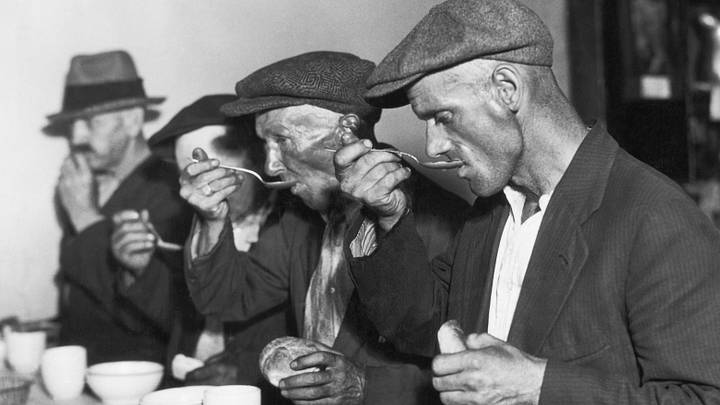
Food was not only unaffordable; it was scarce. Conditions were so unforgiving that churches and charities set up "breadlines" and soup kitchens, where unemployed city residents waited for free food. Small rural communities were also impacted, but a sense of community, borrowing and trading goods like homemade food from gardens and livestock, and canning helped them survive.
We know ingredients were in short supply, and meals were makeshift, but what did families really eat to survive the Great Depression?
HOOVER STEW

Former President Herbert Hoover was criticized for the role he played (or didn’t play) in easing the hardships of the Great Depression. According to U.S. History, he refused to launch relief programs for the hungry or use federal dollars to "stimulate the economy." He also signed the Smoot-Hawley Act in 1930, which raised U.S. tariffs. Other countries then attached tariffs to U.S. exports, reducing demand for American products abroad and worsening the economic crisis.
It wasn’t until Franklin Delano Roosevelt signed the New Deal that the economy became more stable, and Americans gained necessary resources. Needless to say, many blamed Hoover for the duration of the Great Depression.
"Hoover Stew," named after the president, was a hodgepodge of inexpensive items families could find in their cabinets. The stew was served in rural homes and in bulk at soup kitchens, and included pasta, inexpensive meats (often hot dogs), and canned vegetables. The dish was designed to provide nutrients while keeping things cost-effective.
Sure, it doesn’t sound like the most flavorful option, but Americans were just glad to have something to eat.
POOR MAN'S MEAL

Like Hoover Stew, a "Poor Man’s Meal,” named to reflect the desperation of the times, was a mixture of affordable ingredients compiled for survival. Families searched their homes for simple ingredients and created recipes that everyone could afford and that would last for days. One such recipe called for onions, potatoes, and, once again, meat that wouldn’t break the bank.
Some used water and tomato sauce; others added salt and pepper, cooked it on the stove, and served it in a skillet.
WATER PIE

Because ingredients were limited and people could afford very little, families living during the Great Depression were forced to get creative. One such creation was water pie. Served as a dessert, water pie consisted mostly of water.
The dish called for only a few ingredients: water, sugar, flour, and butter. Milk and eggs were increasingly rare and expensive, so families didn’t bother adding them. Once baked, it looked like a clear jelly or cream in a crumb shell.
When a meal, let alone a dessert, was not promised, one could only hope for water pie. And don't even get us started on Wacky Cake!
MOCK CHICKEN

Mock chicken is exactly what you might assume: fake chicken. Unlike the plant-based substitutes of the modern era, people trying to survive during the Great Depression had no choice but to create no-chicken chicken. Meat was pricey, and families who owned chickens kept them for eggs, rather than slaughtering them for a few days’ worth of meat. Thus, mock chicken was born.
The recipe used eggs, onion, butter, and boiled and peeled tomatoes. It was basically a scrambled egg fried with tomato and onion, used to imitate chicken. Tasting Table noted that mock chicken was predominantly served cold, with bread used to soak up the remnants.
MILK BREAD

Milk bread, or milk toast, was another creation that utilized the most available, basic, and cost-effective ingredients. People waited in line for hours to receive soup and bread because it was cheap and, unlike meat, easier to obtain.
Milk bread was a breakfast variation risen from hardship. Families would sprinkle cinnamon and sugar on bread or toast, tear it into pieces, and pour warm milk over top. Some even added butter or lard if available. The bread wasn’t toasted; it was simply hard from being stale and needed to be used up.
POTATO SOUP

Starches were popular during the Great Depression. Many grew potatoes, which made them cheap and easy to throw into recipes (including soup); plus, they were very filling! Carbs were also important because they provided energy, and when your days sometimes consisted of just one meal, you needed all the energy you could get.
Modern potato soup is loaded with seasonings and flavor, but that was not the case 90 years ago. Recipes from the Great Depression called for, you guessed it, potatoes (diced and mashed, of course), onions, carrots, and butter.