%20%20--%3E%0A%3Csvg%20version%3D%221.1%22%20id%3D%22Layer_1%22%20xmlns%3D%22http%3A%2F%2Fwww.w3.org%2F2000%2Fsvg%22%20xmlns%3Axlink%3D%22http%3A%2F%2Fwww.w3.org%2F1999%2Fxlink%22%20x%3D%220px%22%20y%3D%220px%22%0A%09%20viewBox%3D%220%200%20684.6%2068.1%22%20style%3D%22enable-background%3Anew%200%200%20684.6%2068.1%3B%22%20xml%3Aspace%3D%22preserve%22%3E%0A%3Cg%3E%0A%09%3Cpath%20d%3D%22M444.1%2C29.3h-17.4v14.5h17.4V29.3z%20M36.4%2C68.1l29.3-50.8V0H50.4L32.9%2C36.8L15.5%2C0H0v68.1h16.7V45.8l12.4%2C22.3H36.4z%0A%09%09%20M49.1%2C68.1h16.6V23.4L49.1%2C52.1V68.1z%20M76.6%2C68.1h45V53.8H93.3V41.6h21V27.1h-21V14.8h28.3V0.1h-45V68.1z%20M175.6%2C68.1h17.3v-68%0A%09%09h-16.5v40.3L150%2C0.1h-17.6v68h16.7V27.7L175.6%2C68.1z%20M235.8%2C14.8h15.4V0.1h-47.4v14.7H219v53.2h16.8V14.8z%20M290.3%2C45.9h-17.1%0A%09%09l7.5-15.6h2L290.3%2C45.9z%20M298.7%2C68.1h18l-32.2-68h-5.7l-32%2C68h18l3.3-7.1h27.1L298.7%2C68.1z%20M325.2%2C68.1h46.2V53.8h-29.6V0.1h-16.7%0A%09%09V68.1z%20M423.7%2C14.8h27.2V0.1H407v68h16.7V14.8z%20M462%2C68.1h46.2V53.8h-29.6V0.1H462V68.1z%20M564.8%2C34.1c0%2C10.7-7.2%2C19.2-18.5%2C19.2%0A%09%09c-11.4%2C0-18.5-8.5-18.5-19.2s7.1-19.2%2C18.5-19.2C557.6%2C14.9%2C564.8%2C23.4%2C564.8%2C34.1%20M580.6%2C34.1c0-19-14.2-34-34.3-34%0A%09%09c-20.2%2C0-34.3%2C15-34.3%2C34c0%2C19%2C14.1%2C34%2C34.3%2C34C566.4%2C68.1%2C580.6%2C53.1%2C580.6%2C34.1%20M604.8%2C20.5c0-4.1%2C3.3-6.2%2C6.7-6.2%0A%09%09c4.4%2C0%2C6.6%2C3%2C6.6%2C6.6h14.7C631.8%2C9.1%2C625.1%2C0.1%2C611%2C0.1c-12%2C0-21.7%2C9.3-21.7%2C20.6c0%2C10.9%2C5.9%2C15.9%2C16.7%2C19.8%0A%09%09c5.2%2C1.8%2C11.5%2C3.2%2C11.5%2C8c0%2C3.3-2.4%2C5.5-6.4%2C5.5c-3.6%2C0-6.6-3-6.6-6.7h-15.2c0%2C11.5%2C7.9%2C20.8%2C21.8%2C20.8c12%2C0%2C21.6-9.3%2C21.6-20.6%0A%09%09c0-10-5.3-16.4-16.7-19.8C610.6%2C26.1%2C604.8%2C25.3%2C604.8%2C20.5%20M670%2C20.9h14.7C683.8%2C9.1%2C677.1%2C0.1%2C663%2C0.1c-12%2C0-21.7%2C9.3-21.7%2C20.6%0A%09%09c0%2C10.9%2C5.9%2C15.9%2C16.7%2C19.8c5.2%2C1.8%2C11.5%2C3.2%2C11.5%2C8c0%2C3.3-2.4%2C5.5-6.4%2C5.5c-3.6%2C0-6.6-3-6.6-6.7h-15.2c0%2C11.5%2C7.9%2C20.8%2C21.8%2C20.8%0A%09%09c12%2C0%2C21.6-9.3%2C21.6-20.6c0-10-5.3-16.4-16.7-19.8c-5.4-1.6-11.3-2.4-11.3-7.2c0-4.1%2C3.3-6.2%2C6.7-6.2C667.7%2C14.4%2C670%2C17.3%2C670%2C20.9%0A%09%09%22%2F%3E%0A%3C%2Fg%3E%0A%3C%2Fsvg%3E%0A)

For Americans, “Sun’s out, buns out” is the unofficial motto of Memorial Day weekend—in more ways than one. Not only is it time to shed a few layers and kick off swimming season at the local pool, but it’s the first excuse of the year to fire up the grill and drop a few patties into those pillowy potato buns.
Data from the Hearth, Patio and Barbecue Association shows that nearly 58% of Americans host a cookout over the long weekend, making it the second biggest grilling holiday of the year, right behind the Fourth of July. But how did a solemn day dedicated to honoring those who died while serving in the military become so deeply intertwined with charred meats and cold beer?
The link between open-air cooking and American patriotism goes back centuries. Long before Memorial Day became a federal holiday in 1971, 19th-century political campaign managers drew massive crowds to summer rallies by promising free meals of pork, beef, and oxen slow-roasted over pits—a smoking method early colonists adopted from Caribbean indigenous peoples.
In times of conflict, food has always doubled as a source of both calories and comfort, with thousands of Union and Confederate veterans famously gathering for unifying "peace barbecues." By the pre-World War II era, public feasts gave way to private property. Thanks to the sudden availability of commercial charcoal and portable grills, Americans could finally ditch the massive crowds and play pitmaster in their own backyards.
From wartime rations to immigrant traditions, here's the real history behind the staples on your Memorial Day plate.
Hamburgers

It’s hard to imagine the quintessential cookout without the hamburger, but its story begins far from the backyard grill. The burger traces back to hamburg steak, a minced beef dish brought to the United States by German immigrants in the 19th century. What eventually became the modern hamburger only came together once Americans upgraded ground beef with the help of two game-changing conveniences: the meat grinder and the soft, split bun that turned a loose patty into a portable meal.
The name itself briefly became a liability during World War I, when anti-German sentiment swept the country. Some restaurants swapped “hamburgers” for patriotic alternatives like “Liberty steaks,” part of a broader trend that also turned sauerkraut into “liberty cabbage.” The rebrands didn’t last, but the burger did—and by the mid-20th century, it had become a defining feature of American cookout culture.
Hot Dogs

The hot dog became a Memorial Day mainstay for one simple reason: it was easy to eat on the go. German immigrants introduced frankfurters to the United States in the late 19th century, but the real turning point came when vendors began serving the sausages tucked into soft buns.
According to popular accounts, Coney Island vendor Charles Feltman helped popularize the format in the 1870s, turning it into a beachside staple for crowds who wanted something quick, cheap, and easy to eat with one hand. From boardwalks to baseball stadiums to backyards, the hot dog spread wherever Americans gathered outdoors—and eventually became inseparable from the summer barbecue itself.
BBQ Ribs

Saucy, succulent barbecue ribs owe much of their identity to African American culinary traditions, particularly in the South, where enslaved cooks developed techniques for slow-smoking and seasoning tougher cuts of meat over wood-fired pits. Over generations, those methods evolved into the regional barbecue styles now associated with places like Texas, Memphis, Kansas City, and Chicago.
Barbecue also solved a very practical problem: how to feed a lot of people at once. Cooking low and slow over an open fire made it ideal for large gatherings, where food needed to stretch across families, communities, and celebrations. By the time Memorial Day cookouts became a national tradition, ribs had already earned their place as a centerpiece of the spread.
SPAM

Few cookout foods have a stranger path to the picnic table than SPAM. Introduced by Hormel in 1937, the canned meat became a wartime staple during World War II, when more than 100 million pounds were shipped overseas to feed soldiers.
Even back home, rationing made fresh meat harder to come by, and SPAM filled the gap as an affordable, shelf-stable alternative. After the war, it lingered in American kitchens and eventually found its way onto the grill—sliced, skewered, fried, or grilled into no-fuss cookout fare.
Corn on the Cob

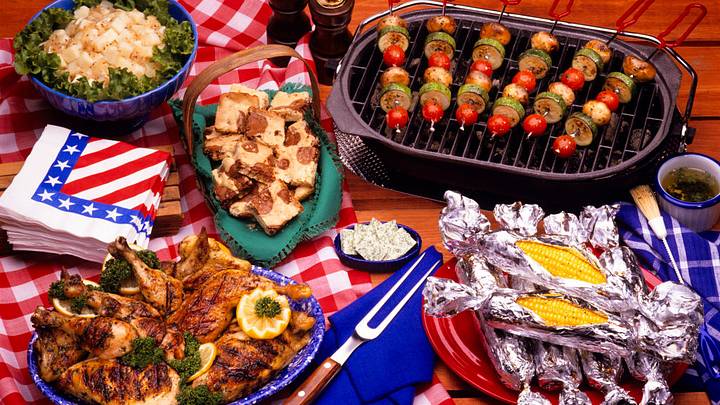
Smoky, sweet corn on the cob has deep roots in the Americas, where Indigenous communities cultivated maize for thousands of years, long before Columbus came into the picture. Over time, sweet corn became especially associated with late spring and summer, when it reaches peak freshness.
That seasonal timing helped cement its place in outdoor cooking traditions. Roasted over fire or boiled and finished with butter and salt, corn on the cob became one of the simplest—and most enduring—symbols of summer cookouts.
Pork and Beans

Pork and beans became a natural companion to barbecued meats for reasons that had less to do with flavor than practicality. As canned foods became widely available in the late 19th and early 20th centuries, baked beans emerged as one of the most reliable ways to feed a crowd cheaply and efficiently.
Versions of the dish were commonly used in military contexts because they were shelf-stable, filling, and easy to transport. That same convenience translated naturally to backyard gatherings, where hosts needed side dishes that could sit out, stretch far, and pair easily with grilled mains.
Potato Salad

The creamy potato salad on your plate actually survived a massive identity crisis before becoming a summer staple. When German immigrants arrived in America, they brought their traditional recipe: a warm dish of boiled potatoes tossed in a sharp, savory mixture of vinegar, oil, and bacon fat.
However, tastes shifted as the dish evolved across the country. By the early 20th century, when shelf-stable commercial mayonnaise hit grocery store shelves, the cold, mayo-drenched version won out completely—transforming the dish into the chilled antidote to a hot day in late May.