%20%20--%3E%0A%3Csvg%20version%3D%221.1%22%20id%3D%22Layer_1%22%20xmlns%3D%22http%3A%2F%2Fwww.w3.org%2F2000%2Fsvg%22%20xmlns%3Axlink%3D%22http%3A%2F%2Fwww.w3.org%2F1999%2Fxlink%22%20x%3D%220px%22%20y%3D%220px%22%0A%09%20viewBox%3D%220%200%20684.6%2068.1%22%20style%3D%22enable-background%3Anew%200%200%20684.6%2068.1%3B%22%20xml%3Aspace%3D%22preserve%22%3E%0A%3Cg%3E%0A%09%3Cpath%20d%3D%22M444.1%2C29.3h-17.4v14.5h17.4V29.3z%20M36.4%2C68.1l29.3-50.8V0H50.4L32.9%2C36.8L15.5%2C0H0v68.1h16.7V45.8l12.4%2C22.3H36.4z%0A%09%09%20M49.1%2C68.1h16.6V23.4L49.1%2C52.1V68.1z%20M76.6%2C68.1h45V53.8H93.3V41.6h21V27.1h-21V14.8h28.3V0.1h-45V68.1z%20M175.6%2C68.1h17.3v-68%0A%09%09h-16.5v40.3L150%2C0.1h-17.6v68h16.7V27.7L175.6%2C68.1z%20M235.8%2C14.8h15.4V0.1h-47.4v14.7H219v53.2h16.8V14.8z%20M290.3%2C45.9h-17.1%0A%09%09l7.5-15.6h2L290.3%2C45.9z%20M298.7%2C68.1h18l-32.2-68h-5.7l-32%2C68h18l3.3-7.1h27.1L298.7%2C68.1z%20M325.2%2C68.1h46.2V53.8h-29.6V0.1h-16.7%0A%09%09V68.1z%20M423.7%2C14.8h27.2V0.1H407v68h16.7V14.8z%20M462%2C68.1h46.2V53.8h-29.6V0.1H462V68.1z%20M564.8%2C34.1c0%2C10.7-7.2%2C19.2-18.5%2C19.2%0A%09%09c-11.4%2C0-18.5-8.5-18.5-19.2s7.1-19.2%2C18.5-19.2C557.6%2C14.9%2C564.8%2C23.4%2C564.8%2C34.1%20M580.6%2C34.1c0-19-14.2-34-34.3-34%0A%09%09c-20.2%2C0-34.3%2C15-34.3%2C34c0%2C19%2C14.1%2C34%2C34.3%2C34C566.4%2C68.1%2C580.6%2C53.1%2C580.6%2C34.1%20M604.8%2C20.5c0-4.1%2C3.3-6.2%2C6.7-6.2%0A%09%09c4.4%2C0%2C6.6%2C3%2C6.6%2C6.6h14.7C631.8%2C9.1%2C625.1%2C0.1%2C611%2C0.1c-12%2C0-21.7%2C9.3-21.7%2C20.6c0%2C10.9%2C5.9%2C15.9%2C16.7%2C19.8%0A%09%09c5.2%2C1.8%2C11.5%2C3.2%2C11.5%2C8c0%2C3.3-2.4%2C5.5-6.4%2C5.5c-3.6%2C0-6.6-3-6.6-6.7h-15.2c0%2C11.5%2C7.9%2C20.8%2C21.8%2C20.8c12%2C0%2C21.6-9.3%2C21.6-20.6%0A%09%09c0-10-5.3-16.4-16.7-19.8C610.6%2C26.1%2C604.8%2C25.3%2C604.8%2C20.5%20M670%2C20.9h14.7C683.8%2C9.1%2C677.1%2C0.1%2C663%2C0.1c-12%2C0-21.7%2C9.3-21.7%2C20.6%0A%09%09c0%2C10.9%2C5.9%2C15.9%2C16.7%2C19.8c5.2%2C1.8%2C11.5%2C3.2%2C11.5%2C8c0%2C3.3-2.4%2C5.5-6.4%2C5.5c-3.6%2C0-6.6-3-6.6-6.7h-15.2c0%2C11.5%2C7.9%2C20.8%2C21.8%2C20.8%0A%09%09c12%2C0%2C21.6-9.3%2C21.6-20.6c0-10-5.3-16.4-16.7-19.8c-5.4-1.6-11.3-2.4-11.3-7.2c0-4.1%2C3.3-6.2%2C6.7-6.2C667.7%2C14.4%2C670%2C17.3%2C670%2C20.9%0A%09%09%22%2F%3E%0A%3C%2Fg%3E%0A%3C%2Fsvg%3E%0A)

Most Americans associate Cinco de Mayo with salt-rimmed margaritas and mountainous plates of nachos, but if you take a trip south of the border on May 5, you'll find the reality looks a lot different. In Mexico, Cinco de Mayo isn't a nationwide festival; it's primarily observed in the state of Puebla, situated in the east-central part of the country. That’s because the day doesn't celebrate Mexican independence (which actually falls on September 16), but rather a single, highly specific military upset: the Mexican army’s unlikely victory over French forces at the Battle of Puebla in 1862.
Beyond its often-misunderstood holidays, Mexican cuisine is deeply tied to ritual and tradition. From symbolic dishes like chiles en nogada in Puebla to widely known staples like tamales and tacos, food in Mexico often carries meaning that goes far beyond taste. Many dishes are connected to specific occasions—from Día de los Muertos to Christmas—serving as offerings, symbols of remembrance, or ways to bring communities together. What looks like everyday comfort food today often began as something far more sacred. If you get beyond the first bite of these four classic Mexican foods, you’ll find histories tied to ancient, fascinating rituals.
Pan de Muerto

Few foods are as explicitly ritualistic as pan de muerto, the sweet, anise-and-orange-blossom-scented bread baked in late October for Día de los Muertos. Placed on ofrendas—family altars—alongside candles, bright orange marigolds, and photographs, it’s meant to nourish the spirits of deceased loved ones returning for a brief visit on November 1 and 2. Unlike dishes whose original meanings have drifted over time, pan de muerto still does exactly what it was created to do: serve as a direct, physical offering to the afterlife.
The bread’s shape isn't just a baker's whim—it’s a literal map of the human body and the cosmos. The small sphere placed on top represents the skull of the deceased, while the raised strips of dough radiating down the sides mimic the bones of the dead and the four cardinal directions of the universe, a nod to the ancient Aztec gods who ruled over them. Even the round shape of the loaf itself holds meaning, symbolizing the continuous cycle of life and death.
But the sweet bread isn’t just for the dead: pan de muerto is traditionally eaten by the living at the gravesites of the deceased, and in some regions, it's enjoyed for weeks leading up to the holiday. Making it remains a vital part of the ritual itself, functioning less like baking a seasonal dessert and more like participating in a living tradition that blurs the line between the living and the dead.
Mole Poblano

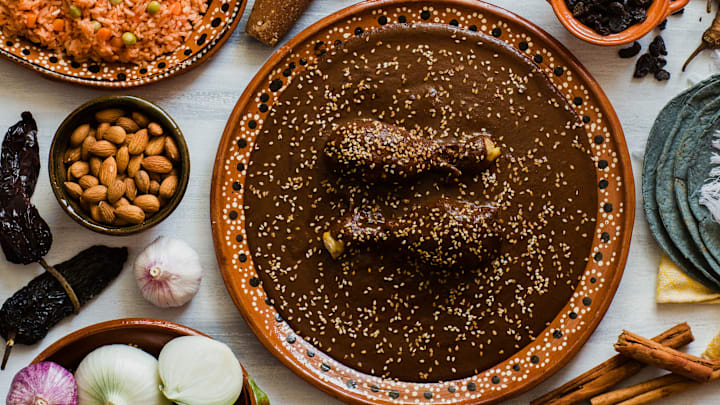
The rich, reddish-brown sauce known as mole poblano is sometimes pulled into Cinco de Mayo conversations in the U.S., mostly because of its regional connection to Puebla. But its real significance goes much deeper than the military holiday—even though it is one of the most consumed dishes during the festivities, traditionally served over turkey or chicken.
Mole is famous for being incredibly labor-intensive: a dizzying array of dozens of ingredients, including chiles, seeds, nuts, spices, and Mexican chocolate, are individually toasted, ground, and simmered into a velvety sauce. While its origin story is a delicious tangle of history and legend (one popular story credits 17th-century nuns at the Santa Rosa convent in Puebla scrambling to feed a visiting archbishop), its true ritual value lies in the process of its creation. In indigenous Mesoamerican culture, complex sauces called molli were ground on a stone metate and offered to the gods. After the Spanish conquest, this sacred grinding process merged with European ingredients to become the ultimate celebratory dish.
But the ritual element here isn't just visual symbolism, or even its role in bridging the Old and New Worlds through food: it's the process. Because it takes hours, or even days, to make properly from scratch, preparing mole is a communal ritual, or as some may say, a "labor of love." It demands time, collaboration, and intense attention from multiple generations in the kitchen, turning the act of cooking into a shared cultural ceremony that marks major life moments like weddings, baptisms, and patron saint festivals.
Pozole Rojo

What looks like a comforting, hearty hominy corn stew today actually has ritual roots in a time long before it became a staple on our dinner tables. Whether you’re in Mexico or traveling through the American Southwest, you’ll find that a massive pot of steaming pozole rojo is the ultimate symbol of celebration and community. It’s a time-honored tradition for New Year’s Eve, Christmas Eve, and Mexican Independence Day—but in pre-Hispanic Mesoamerica, the consumption of this dish carried a meaning that was literally a matter of life and death.
Because the Aztecs believed that the corn was a gift from the gods, maize was considered a sacred substance. To honor Xipe Tótec, the god of agriculture, fertility, and regeneration, priests prepared a ritual version of the soup called tlacatlaolli. The star ingredient alongside the sacred corn was the flesh of sacrificed enemy warriors. Consuming the soup allowed the Aztec elite to absorb the spirit and strength of the sacrifice, symbolically ensuring that the earth would remain fertile for another season.
After the Spanish conquest, the Catholic Church banned cannibalism, and the human flesh was replaced with pork, which the conquistadors reportedly noted tasted remarkably similar. Even today, when it’s served to hungry holiday crowds from Albuquerque to Mexico City, the spirit of pozole remains the same: it’s a dish meant to bring life to a whole room, while keeping an ancient tradition alive.