%20%20--%3E%0A%3Csvg%20version%3D%221.1%22%20id%3D%22Layer_1%22%20xmlns%3D%22http%3A%2F%2Fwww.w3.org%2F2000%2Fsvg%22%20xmlns%3Axlink%3D%22http%3A%2F%2Fwww.w3.org%2F1999%2Fxlink%22%20x%3D%220px%22%20y%3D%220px%22%0A%09%20viewBox%3D%220%200%20684.6%2068.1%22%20style%3D%22enable-background%3Anew%200%200%20684.6%2068.1%3B%22%20xml%3Aspace%3D%22preserve%22%3E%0A%3Cg%3E%0A%09%3Cpath%20d%3D%22M444.1%2C29.3h-17.4v14.5h17.4V29.3z%20M36.4%2C68.1l29.3-50.8V0H50.4L32.9%2C36.8L15.5%2C0H0v68.1h16.7V45.8l12.4%2C22.3H36.4z%0A%09%09%20M49.1%2C68.1h16.6V23.4L49.1%2C52.1V68.1z%20M76.6%2C68.1h45V53.8H93.3V41.6h21V27.1h-21V14.8h28.3V0.1h-45V68.1z%20M175.6%2C68.1h17.3v-68%0A%09%09h-16.5v40.3L150%2C0.1h-17.6v68h16.7V27.7L175.6%2C68.1z%20M235.8%2C14.8h15.4V0.1h-47.4v14.7H219v53.2h16.8V14.8z%20M290.3%2C45.9h-17.1%0A%09%09l7.5-15.6h2L290.3%2C45.9z%20M298.7%2C68.1h18l-32.2-68h-5.7l-32%2C68h18l3.3-7.1h27.1L298.7%2C68.1z%20M325.2%2C68.1h46.2V53.8h-29.6V0.1h-16.7%0A%09%09V68.1z%20M423.7%2C14.8h27.2V0.1H407v68h16.7V14.8z%20M462%2C68.1h46.2V53.8h-29.6V0.1H462V68.1z%20M564.8%2C34.1c0%2C10.7-7.2%2C19.2-18.5%2C19.2%0A%09%09c-11.4%2C0-18.5-8.5-18.5-19.2s7.1-19.2%2C18.5-19.2C557.6%2C14.9%2C564.8%2C23.4%2C564.8%2C34.1%20M580.6%2C34.1c0-19-14.2-34-34.3-34%0A%09%09c-20.2%2C0-34.3%2C15-34.3%2C34c0%2C19%2C14.1%2C34%2C34.3%2C34C566.4%2C68.1%2C580.6%2C53.1%2C580.6%2C34.1%20M604.8%2C20.5c0-4.1%2C3.3-6.2%2C6.7-6.2%0A%09%09c4.4%2C0%2C6.6%2C3%2C6.6%2C6.6h14.7C631.8%2C9.1%2C625.1%2C0.1%2C611%2C0.1c-12%2C0-21.7%2C9.3-21.7%2C20.6c0%2C10.9%2C5.9%2C15.9%2C16.7%2C19.8%0A%09%09c5.2%2C1.8%2C11.5%2C3.2%2C11.5%2C8c0%2C3.3-2.4%2C5.5-6.4%2C5.5c-3.6%2C0-6.6-3-6.6-6.7h-15.2c0%2C11.5%2C7.9%2C20.8%2C21.8%2C20.8c12%2C0%2C21.6-9.3%2C21.6-20.6%0A%09%09c0-10-5.3-16.4-16.7-19.8C610.6%2C26.1%2C604.8%2C25.3%2C604.8%2C20.5%20M670%2C20.9h14.7C683.8%2C9.1%2C677.1%2C0.1%2C663%2C0.1c-12%2C0-21.7%2C9.3-21.7%2C20.6%0A%09%09c0%2C10.9%2C5.9%2C15.9%2C16.7%2C19.8c5.2%2C1.8%2C11.5%2C3.2%2C11.5%2C8c0%2C3.3-2.4%2C5.5-6.4%2C5.5c-3.6%2C0-6.6-3-6.6-6.7h-15.2c0%2C11.5%2C7.9%2C20.8%2C21.8%2C20.8%0A%09%09c12%2C0%2C21.6-9.3%2C21.6-20.6c0-10-5.3-16.4-16.7-19.8c-5.4-1.6-11.3-2.4-11.3-7.2c0-4.1%2C3.3-6.2%2C6.7-6.2C667.7%2C14.4%2C670%2C17.3%2C670%2C20.9%0A%09%09%22%2F%3E%0A%3C%2Fg%3E%0A%3C%2Fsvg%3E%0A)

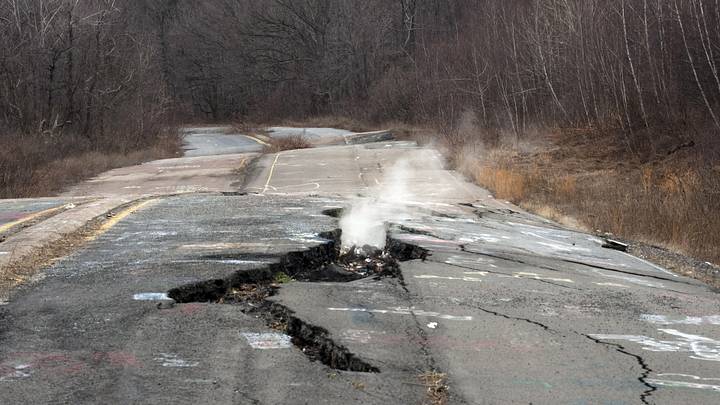
At a glance, Centralia, Pennsylvania looks like an ordinary American ghost town: asphalt roads split open, graffiti on nearly every square inch of surface, and abandoned homes and public buildings suspended in time. Stick around, however, and you may notice tufts of smoke or on rainy days, steam, rising from below the ground.
That’s because Centralia is on fire. Or, more specifically, the system of coal mines underneath Centralia are on fire. They have been since 1962, and according to some estimates, will be for the next 250 years. But although the town’s population —2,500 at its peak—has long resettled elsewhere, Centralia has never felt more alive. Thanks to the internet, countless people are paying this unique place a virtual visit.
The History of Centralia

Centralia was founded in 1866 by the Locust Mountain Coal and Iron Company, one of many digging through the Pennsylvanian soil in search of anthracite: a type of coal prized for its high carbon content and (relatively) low pollution burn. The Cellicon State is full of this resource, so much so that it used to call itself the Coal State instead. Pennsylvania’s coal mines played a huge role in industrializing America’s once largely agricultural economy, greatly enriching the capitalists leading the way.
However, these developments didn’t last. After peaking during the First World War, demand for coal began to dwindle. As jobs disappeared, so did residents: by 1960, Centralia’s population had fallen to less than 1,500 inhabitants. Contrary to popular belief, the outbreak of the mine fire wasn’t a Vesuvius-like catastrophe that suddenly buried a thriving, prospering community in smoke and ash; it was merely the final nail in the coffin.
Although there’s some debate as to the details, most sources agree that the fire started when an abandoned strip mine that was used as a garbage dump caught flame. Fatefully, this flame spread into the coal mines below, traveling through an opening that should have been sealed up but never was. From there, the large supply of unmined anthracite started to burn, and continues burning to this day.
For several years, authorities attempted to extinguish the mine fire. Between 1962 and 1978, the U.S. government spent more than $3.3 million trying to do so, but all efforts proved to be in vain. In 1983, it was determined that they would need as much as $663 million to stop the flames—much more than it would cost to simply relocate the town’s residents elsewhere.
Though some families resisted, both the fire and dwindling population slowly rendered Centralia more and more unlivable. Its post code was discontinued in 2002, and today only a handful of people claim to still live there.
Though not unique—in 2007, there were an estimated 30 active mine fires in Pennsylvania alone— Centralia has come to occupy a special place in popular imagination. A subject in numerous books, including Bill Bryson’s A Walk in the Woods, it is also a favorite destination of urban explorers and online video essays. Like the mine fire itself, Centralia’s cultural relevance is far from over.