%20%20--%3E%0A%3Csvg%20version%3D%221.1%22%20id%3D%22Layer_1%22%20xmlns%3D%22http%3A%2F%2Fwww.w3.org%2F2000%2Fsvg%22%20xmlns%3Axlink%3D%22http%3A%2F%2Fwww.w3.org%2F1999%2Fxlink%22%20x%3D%220px%22%20y%3D%220px%22%0A%09%20viewBox%3D%220%200%20684.6%2068.1%22%20style%3D%22enable-background%3Anew%200%200%20684.6%2068.1%3B%22%20xml%3Aspace%3D%22preserve%22%3E%0A%3Cg%3E%0A%09%3Cpath%20d%3D%22M444.1%2C29.3h-17.4v14.5h17.4V29.3z%20M36.4%2C68.1l29.3-50.8V0H50.4L32.9%2C36.8L15.5%2C0H0v68.1h16.7V45.8l12.4%2C22.3H36.4z%0A%09%09%20M49.1%2C68.1h16.6V23.4L49.1%2C52.1V68.1z%20M76.6%2C68.1h45V53.8H93.3V41.6h21V27.1h-21V14.8h28.3V0.1h-45V68.1z%20M175.6%2C68.1h17.3v-68%0A%09%09h-16.5v40.3L150%2C0.1h-17.6v68h16.7V27.7L175.6%2C68.1z%20M235.8%2C14.8h15.4V0.1h-47.4v14.7H219v53.2h16.8V14.8z%20M290.3%2C45.9h-17.1%0A%09%09l7.5-15.6h2L290.3%2C45.9z%20M298.7%2C68.1h18l-32.2-68h-5.7l-32%2C68h18l3.3-7.1h27.1L298.7%2C68.1z%20M325.2%2C68.1h46.2V53.8h-29.6V0.1h-16.7%0A%09%09V68.1z%20M423.7%2C14.8h27.2V0.1H407v68h16.7V14.8z%20M462%2C68.1h46.2V53.8h-29.6V0.1H462V68.1z%20M564.8%2C34.1c0%2C10.7-7.2%2C19.2-18.5%2C19.2%0A%09%09c-11.4%2C0-18.5-8.5-18.5-19.2s7.1-19.2%2C18.5-19.2C557.6%2C14.9%2C564.8%2C23.4%2C564.8%2C34.1%20M580.6%2C34.1c0-19-14.2-34-34.3-34%0A%09%09c-20.2%2C0-34.3%2C15-34.3%2C34c0%2C19%2C14.1%2C34%2C34.3%2C34C566.4%2C68.1%2C580.6%2C53.1%2C580.6%2C34.1%20M604.8%2C20.5c0-4.1%2C3.3-6.2%2C6.7-6.2%0A%09%09c4.4%2C0%2C6.6%2C3%2C6.6%2C6.6h14.7C631.8%2C9.1%2C625.1%2C0.1%2C611%2C0.1c-12%2C0-21.7%2C9.3-21.7%2C20.6c0%2C10.9%2C5.9%2C15.9%2C16.7%2C19.8%0A%09%09c5.2%2C1.8%2C11.5%2C3.2%2C11.5%2C8c0%2C3.3-2.4%2C5.5-6.4%2C5.5c-3.6%2C0-6.6-3-6.6-6.7h-15.2c0%2C11.5%2C7.9%2C20.8%2C21.8%2C20.8c12%2C0%2C21.6-9.3%2C21.6-20.6%0A%09%09c0-10-5.3-16.4-16.7-19.8C610.6%2C26.1%2C604.8%2C25.3%2C604.8%2C20.5%20M670%2C20.9h14.7C683.8%2C9.1%2C677.1%2C0.1%2C663%2C0.1c-12%2C0-21.7%2C9.3-21.7%2C20.6%0A%09%09c0%2C10.9%2C5.9%2C15.9%2C16.7%2C19.8c5.2%2C1.8%2C11.5%2C3.2%2C11.5%2C8c0%2C3.3-2.4%2C5.5-6.4%2C5.5c-3.6%2C0-6.6-3-6.6-6.7h-15.2c0%2C11.5%2C7.9%2C20.8%2C21.8%2C20.8%0A%09%09c12%2C0%2C21.6-9.3%2C21.6-20.6c0-10-5.3-16.4-16.7-19.8c-5.4-1.6-11.3-2.4-11.3-7.2c0-4.1%2C3.3-6.2%2C6.7-6.2C667.7%2C14.4%2C670%2C17.3%2C670%2C20.9%0A%09%09%22%2F%3E%0A%3C%2Fg%3E%0A%3C%2Fsvg%3E%0A)

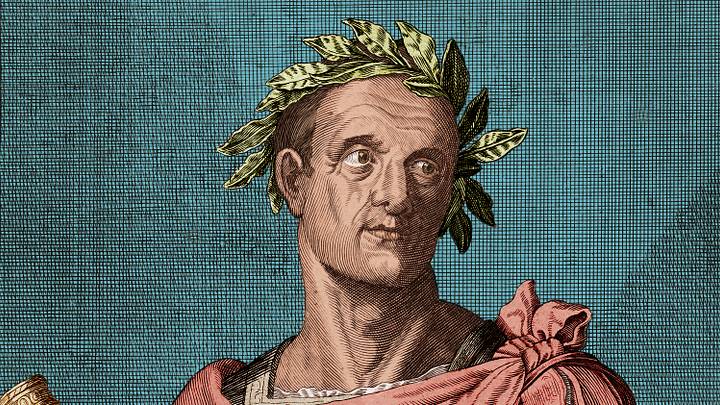
In 47 BC, Julius Caesar sailed to North Africa to mop up the remaining forces of his longtime rival, Pompey the Great, and the anti-Caesarian factions of the Senate. Pompey himself had been killed the year before, betrayed by courtiers of the Egyptian pharaoh Ptolemy XIII in an attempt to ingratiate themselves to Rome’s new master.
But although Caesar was on the cusp of becoming the undisputed ruler of the Republic, he nearly tripped before the finish line. Upon reaching the Tunisian coast, it’s believed the general lost his balance while disembarking and fell face-first in the sand for all his soldiers to see.
In any other time and place, this embarrassing accident would have been just that: an embarrassing accident. But to the superstitious Romans, it was apparently a bad omen—a sign from the gods that their campaign was doomed to fail, and that they should pack their belongings and turn back home.
An Embarrassing Accident Turned Into a Power Move

To the Romans, war was a matter of divination as much as manpower. Another famous story, recalled by the statesmen Cicero, claims that the Romans lost an important sea battle during the First Punic War because their commander—consul Publius Claudius Pulcher—refused to honor the ritual of the “sacred chickens.”
According to this ritual, the Romans could not engage in battle until the chickens had eaten their food. But Pulcher, eager to launch a surprise attack while he still could, refused to wait. “Since they do not wish to eat,” he exclaimed, “let them drink!” The chickens were thrown overboard, and the Roman fleet was utterly crushed.
As he fell, Caesar must have known what was at stake. Thinking quickly, he sought—as the Roman historian Suetonius put it—to give the omen “favourable turn.” As soon as he hit the ground, he sifted his hands through the sand and is believed to have shouted something that has since been reported on differently depending on the publication, with one claiming it to be, “I hold thee fast, Africa.” To onlookers, it seemed like their leader had fallen to his knees on purpose.
Though ultimately unverifiable and possibly apocryphal, historical anecdotes of Caesar’s deceptive qualities have greatly inspired his portrayal in popular media. In the play by William Shakespeare, for instance, Caesar feigns seizures because—in ancient times—epilepsy was sometimes called the “sacred disease” and thought to be a result of divine possession.
Similarly, in HBO’s Rome, Caesar bribes the head augur— a magistrate who interpreted signs from the gods (auspicia)—to make it seem as though the gods favored his rise to power.
Whether Caesar actually tripped—and made the accident seem like a deliberate act—the campaign in North Africa continued and ended in success. After defeating the last of his opponents at the Battle of Thapsus in 46 BC, Caesar claimed the neighboring kingdom of Numidia for Rome and returned to the Eternal City victorious.
Of course, whatever divine favor he was thought to have secured didn’t stay with him for long. Less than two years later, he was assassinated by senators on the Ides of March—a day which, the historian Plutarch claims, a soothsayer told him to beware.