%20%20--%3E%0A%3Csvg%20version%3D%221.1%22%20id%3D%22Layer_1%22%20xmlns%3D%22http%3A%2F%2Fwww.w3.org%2F2000%2Fsvg%22%20xmlns%3Axlink%3D%22http%3A%2F%2Fwww.w3.org%2F1999%2Fxlink%22%20x%3D%220px%22%20y%3D%220px%22%0A%09%20viewBox%3D%220%200%20684.6%2068.1%22%20style%3D%22enable-background%3Anew%200%200%20684.6%2068.1%3B%22%20xml%3Aspace%3D%22preserve%22%3E%0A%3Cg%3E%0A%09%3Cpath%20d%3D%22M444.1%2C29.3h-17.4v14.5h17.4V29.3z%20M36.4%2C68.1l29.3-50.8V0H50.4L32.9%2C36.8L15.5%2C0H0v68.1h16.7V45.8l12.4%2C22.3H36.4z%0A%09%09%20M49.1%2C68.1h16.6V23.4L49.1%2C52.1V68.1z%20M76.6%2C68.1h45V53.8H93.3V41.6h21V27.1h-21V14.8h28.3V0.1h-45V68.1z%20M175.6%2C68.1h17.3v-68%0A%09%09h-16.5v40.3L150%2C0.1h-17.6v68h16.7V27.7L175.6%2C68.1z%20M235.8%2C14.8h15.4V0.1h-47.4v14.7H219v53.2h16.8V14.8z%20M290.3%2C45.9h-17.1%0A%09%09l7.5-15.6h2L290.3%2C45.9z%20M298.7%2C68.1h18l-32.2-68h-5.7l-32%2C68h18l3.3-7.1h27.1L298.7%2C68.1z%20M325.2%2C68.1h46.2V53.8h-29.6V0.1h-16.7%0A%09%09V68.1z%20M423.7%2C14.8h27.2V0.1H407v68h16.7V14.8z%20M462%2C68.1h46.2V53.8h-29.6V0.1H462V68.1z%20M564.8%2C34.1c0%2C10.7-7.2%2C19.2-18.5%2C19.2%0A%09%09c-11.4%2C0-18.5-8.5-18.5-19.2s7.1-19.2%2C18.5-19.2C557.6%2C14.9%2C564.8%2C23.4%2C564.8%2C34.1%20M580.6%2C34.1c0-19-14.2-34-34.3-34%0A%09%09c-20.2%2C0-34.3%2C15-34.3%2C34c0%2C19%2C14.1%2C34%2C34.3%2C34C566.4%2C68.1%2C580.6%2C53.1%2C580.6%2C34.1%20M604.8%2C20.5c0-4.1%2C3.3-6.2%2C6.7-6.2%0A%09%09c4.4%2C0%2C6.6%2C3%2C6.6%2C6.6h14.7C631.8%2C9.1%2C625.1%2C0.1%2C611%2C0.1c-12%2C0-21.7%2C9.3-21.7%2C20.6c0%2C10.9%2C5.9%2C15.9%2C16.7%2C19.8%0A%09%09c5.2%2C1.8%2C11.5%2C3.2%2C11.5%2C8c0%2C3.3-2.4%2C5.5-6.4%2C5.5c-3.6%2C0-6.6-3-6.6-6.7h-15.2c0%2C11.5%2C7.9%2C20.8%2C21.8%2C20.8c12%2C0%2C21.6-9.3%2C21.6-20.6%0A%09%09c0-10-5.3-16.4-16.7-19.8C610.6%2C26.1%2C604.8%2C25.3%2C604.8%2C20.5%20M670%2C20.9h14.7C683.8%2C9.1%2C677.1%2C0.1%2C663%2C0.1c-12%2C0-21.7%2C9.3-21.7%2C20.6%0A%09%09c0%2C10.9%2C5.9%2C15.9%2C16.7%2C19.8c5.2%2C1.8%2C11.5%2C3.2%2C11.5%2C8c0%2C3.3-2.4%2C5.5-6.4%2C5.5c-3.6%2C0-6.6-3-6.6-6.7h-15.2c0%2C11.5%2C7.9%2C20.8%2C21.8%2C20.8%0A%09%09c12%2C0%2C21.6-9.3%2C21.6-20.6c0-10-5.3-16.4-16.7-19.8c-5.4-1.6-11.3-2.4-11.3-7.2c0-4.1%2C3.3-6.2%2C6.7-6.2C667.7%2C14.4%2C670%2C17.3%2C670%2C20.9%0A%09%09%22%2F%3E%0A%3C%2Fg%3E%0A%3C%2Fsvg%3E%0A)

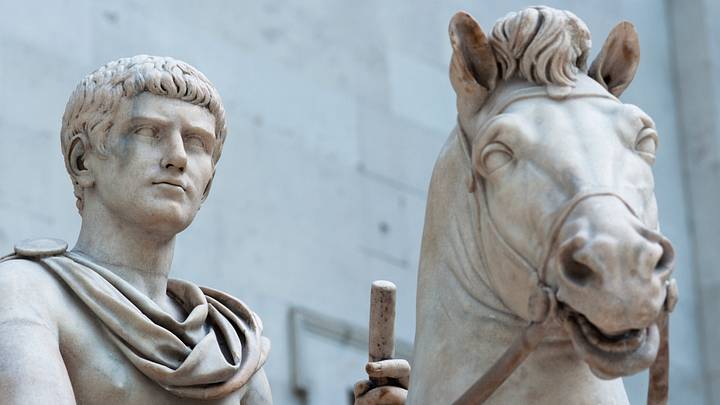
Few Roman Emperors are as infamous as Caligula. The third ruler of the empire after Augustus and Tiberius, Caligula’s short reign was marked by megalomania that at times bordered on outright insanity. Among other things, the young emperor is said to have crossed the Bay of Baie on a bridge made of 2,000 merchant ships. He also declared war on the god Poseidon and ordered his soldiers to gather seashells to mark their victory.
Perhaps the best-known story about Caligula is that he named his horse, Incitatus, a consul: the highest public office a citizen outside the imperial family could hold. During the republican era, consuls were the heads of Rome’s government. To be elected consul was the crowning achievement of one’s career, almost always, though not always, reserved for members of Rome’s noble patrician families. To give the position to a horse was therefore not just absurd, but insulting.
The Legend of Incitatus

Whether Caligula actually did any of these things is another question. Contrary to widespread belief, historians suspect that much of what we know about Rome’s third emperor — along with the other rulers of the Julio-Claudian dynasty that ruled Rome from the rise of Augustus to the suicide of Nero — is not fact, but fiction: propaganda spread by the first imperial family’s successors, the Flavians, so as to legitimize their own authority.
Most of what we know about Caligula’s favorite horse — an Iberian breed, used for chariot racing — comes from just two sources: the ancient historians Suetonius and Cassius Dio. According to Suetonius, Incitatus had a marble stall, an ivory manger, and a “troop of slaves” to cater to his every need. Suetonius also says that, on nights before races, soldiers would make sure the neighborhood stayed quiet so as not to disturb the animal’s slumber. Cassius Dio says that Caligula would invite Incitatus “to dinner, where he would offer him golden barley and drink his health in wine.”
Did It Actually Happen?

These luxuries notwithstanding, neither historian says that Caligula actually appointed Incitatus as consul — only that he “promised” or “planned” to appoint him. This distinction is crucial, as it casts doubt on Caligula’s reputation. As ancient Rome scholar Mary Beard notes in an article for the Times Literary Supplement, it’s possible that this promise was not a sign of madness and self-aggrandizement, but an expression of dissatisfaction with the functioning of the imperial government and the capabilities of those who served in it. What the emperor might have been “really saying,” Beard suggests, “was ‘You senators are such a useless lot that this horse would do a better job.’”
In other words, the history of Caligula’s horse is not as crazy as it sounds. The same might be true for his unpopular predecessor Tiberius, who was rumored to engage in all manner of sexual perversion on a secluded island off the Italian coast, or his eventual successor Nero, who — also in spite of actual historical evidence — is said to have played the fiddle while Rome burned. When looking over the more difficult-to-believe parts of Roman history, it’s important to consult the primary sources.