%20%20--%3E%0A%3Csvg%20version%3D%221.1%22%20id%3D%22Layer_1%22%20xmlns%3D%22http%3A%2F%2Fwww.w3.org%2F2000%2Fsvg%22%20xmlns%3Axlink%3D%22http%3A%2F%2Fwww.w3.org%2F1999%2Fxlink%22%20x%3D%220px%22%20y%3D%220px%22%0A%09%20viewBox%3D%220%200%20684.6%2068.1%22%20style%3D%22enable-background%3Anew%200%200%20684.6%2068.1%3B%22%20xml%3Aspace%3D%22preserve%22%3E%0A%3Cg%3E%0A%09%3Cpath%20d%3D%22M444.1%2C29.3h-17.4v14.5h17.4V29.3z%20M36.4%2C68.1l29.3-50.8V0H50.4L32.9%2C36.8L15.5%2C0H0v68.1h16.7V45.8l12.4%2C22.3H36.4z%0A%09%09%20M49.1%2C68.1h16.6V23.4L49.1%2C52.1V68.1z%20M76.6%2C68.1h45V53.8H93.3V41.6h21V27.1h-21V14.8h28.3V0.1h-45V68.1z%20M175.6%2C68.1h17.3v-68%0A%09%09h-16.5v40.3L150%2C0.1h-17.6v68h16.7V27.7L175.6%2C68.1z%20M235.8%2C14.8h15.4V0.1h-47.4v14.7H219v53.2h16.8V14.8z%20M290.3%2C45.9h-17.1%0A%09%09l7.5-15.6h2L290.3%2C45.9z%20M298.7%2C68.1h18l-32.2-68h-5.7l-32%2C68h18l3.3-7.1h27.1L298.7%2C68.1z%20M325.2%2C68.1h46.2V53.8h-29.6V0.1h-16.7%0A%09%09V68.1z%20M423.7%2C14.8h27.2V0.1H407v68h16.7V14.8z%20M462%2C68.1h46.2V53.8h-29.6V0.1H462V68.1z%20M564.8%2C34.1c0%2C10.7-7.2%2C19.2-18.5%2C19.2%0A%09%09c-11.4%2C0-18.5-8.5-18.5-19.2s7.1-19.2%2C18.5-19.2C557.6%2C14.9%2C564.8%2C23.4%2C564.8%2C34.1%20M580.6%2C34.1c0-19-14.2-34-34.3-34%0A%09%09c-20.2%2C0-34.3%2C15-34.3%2C34c0%2C19%2C14.1%2C34%2C34.3%2C34C566.4%2C68.1%2C580.6%2C53.1%2C580.6%2C34.1%20M604.8%2C20.5c0-4.1%2C3.3-6.2%2C6.7-6.2%0A%09%09c4.4%2C0%2C6.6%2C3%2C6.6%2C6.6h14.7C631.8%2C9.1%2C625.1%2C0.1%2C611%2C0.1c-12%2C0-21.7%2C9.3-21.7%2C20.6c0%2C10.9%2C5.9%2C15.9%2C16.7%2C19.8%0A%09%09c5.2%2C1.8%2C11.5%2C3.2%2C11.5%2C8c0%2C3.3-2.4%2C5.5-6.4%2C5.5c-3.6%2C0-6.6-3-6.6-6.7h-15.2c0%2C11.5%2C7.9%2C20.8%2C21.8%2C20.8c12%2C0%2C21.6-9.3%2C21.6-20.6%0A%09%09c0-10-5.3-16.4-16.7-19.8C610.6%2C26.1%2C604.8%2C25.3%2C604.8%2C20.5%20M670%2C20.9h14.7C683.8%2C9.1%2C677.1%2C0.1%2C663%2C0.1c-12%2C0-21.7%2C9.3-21.7%2C20.6%0A%09%09c0%2C10.9%2C5.9%2C15.9%2C16.7%2C19.8c5.2%2C1.8%2C11.5%2C3.2%2C11.5%2C8c0%2C3.3-2.4%2C5.5-6.4%2C5.5c-3.6%2C0-6.6-3-6.6-6.7h-15.2c0%2C11.5%2C7.9%2C20.8%2C21.8%2C20.8%0A%09%09c12%2C0%2C21.6-9.3%2C21.6-20.6c0-10-5.3-16.4-16.7-19.8c-5.4-1.6-11.3-2.4-11.3-7.2c0-4.1%2C3.3-6.2%2C6.7-6.2C667.7%2C14.4%2C670%2C17.3%2C670%2C20.9%0A%09%09%22%2F%3E%0A%3C%2Fg%3E%0A%3C%2Fsvg%3E%0A)

The end of the world has been predicted countless times—and people have long pointed to strange signs as proof it might be coming. Across cultures and throughout history, bizarre occurrences have often been interpreted as omens or warnings of the apocalypse.
From deep-sea creatures surfacing to flocks of crows circling, these moments continue to spark speculation, even when science offers more grounded explanations. Here are four of the most intriguing “doomsday” signs people take to heart to this day.
- Thwaites Glacier Melting // Doomsday Glacier
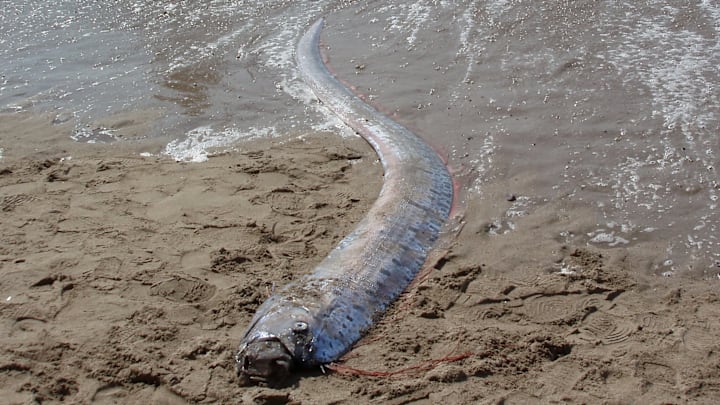
- Oarfish Surfacing // Doomsday Fish
- E-4B Nightwatch Flying // Doomsday Plane
- Crows Circling // Doomsday Birds
Thwaites Glacier Melting // Doomsday Glacier

In the remote reaches of West Antarctica lies Thwaites Glacier, a vast 40-mile-wide sheet of ice that has earned the ominous nickname “Doomsday Glacier.” The Great Britain–sized glacier may not be the largest in the region, but it is among the most closely watched, thanks to its rapid changes and the potential consequences of its continued melting. Scientists warn that its loss could cause sea levels to rise by up to 2 ft., enough to reshape coastlines and possibly flood the Earth, making it a focal point of climate research and apocalypse worriers worldwide.
Oarfish Surfacing // Doomsday Fish

Thriving at depths of more than 3,000 ft., this deep-sea fish is rarely seen near the surface—so when it washes ashore, it’s easy to see why people view it as a sinister sign. In Japanese folklore, the oarfish, called “ryugu no tsukai,” has long been associated with earthquakes and other natural disasters. Stories describe it as a “messenger” or warning sign from the sea, and sightings have occasionally been reported in the months before major seismic events—most notably ahead of Japan’s devastating 2011 earthquake and tsunami.
While these occurrences have fueled speculation, scientists emphasize there is no evidence that oarfish can predict earthquakes, and the sightings are more likely coincidental. Still, recent years have seen several around the world, including two 30-foot specimens that washed ashore in Cabo in March 2026, another in Vietnam the same month, a 10-foot oarfish found in Tasmania in November 2025, and one in San Diego in 2024.
E-4B Nightwatch Flying // Doomsday Plane

Built to survive nuclear war, this plane is crafted for crisis. The E-4B "Nightwatch"—often called the “Doomsday Plane”—is a modified Boeing 747-200 designed to serve as a mobile command center for the president and top military leaders during national emergencies, including nuclear conflict and natural disasters. Capable of staying airborne for more than 12 hours without refueling, the aircraft is a powerful symbol of preparedness—but also one tied to extreme scenarios, which helps explain why sightings can spark concern.
In early 2026, two such planes were spotted in California within a two-month span, including one landing at Los Angeles International Airport and another observed during exercises in Fresno. While officials said the flights were routine, the timing—amid heightened global tensions—helped fuel apocalyptic rumblings online. The U.S. Navy also operates the E-6B Mercury, a similar aircraft used for strategic communications and known as “Looking Glass." Together, they reflect a system built to ensure leadership can endure—even in the most uncertain of times.
Crows Circling // Doomsday Birds

Crows and ravens have long been viewed as ominous creatures, thanks to their dark plumage and frequent association with death in mythology and literature. In Britain, the presence of crows at the Tower of London has been tied to legend for centuries, with tradition holding that if the ravens ever leave, the kingdom will fall. Large gatherings of these birds—often called a “murder” of crows—have also been interpreted as bad omens in various cultures.
More recently, viral reports of large flocks circling over parts of Israel were described by some online observers as a “harbinger of doom,” though there is no scientific basis linking crow behavior to disasters. Instead, such gatherings are typically driven by food sources, roosting habits, or environmental conditions, even if they continue to fuel doomsday speculation.