%20%20--%3E%0A%3Csvg%20version%3D%221.1%22%20id%3D%22Layer_1%22%20xmlns%3D%22http%3A%2F%2Fwww.w3.org%2F2000%2Fsvg%22%20xmlns%3Axlink%3D%22http%3A%2F%2Fwww.w3.org%2F1999%2Fxlink%22%20x%3D%220px%22%20y%3D%220px%22%0A%09%20viewBox%3D%220%200%20684.6%2068.1%22%20style%3D%22enable-background%3Anew%200%200%20684.6%2068.1%3B%22%20xml%3Aspace%3D%22preserve%22%3E%0A%3Cg%3E%0A%09%3Cpath%20d%3D%22M444.1%2C29.3h-17.4v14.5h17.4V29.3z%20M36.4%2C68.1l29.3-50.8V0H50.4L32.9%2C36.8L15.5%2C0H0v68.1h16.7V45.8l12.4%2C22.3H36.4z%0A%09%09%20M49.1%2C68.1h16.6V23.4L49.1%2C52.1V68.1z%20M76.6%2C68.1h45V53.8H93.3V41.6h21V27.1h-21V14.8h28.3V0.1h-45V68.1z%20M175.6%2C68.1h17.3v-68%0A%09%09h-16.5v40.3L150%2C0.1h-17.6v68h16.7V27.7L175.6%2C68.1z%20M235.8%2C14.8h15.4V0.1h-47.4v14.7H219v53.2h16.8V14.8z%20M290.3%2C45.9h-17.1%0A%09%09l7.5-15.6h2L290.3%2C45.9z%20M298.7%2C68.1h18l-32.2-68h-5.7l-32%2C68h18l3.3-7.1h27.1L298.7%2C68.1z%20M325.2%2C68.1h46.2V53.8h-29.6V0.1h-16.7%0A%09%09V68.1z%20M423.7%2C14.8h27.2V0.1H407v68h16.7V14.8z%20M462%2C68.1h46.2V53.8h-29.6V0.1H462V68.1z%20M564.8%2C34.1c0%2C10.7-7.2%2C19.2-18.5%2C19.2%0A%09%09c-11.4%2C0-18.5-8.5-18.5-19.2s7.1-19.2%2C18.5-19.2C557.6%2C14.9%2C564.8%2C23.4%2C564.8%2C34.1%20M580.6%2C34.1c0-19-14.2-34-34.3-34%0A%09%09c-20.2%2C0-34.3%2C15-34.3%2C34c0%2C19%2C14.1%2C34%2C34.3%2C34C566.4%2C68.1%2C580.6%2C53.1%2C580.6%2C34.1%20M604.8%2C20.5c0-4.1%2C3.3-6.2%2C6.7-6.2%0A%09%09c4.4%2C0%2C6.6%2C3%2C6.6%2C6.6h14.7C631.8%2C9.1%2C625.1%2C0.1%2C611%2C0.1c-12%2C0-21.7%2C9.3-21.7%2C20.6c0%2C10.9%2C5.9%2C15.9%2C16.7%2C19.8%0A%09%09c5.2%2C1.8%2C11.5%2C3.2%2C11.5%2C8c0%2C3.3-2.4%2C5.5-6.4%2C5.5c-3.6%2C0-6.6-3-6.6-6.7h-15.2c0%2C11.5%2C7.9%2C20.8%2C21.8%2C20.8c12%2C0%2C21.6-9.3%2C21.6-20.6%0A%09%09c0-10-5.3-16.4-16.7-19.8C610.6%2C26.1%2C604.8%2C25.3%2C604.8%2C20.5%20M670%2C20.9h14.7C683.8%2C9.1%2C677.1%2C0.1%2C663%2C0.1c-12%2C0-21.7%2C9.3-21.7%2C20.6%0A%09%09c0%2C10.9%2C5.9%2C15.9%2C16.7%2C19.8c5.2%2C1.8%2C11.5%2C3.2%2C11.5%2C8c0%2C3.3-2.4%2C5.5-6.4%2C5.5c-3.6%2C0-6.6-3-6.6-6.7h-15.2c0%2C11.5%2C7.9%2C20.8%2C21.8%2C20.8%0A%09%09c12%2C0%2C21.6-9.3%2C21.6-20.6c0-10-5.3-16.4-16.7-19.8c-5.4-1.6-11.3-2.4-11.3-7.2c0-4.1%2C3.3-6.2%2C6.7-6.2C667.7%2C14.4%2C670%2C17.3%2C670%2C20.9%0A%09%09%22%2F%3E%0A%3C%2Fg%3E%0A%3C%2Fsvg%3E%0A)

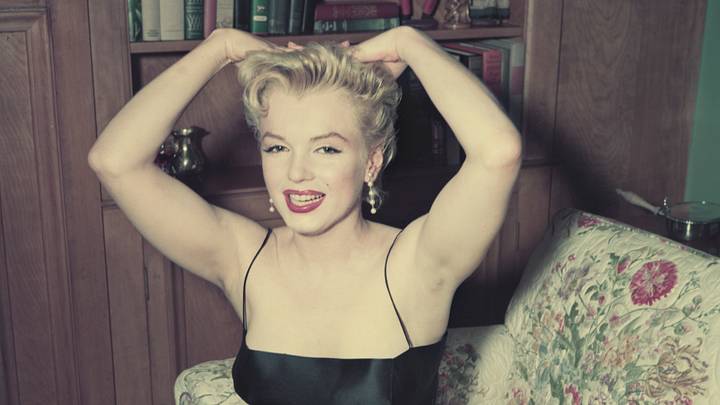
Few Hollywood stars have quite the same legacy as Marilyn Monroe. In her all too brief 36 years, she exploded into the movie industry in the early 1950s, quickly rising to the very top of the profession and working with some of the biggest stars of the era. Her untimely death in 1962, from an alleged overdose of sedatives, brought her stellar rise to fame and stardom to a tragically early end—yet in the decades since her death, Monroe fans and moviegoers alike have transformed her into a truly timeless icon of Hollywood’s golden age.
Now, with such a legendary life story and reputation, however, many of the true details of Marilyn Monroe’s life have become confused or altered, and misshapen by long-repeated anecdotes and half-remembered tales. And, based on those, here are five things that many people assume to be true of Monroe that aren’t quite rooted in truth.
- MISCONCEPTION: SHE WAS ABANDONED AS A CHILD
- MISCONCEPTION: SHE WAS A NATURAL BLONDE
- MISCONCEPTION: SHE WAS THE QUINTESSENTIAL "DUMB BLONDE"
- MISCONCEPTION: SHE WAS UNPROFESSIONAL ON SET
- MISCONCEPTION: SHE WAS WILDLY FINANCIALLY SUCCESSFUL
MISCONCEPTION: SHE WAS ABANDONED AS A CHILD

Tales of the hardships that Monroe supposedly suffered through in childhood are widely told today, but one of the most common misconceptions is that her mother, Gladys Baker, effectively abandoned her after birth. Monroe’s life story certainly starts out that way, as Gladys indeed handed her young daughter, then known as Norma Jeane Mortenson, over to a foster home in Hawthorne, California, when she was just two weeks old. Despite that inauspicious start, though, Gladys remained on the scene for much of Monroe’s early years, and although seemingly in no position to raise her herself, continued to visit her at the foster home and, when she was old enough, would even take her away for sleepovers at her apartment.
Unfortunately, Gladys’ mental health began to falter, and she would later be confined to a series of institutions and treated for paranoid schizophrenia. Monroe, as a result, spent much of her childhood with foster families and relatives—but the idea that her mother had little to do with her upbringing is somewhat misguided.
MISCONCEPTION: SHE WAS A NATURAL BLONDE
Monroe later recalled that some of the foster families she spent time with in childhood “used to send me to the movies to get me out of the house,” and as a result, she would spend hours and hours every day at the local cinema.
One star that Monroe became particularly fond of was Jean Harlow, the original “Blonde Bombshell” of Hollywood, and it’s thought that Monroe at least partly modeled her image on her. Harlow’s image is at least part of the reason Monroe began lightening her naturally brunette hair in the 1940s, eventually settling on the bright platinum blonde—a shade she called “pillow case white”—once her career in the movies took off. Some rare early photographs from her photographic modeling career in the 1940s still show Monroe with her natural, darker-toned hair, but the idea that she was originally blonde or fair-haired is misguided.
MISCONCEPTION: SHE WAS THE QUINTESSENTIAL "DUMB BLONDE"

Having bright blonde hair, however, comes with the rather unfair connotations of being not particularly intelligent, and on- and off-set tales of Monroe’s movie career and life in the public eye have led to her gaining a reputation as little more than the quintessential “dumb blonde.” Although rumors that she actually had an IQ somewhere in the region of 168 (higher than Albert Einstein's) are untrue, the idea that Monroe was nothing more than a ditzy blonde without a thought in her head is just as unfounded.
Monroe was an avid reader, with a library of more than 400 books and an interest in philosophy, politics, and classical literature. Her third and final husband, the great playwright Arthur Miller, likewise called her “a very smart woman,” with “a terrific sense of humour, irony and generosity,” but whose intelligence was belied by “a kind of paranoia.”
MISCONCEPTION: SHE WAS UNPROFESSIONAL ON SET
Rumors of Monroe's unprofessionalism have dogged many of her most successful and best remembered movies and performances, with her co-stars and crew spreading stories of her inability to remember lines and lack of punctuality. Her role in Billy Wilder’s Some Like It Hot might have won her a Golden Globe, for instance, but Monroe struggled so badly with her lines that at one point she took over fifty takes to get a single three-word line correct, leading Wilder to secrete her lines around the set—either on cue cards behind the camera, or taped inside props—while Tony Curtis and Jack Lemmon allegedly would take bets on how many times it would take for her to finally get a scene in the can. While filming The Prince and the Showgirl with Sir Laurence Olivier, meanwhile, the legendary thespian reportedly clashed with his co-star, taking particular exception to her tendency to be late to set and unprepared for filming every day.
Movie historians and Monroe fans, however, have since sought to redress the balance in tales like these by pointing out the context in which she was working. Monroe suffered from debilitating anxiety, personal insecurities, and stage fright, which understandably affected her ability to remember and recite her lines both on cue and on camera. Both Wilder and Olivier themselves, meanwhile, had similar reputations for being difficult to work with, and it has even been suggested that Monroe’s unprofessionalism was her way of pushing back against her mistreatment.
By the time she was filming Showgirl in 1957, for instance, Monroe was studying method acting in New York, which inevitably clashed with Olivier’s more classical training—and led him to infamously and dismissively tell her that, “All you have to do is be sexy.” It was only after this that Monroe apparently began turning up late to set each day, which has since been re-evaluated as perhaps her quiet way of protesting her co-star’s patronizing and misogynistic comment. Miller, who was Monroe’s partner by this stage, was often called on to mediate between the two stars, and later commented how “there was a genuine conflict … between two different styles, not merely of acting, but of life.”
MISCONCEPTION: SHE WAS WILDLY FINANCIALLY SUCCESSFUL

Monroe’s movies might have earned over $200 million dollars at the box office—and through posthumous brand deals and advertisements, her name and likeness are immensely lucrative—but Monroe herself did not see quite the same level of financial return during her lifetime. In fact, the contracts under which she worked throughout much of her early career, in which she made many of her best remembered movies, were relatively paltry: in making Gentlemen Prefer Blondes in 1953, for instance, Monroe was paid only $18,000 compared to her co-star Jane Russell’s $100,000.