%20%20--%3E%0A%3Csvg%20version%3D%221.1%22%20id%3D%22Layer_1%22%20xmlns%3D%22http%3A%2F%2Fwww.w3.org%2F2000%2Fsvg%22%20xmlns%3Axlink%3D%22http%3A%2F%2Fwww.w3.org%2F1999%2Fxlink%22%20x%3D%220px%22%20y%3D%220px%22%0A%09%20viewBox%3D%220%200%20684.6%2068.1%22%20style%3D%22enable-background%3Anew%200%200%20684.6%2068.1%3B%22%20xml%3Aspace%3D%22preserve%22%3E%0A%3Cg%3E%0A%09%3Cpath%20d%3D%22M444.1%2C29.3h-17.4v14.5h17.4V29.3z%20M36.4%2C68.1l29.3-50.8V0H50.4L32.9%2C36.8L15.5%2C0H0v68.1h16.7V45.8l12.4%2C22.3H36.4z%0A%09%09%20M49.1%2C68.1h16.6V23.4L49.1%2C52.1V68.1z%20M76.6%2C68.1h45V53.8H93.3V41.6h21V27.1h-21V14.8h28.3V0.1h-45V68.1z%20M175.6%2C68.1h17.3v-68%0A%09%09h-16.5v40.3L150%2C0.1h-17.6v68h16.7V27.7L175.6%2C68.1z%20M235.8%2C14.8h15.4V0.1h-47.4v14.7H219v53.2h16.8V14.8z%20M290.3%2C45.9h-17.1%0A%09%09l7.5-15.6h2L290.3%2C45.9z%20M298.7%2C68.1h18l-32.2-68h-5.7l-32%2C68h18l3.3-7.1h27.1L298.7%2C68.1z%20M325.2%2C68.1h46.2V53.8h-29.6V0.1h-16.7%0A%09%09V68.1z%20M423.7%2C14.8h27.2V0.1H407v68h16.7V14.8z%20M462%2C68.1h46.2V53.8h-29.6V0.1H462V68.1z%20M564.8%2C34.1c0%2C10.7-7.2%2C19.2-18.5%2C19.2%0A%09%09c-11.4%2C0-18.5-8.5-18.5-19.2s7.1-19.2%2C18.5-19.2C557.6%2C14.9%2C564.8%2C23.4%2C564.8%2C34.1%20M580.6%2C34.1c0-19-14.2-34-34.3-34%0A%09%09c-20.2%2C0-34.3%2C15-34.3%2C34c0%2C19%2C14.1%2C34%2C34.3%2C34C566.4%2C68.1%2C580.6%2C53.1%2C580.6%2C34.1%20M604.8%2C20.5c0-4.1%2C3.3-6.2%2C6.7-6.2%0A%09%09c4.4%2C0%2C6.6%2C3%2C6.6%2C6.6h14.7C631.8%2C9.1%2C625.1%2C0.1%2C611%2C0.1c-12%2C0-21.7%2C9.3-21.7%2C20.6c0%2C10.9%2C5.9%2C15.9%2C16.7%2C19.8%0A%09%09c5.2%2C1.8%2C11.5%2C3.2%2C11.5%2C8c0%2C3.3-2.4%2C5.5-6.4%2C5.5c-3.6%2C0-6.6-3-6.6-6.7h-15.2c0%2C11.5%2C7.9%2C20.8%2C21.8%2C20.8c12%2C0%2C21.6-9.3%2C21.6-20.6%0A%09%09c0-10-5.3-16.4-16.7-19.8C610.6%2C26.1%2C604.8%2C25.3%2C604.8%2C20.5%20M670%2C20.9h14.7C683.8%2C9.1%2C677.1%2C0.1%2C663%2C0.1c-12%2C0-21.7%2C9.3-21.7%2C20.6%0A%09%09c0%2C10.9%2C5.9%2C15.9%2C16.7%2C19.8c5.2%2C1.8%2C11.5%2C3.2%2C11.5%2C8c0%2C3.3-2.4%2C5.5-6.4%2C5.5c-3.6%2C0-6.6-3-6.6-6.7h-15.2c0%2C11.5%2C7.9%2C20.8%2C21.8%2C20.8%0A%09%09c12%2C0%2C21.6-9.3%2C21.6-20.6c0-10-5.3-16.4-16.7-19.8c-5.4-1.6-11.3-2.4-11.3-7.2c0-4.1%2C3.3-6.2%2C6.7-6.2C667.7%2C14.4%2C670%2C17.3%2C670%2C20.9%0A%09%09%22%2F%3E%0A%3C%2Fg%3E%0A%3C%2Fsvg%3E%0A)

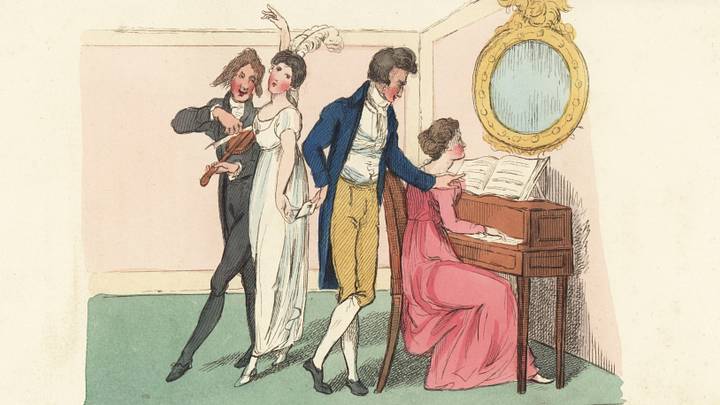
Fans of Bridgerton and Jane Austen often dream of living in Regency England, but the reality of living with all those rules and expectations would be incredibly difficult for modern society. The ton was merciless, and breaking etiquette could damage a family's reputation for years.
Luckily, we don't have to worry about living the high society rules of the Regency Era. It would be interesting to see how we might handle the strict etiquette, though. Do you think you could follow the rules without pulling all your hair out? These are just a small portion of the Regency-Era etiquette rules, and many of us would struggle to heed them all.
- Always be calm and collected
- Do not use Christian names generally
- Don't speak to strangers
- If single, always have a chaperone
- Always dress for dinner
- Do not talk across the dinner table
- When around ladies, gentlemen should not discuss politics or science

Always be calm and collected
People who live for drama would have died of boredom in the Regency era. Not that there wasn't any drama at all, but people were trained to hide it very well. Any emotional outbursts were seen as vulgar, and that included anger, sadness, or enthusiastic happiness. It was best if no one really knew what you were feeling while in public, and losing your temper was forbidden. This is one of the reasons people looked down on the Bennet family in Jane Austen's Pride and Prejudice; Mrs. Bennet and her daughters were much too expressive for polite society.

Do not use Christian names generally
Using someone's first name was considered very intimate and was only done between family, friends close enough to be called family, and couples who were serious about their relationship. Instead, most people called each other by their title, last name, or both. If you didn't have a title, then you were called by 'Mr.,' 'Miss,' or 'Mrs.' Asking someone you were only acquainted with to call you by your Christian name (first name) was a big faux pas.

Don't speak to strangers
Even if you gathered up all your courage to go talk to a cute guy or attractive girl, unless you had some kind of connection to them, you weren't actually allowed to meet. It was rather scandalous to talk to someone without being introduced to them by a relative, friend, or acquaintance. This is when coming from a small town where everyone knows everyone would come in handy.

If single, always have a chaperone
If you thought it was unfair not being allowed to bring a friend of a different gender into your bedroom, you would not have liked living in Regency times. To keep a lady's reputation intact, a chaperone was necessary for any interaction outside of her family. No meeting in private for even totally innocent reasons, or people would think you were having a tryst.

Always dress for dinner
There's nothing like coming home after a long day and changing into your pajamas the moment you reach your bedroom. But this was not possible in the early 1800s. You were expected to change out of what you had worn throughout the day, and it was often into a fancier outfit. Dinner was an event, and you had to look decent, even just for your family. There was certainly no dining while wearing your nightclothes.

Do not talk across the dinner table
When seated at the dinner table, you hoped that the people on either side of you were capable of interesting conversation. That's because you could not join a conversation being held across the table. Just as you weren't supposed to pass the salt directly across the table, you shouldn't let speech cross the table either. So you were stuck talking to the people sitting parallel to you. Hopefully the host of the meal had the sense to seat you with people you got along with.

When around ladies, gentlemen should not discuss politics or science
Sorry, ladies, we weren't allowed to have political opinions in the Regency Era. Women were supposed to keep their conversations about light topics like art, music, and clothing. Men could talk about politics, science, technology, and war amongst themselves, but once a woman was in the room, it was ungentlemanly to continue a conversation in which she could not participate.