%20%20--%3E%0A%3Csvg%20version%3D%221.1%22%20id%3D%22Layer_1%22%20xmlns%3D%22http%3A%2F%2Fwww.w3.org%2F2000%2Fsvg%22%20xmlns%3Axlink%3D%22http%3A%2F%2Fwww.w3.org%2F1999%2Fxlink%22%20x%3D%220px%22%20y%3D%220px%22%0A%09%20viewBox%3D%220%200%20684.6%2068.1%22%20style%3D%22enable-background%3Anew%200%200%20684.6%2068.1%3B%22%20xml%3Aspace%3D%22preserve%22%3E%0A%3Cg%3E%0A%09%3Cpath%20d%3D%22M444.1%2C29.3h-17.4v14.5h17.4V29.3z%20M36.4%2C68.1l29.3-50.8V0H50.4L32.9%2C36.8L15.5%2C0H0v68.1h16.7V45.8l12.4%2C22.3H36.4z%0A%09%09%20M49.1%2C68.1h16.6V23.4L49.1%2C52.1V68.1z%20M76.6%2C68.1h45V53.8H93.3V41.6h21V27.1h-21V14.8h28.3V0.1h-45V68.1z%20M175.6%2C68.1h17.3v-68%0A%09%09h-16.5v40.3L150%2C0.1h-17.6v68h16.7V27.7L175.6%2C68.1z%20M235.8%2C14.8h15.4V0.1h-47.4v14.7H219v53.2h16.8V14.8z%20M290.3%2C45.9h-17.1%0A%09%09l7.5-15.6h2L290.3%2C45.9z%20M298.7%2C68.1h18l-32.2-68h-5.7l-32%2C68h18l3.3-7.1h27.1L298.7%2C68.1z%20M325.2%2C68.1h46.2V53.8h-29.6V0.1h-16.7%0A%09%09V68.1z%20M423.7%2C14.8h27.2V0.1H407v68h16.7V14.8z%20M462%2C68.1h46.2V53.8h-29.6V0.1H462V68.1z%20M564.8%2C34.1c0%2C10.7-7.2%2C19.2-18.5%2C19.2%0A%09%09c-11.4%2C0-18.5-8.5-18.5-19.2s7.1-19.2%2C18.5-19.2C557.6%2C14.9%2C564.8%2C23.4%2C564.8%2C34.1%20M580.6%2C34.1c0-19-14.2-34-34.3-34%0A%09%09c-20.2%2C0-34.3%2C15-34.3%2C34c0%2C19%2C14.1%2C34%2C34.3%2C34C566.4%2C68.1%2C580.6%2C53.1%2C580.6%2C34.1%20M604.8%2C20.5c0-4.1%2C3.3-6.2%2C6.7-6.2%0A%09%09c4.4%2C0%2C6.6%2C3%2C6.6%2C6.6h14.7C631.8%2C9.1%2C625.1%2C0.1%2C611%2C0.1c-12%2C0-21.7%2C9.3-21.7%2C20.6c0%2C10.9%2C5.9%2C15.9%2C16.7%2C19.8%0A%09%09c5.2%2C1.8%2C11.5%2C3.2%2C11.5%2C8c0%2C3.3-2.4%2C5.5-6.4%2C5.5c-3.6%2C0-6.6-3-6.6-6.7h-15.2c0%2C11.5%2C7.9%2C20.8%2C21.8%2C20.8c12%2C0%2C21.6-9.3%2C21.6-20.6%0A%09%09c0-10-5.3-16.4-16.7-19.8C610.6%2C26.1%2C604.8%2C25.3%2C604.8%2C20.5%20M670%2C20.9h14.7C683.8%2C9.1%2C677.1%2C0.1%2C663%2C0.1c-12%2C0-21.7%2C9.3-21.7%2C20.6%0A%09%09c0%2C10.9%2C5.9%2C15.9%2C16.7%2C19.8c5.2%2C1.8%2C11.5%2C3.2%2C11.5%2C8c0%2C3.3-2.4%2C5.5-6.4%2C5.5c-3.6%2C0-6.6-3-6.6-6.7h-15.2c0%2C11.5%2C7.9%2C20.8%2C21.8%2C20.8%0A%09%09c12%2C0%2C21.6-9.3%2C21.6-20.6c0-10-5.3-16.4-16.7-19.8c-5.4-1.6-11.3-2.4-11.3-7.2c0-4.1%2C3.3-6.2%2C6.7-6.2C667.7%2C14.4%2C670%2C17.3%2C670%2C20.9%0A%09%09%22%2F%3E%0A%3C%2Fg%3E%0A%3C%2Fsvg%3E%0A)

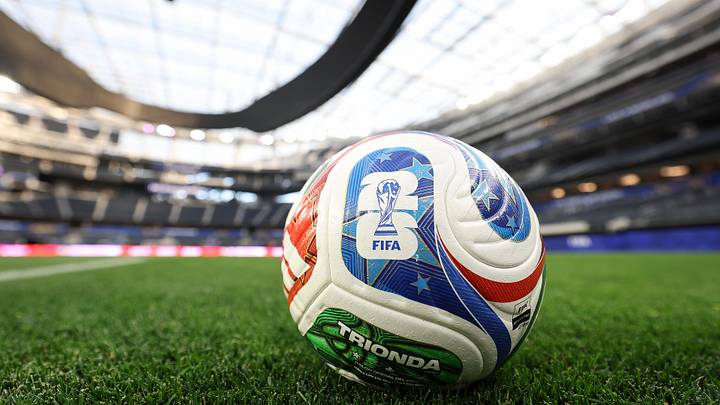
The very first FIFA World Cup was organized in 1929, and took place in Uruguay over two weeks the following year, from July 13 to July 30, 1930. Just 13 countries (Argentina, Belgium, Bolivia, Brazil, Chile, France, Mexico, Paraguay, Peru, Romania, USA, Uruguay, and Yugoslavia) took part in the inaugural World Cup, with the hosts, Uruguay, eventually proving victorious having defeated their neighbors and rivals Argentina in the final by four goals to two.
With the 2026 World Cup (the competition’s 23rd) now upon us though, it’s fair to say a lot has changed in the past 96 years—and several things we now know and take for granted, both on and off the pitch, quite simply did not exist when Uruguay first lifted the Jules Rimet Trophy back in 1930.
- TELEVISED COVERAGE
- COLOR TELEVISION
- MICROWAVE OVENS
- BARCODES
- RED AND YELLOW CARDS
- SCREWABLE SOCCER STUDS
- VELCRO
- INSTANT REPLAY
- PICKLEBALL
- CREDIT CARDS
- THE WORD “SIN BIN”
- BALLPOINT PENS
- RADAR
- KODACHROME
- THE JET ENGINE
TELEVISED COVERAGE

Television was in its relative infancy when the World Cup was first held back in 1930, and as a result the first contest was only broadcast by radio. In fact, it wasn’t until the 1950 World Cup in Brazil that television coverage first started to bring the excitement of the competition to audiences sat at home, with further improvements and larger scale broadcasts following at the 1954 World Cup in Switzerland.
COLOR TELEVISION

You might have had to wait until the 1950s to watch the World Cup on television, but even then it would have been in black and white. The technology behind color television dates might back to the late 1920s, but it wasn’t until the 1940s and ‘50s that regular color broadcasting became commonplace—and the World Cup wasn’t broadcast in color until 1970.
MICROWAVE OVENS

If you’re prepping hot snacks to have while watching a game, then chances are you’ll have a microwave oven on the go. No such luck any time before 1945, though, when the patent for the very first microwave oven was filed by the Raytheon Manufacturing Company, using a design by one of their engineers, Percy Spencer. The first domestic tabletop microwave, meanwhile, wouldn’t arrive until 1967.
BARCODES

Nowadays downloading a ticket to your smartphone, and getting its barcode or QR code scanned on entry to a venue, is commonplace. Barcodes weren’t invented until the late 1940s, however, and the electronic scanners used to read them didn’t appear until the 1960s.
RED AND YELLOW CARDS

The referee’s disciplinary system of red and yellow cards was only introduced to international soccer in 1970. Before then, all on-pitch disagreements and infractions were handled verbally, but as more and more countries have taken part in the World Cup each year, language barriers began to prove an issue. Eventually, after a violent game now dubbed “The Battle of Santiago,” color-coded cards (based on traffic lights) were introduced to make the referees’ decisions clear.
SCREWABLE SOCCER STUDS

Gripping studs on the soles of soccer shoes have been used by players since the 19th century, but they were originally a fairly makeshift affair (often involving simply nailing or tacking studs onto to the bottoms of the shoes). Modern interchangeable screw-in studs were not introduced until the 1950s, with Adidas’ studded boots making their debut at the 1954 World Cup in Switzerland.
VELCRO
A staple of sports and fitness kit of all shapes, sizes, and designs, self-hooking Velcro fabric wasn’t invented until 1955.
INSTANT REPLAY
Watch any sport on television today and chances are you’ll see an instant replay at one point or another, giving you slow-motion, multi-angle views of some impressive or controversial moment of play. The technology behind instant replays wasn’t developed until the 1960s, however, and first used by CBS in 1963.
PICKLEBALL
Yes, an entirely new sport has been invented since the World Cup was first held back in the 1930. Pickleball was the brainchild of former Lieutenant Governor of Washington Joel Pritchard, who came up with the game on a lazy July afternoon 35 years after the first World Cup, in 1965.
CREDIT CARDS
Card payments have become so ubiquitous these days that it’s hard to imagine a world without them. But the world’ first credit card, the cardboard Diners Card, wasn’t introduced until 1950, having been dreamt up a year earlier by New Yorker Frank McNamara after he discovered he had left his wallet at home having eaten at a local restaurant.
THE WORD “SIN BIN”

It’s a term more associated with ice hockey than World Cup soccer, but according to the Oxford English Dictionary, the word sin bin wasn’t even coined until 1937 anyway.
BALLPOINT PENS

The first patent for a style of pen using a tiny rotating ball inside the ink barrel dates back to 1888, but the original design—by American lawyer John J Loud—proved unworkable, and tore more paper than it was able to write on. The modern, mass-produced ballpoint with its characteristically thickened ink was the brainchild of Hungarian-Argentinian journalist László Bíró (hence Biro pens), who patented his design in 1938.
RADAR

The technology behind radar (a.k.a. “radio detection and ranging”) dates back to the early 1900s, but it wasn’t until the mid ‘30s that the first functional radar systems were devised, with the first successful demonstration of this new technology held in 1935.
KODACHROME

The World Cup is not only older than color television, it’s older than the first commercially successful color photographic film, too. Although various experiments in color photography had been going on since the mid 1800s—the Lumière Brothers’ autochrome tinting process had produced the first positive color photographs in 1907—it wasn’t until the introduction of Kodak’s “Kodachrome” film in 1935 that color photography (and color cinematography) truly took off.
THE JET ENGINE

If you’re traveling by plane to any of the matches this year, you may well be traveling on an aircraft that uses jet engines. Incredibly, these mainstays of modern air transport were invented way back in 1937—but that still makes them younger than the World Cup.