%20%20--%3E%0A%3Csvg%20version%3D%221.1%22%20id%3D%22Layer_1%22%20xmlns%3D%22http%3A%2F%2Fwww.w3.org%2F2000%2Fsvg%22%20xmlns%3Axlink%3D%22http%3A%2F%2Fwww.w3.org%2F1999%2Fxlink%22%20x%3D%220px%22%20y%3D%220px%22%0A%09%20viewBox%3D%220%200%20684.6%2068.1%22%20style%3D%22enable-background%3Anew%200%200%20684.6%2068.1%3B%22%20xml%3Aspace%3D%22preserve%22%3E%0A%3Cg%3E%0A%09%3Cpath%20d%3D%22M444.1%2C29.3h-17.4v14.5h17.4V29.3z%20M36.4%2C68.1l29.3-50.8V0H50.4L32.9%2C36.8L15.5%2C0H0v68.1h16.7V45.8l12.4%2C22.3H36.4z%0A%09%09%20M49.1%2C68.1h16.6V23.4L49.1%2C52.1V68.1z%20M76.6%2C68.1h45V53.8H93.3V41.6h21V27.1h-21V14.8h28.3V0.1h-45V68.1z%20M175.6%2C68.1h17.3v-68%0A%09%09h-16.5v40.3L150%2C0.1h-17.6v68h16.7V27.7L175.6%2C68.1z%20M235.8%2C14.8h15.4V0.1h-47.4v14.7H219v53.2h16.8V14.8z%20M290.3%2C45.9h-17.1%0A%09%09l7.5-15.6h2L290.3%2C45.9z%20M298.7%2C68.1h18l-32.2-68h-5.7l-32%2C68h18l3.3-7.1h27.1L298.7%2C68.1z%20M325.2%2C68.1h46.2V53.8h-29.6V0.1h-16.7%0A%09%09V68.1z%20M423.7%2C14.8h27.2V0.1H407v68h16.7V14.8z%20M462%2C68.1h46.2V53.8h-29.6V0.1H462V68.1z%20M564.8%2C34.1c0%2C10.7-7.2%2C19.2-18.5%2C19.2%0A%09%09c-11.4%2C0-18.5-8.5-18.5-19.2s7.1-19.2%2C18.5-19.2C557.6%2C14.9%2C564.8%2C23.4%2C564.8%2C34.1%20M580.6%2C34.1c0-19-14.2-34-34.3-34%0A%09%09c-20.2%2C0-34.3%2C15-34.3%2C34c0%2C19%2C14.1%2C34%2C34.3%2C34C566.4%2C68.1%2C580.6%2C53.1%2C580.6%2C34.1%20M604.8%2C20.5c0-4.1%2C3.3-6.2%2C6.7-6.2%0A%09%09c4.4%2C0%2C6.6%2C3%2C6.6%2C6.6h14.7C631.8%2C9.1%2C625.1%2C0.1%2C611%2C0.1c-12%2C0-21.7%2C9.3-21.7%2C20.6c0%2C10.9%2C5.9%2C15.9%2C16.7%2C19.8%0A%09%09c5.2%2C1.8%2C11.5%2C3.2%2C11.5%2C8c0%2C3.3-2.4%2C5.5-6.4%2C5.5c-3.6%2C0-6.6-3-6.6-6.7h-15.2c0%2C11.5%2C7.9%2C20.8%2C21.8%2C20.8c12%2C0%2C21.6-9.3%2C21.6-20.6%0A%09%09c0-10-5.3-16.4-16.7-19.8C610.6%2C26.1%2C604.8%2C25.3%2C604.8%2C20.5%20M670%2C20.9h14.7C683.8%2C9.1%2C677.1%2C0.1%2C663%2C0.1c-12%2C0-21.7%2C9.3-21.7%2C20.6%0A%09%09c0%2C10.9%2C5.9%2C15.9%2C16.7%2C19.8c5.2%2C1.8%2C11.5%2C3.2%2C11.5%2C8c0%2C3.3-2.4%2C5.5-6.4%2C5.5c-3.6%2C0-6.6-3-6.6-6.7h-15.2c0%2C11.5%2C7.9%2C20.8%2C21.8%2C20.8%0A%09%09c12%2C0%2C21.6-9.3%2C21.6-20.6c0-10-5.3-16.4-16.7-19.8c-5.4-1.6-11.3-2.4-11.3-7.2c0-4.1%2C3.3-6.2%2C6.7-6.2C667.7%2C14.4%2C670%2C17.3%2C670%2C20.9%0A%09%09%22%2F%3E%0A%3C%2Fg%3E%0A%3C%2Fsvg%3E%0A)

Ancient Egypt was one of the earliest and most enduring civilizations in history, surviving for over 3,000 years.
From pharaohs to pyramids, political divisions, cultural renaissance, and eventual annexation by Rome, the people of Ancient Egypt are remembered for their unrivaled architecture, spiritual beliefs surrounding mummification and deities, detailed hieroglyphics, and famous rulers like Hatshepsut, Rameses II, and Queen Cleopatra VII.
While their civilization was notably extensive, spanning 11 periods, their meals were quite simple by modern standards, especially breakfast.
Let's dig into the diet of an Ancient Egyptian and discover how they began their busy days of pyramid building, household management, and spiritual practices, among other daily duties that progressed with the centuries.
THE BREAKFAST TABLE

If you suddenly woke up in Ancient Egypt as a healer, priest, pyramid builder (during the Old Kingdom), or any other occupation, for that matter, you’d need a decent amount of energy to get through the day. We’re not talking about toasting a Pop-Tart and heading out the door. The Egyptians' answer to a sustainable breakfast was hearty, seasonal whole foods and fermented drinks.
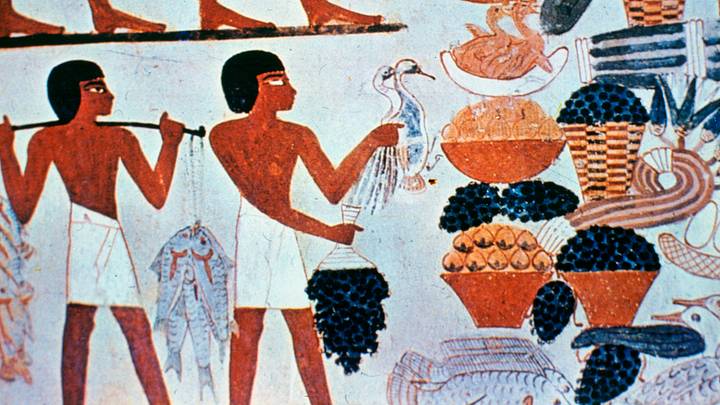
Ancient Egyptians were intentional with their meals, which consisted mostly of grain and vegetable crops grown along the Nile. According to World History, most people consumed basic ingredients, while the wealthy could afford a wider array of meats.
They sat on stools or the floor, ate off low tables (affluent civilians eventually graduated to taller tables and chairs in the New Kingdom), and enjoyed bread, green onions, and beer before setting out to build one of the greatest civilizations the world would ever know. Many households prepared their own meals, whereas wealthier families had servants to make and present them breakfast.
Bread, in particular, was plentiful and widely consumed by all classes. Many ate flatbread baked in ovens or covered in embers, made from just flour, water, and salt. There were heartier bread varieties, too, as bakers sometimes added oil, fat, eggs, or dairy. Bread could be topped with seeds and seasonings or mixed with nuts, and advances in leavening eventually made it less dense and easier to chew.
While green onions were a popular breakfast item, Ancient Egyptians enjoyed additional vegetables, fruits, and protein sources, frequently consuming beans, peas, lentils, lettuce, cucumbers, and radishes, sometimes raw, sometimes boiled.
Since barley was a major crop in Ancient Egypt, many people started their day with a beer. This beer was available in several selections and typically brewed at home. Red beer had a lighter alcohol content, while black beer, often spiced, was more potent.
BREAKFAST ON THE GO

Those who didn’t have time to eat breakfast at home before heading to work stopped at local taverns (which became more widespread by the New Kingdom and Late Period) and bakeries (existing during the building of the pyramids in the Old Kingdom) near their job sites, enjoying their first meal of the day on the go.
Meals, eventually including a more extensive selection of meats, seafood, cheeses, and sweets, evolved over 3,000 years along with innovations in cooking methods. But Ancient Egyptians consistently favored their grains (in the form of beer and bread) and vegetables, up until the Romans' conquest in 30 BC.