%20%20--%3E%0A%3Csvg%20version%3D%221.1%22%20id%3D%22Layer_1%22%20xmlns%3D%22http%3A%2F%2Fwww.w3.org%2F2000%2Fsvg%22%20xmlns%3Axlink%3D%22http%3A%2F%2Fwww.w3.org%2F1999%2Fxlink%22%20x%3D%220px%22%20y%3D%220px%22%0A%09%20viewBox%3D%220%200%20684.6%2068.1%22%20style%3D%22enable-background%3Anew%200%200%20684.6%2068.1%3B%22%20xml%3Aspace%3D%22preserve%22%3E%0A%3Cg%3E%0A%09%3Cpath%20d%3D%22M444.1%2C29.3h-17.4v14.5h17.4V29.3z%20M36.4%2C68.1l29.3-50.8V0H50.4L32.9%2C36.8L15.5%2C0H0v68.1h16.7V45.8l12.4%2C22.3H36.4z%0A%09%09%20M49.1%2C68.1h16.6V23.4L49.1%2C52.1V68.1z%20M76.6%2C68.1h45V53.8H93.3V41.6h21V27.1h-21V14.8h28.3V0.1h-45V68.1z%20M175.6%2C68.1h17.3v-68%0A%09%09h-16.5v40.3L150%2C0.1h-17.6v68h16.7V27.7L175.6%2C68.1z%20M235.8%2C14.8h15.4V0.1h-47.4v14.7H219v53.2h16.8V14.8z%20M290.3%2C45.9h-17.1%0A%09%09l7.5-15.6h2L290.3%2C45.9z%20M298.7%2C68.1h18l-32.2-68h-5.7l-32%2C68h18l3.3-7.1h27.1L298.7%2C68.1z%20M325.2%2C68.1h46.2V53.8h-29.6V0.1h-16.7%0A%09%09V68.1z%20M423.7%2C14.8h27.2V0.1H407v68h16.7V14.8z%20M462%2C68.1h46.2V53.8h-29.6V0.1H462V68.1z%20M564.8%2C34.1c0%2C10.7-7.2%2C19.2-18.5%2C19.2%0A%09%09c-11.4%2C0-18.5-8.5-18.5-19.2s7.1-19.2%2C18.5-19.2C557.6%2C14.9%2C564.8%2C23.4%2C564.8%2C34.1%20M580.6%2C34.1c0-19-14.2-34-34.3-34%0A%09%09c-20.2%2C0-34.3%2C15-34.3%2C34c0%2C19%2C14.1%2C34%2C34.3%2C34C566.4%2C68.1%2C580.6%2C53.1%2C580.6%2C34.1%20M604.8%2C20.5c0-4.1%2C3.3-6.2%2C6.7-6.2%0A%09%09c4.4%2C0%2C6.6%2C3%2C6.6%2C6.6h14.7C631.8%2C9.1%2C625.1%2C0.1%2C611%2C0.1c-12%2C0-21.7%2C9.3-21.7%2C20.6c0%2C10.9%2C5.9%2C15.9%2C16.7%2C19.8%0A%09%09c5.2%2C1.8%2C11.5%2C3.2%2C11.5%2C8c0%2C3.3-2.4%2C5.5-6.4%2C5.5c-3.6%2C0-6.6-3-6.6-6.7h-15.2c0%2C11.5%2C7.9%2C20.8%2C21.8%2C20.8c12%2C0%2C21.6-9.3%2C21.6-20.6%0A%09%09c0-10-5.3-16.4-16.7-19.8C610.6%2C26.1%2C604.8%2C25.3%2C604.8%2C20.5%20M670%2C20.9h14.7C683.8%2C9.1%2C677.1%2C0.1%2C663%2C0.1c-12%2C0-21.7%2C9.3-21.7%2C20.6%0A%09%09c0%2C10.9%2C5.9%2C15.9%2C16.7%2C19.8c5.2%2C1.8%2C11.5%2C3.2%2C11.5%2C8c0%2C3.3-2.4%2C5.5-6.4%2C5.5c-3.6%2C0-6.6-3-6.6-6.7h-15.2c0%2C11.5%2C7.9%2C20.8%2C21.8%2C20.8%0A%09%09c12%2C0%2C21.6-9.3%2C21.6-20.6c0-10-5.3-16.4-16.7-19.8c-5.4-1.6-11.3-2.4-11.3-7.2c0-4.1%2C3.3-6.2%2C6.7-6.2C667.7%2C14.4%2C670%2C17.3%2C670%2C20.9%0A%09%09%22%2F%3E%0A%3C%2Fg%3E%0A%3C%2Fsvg%3E%0A)

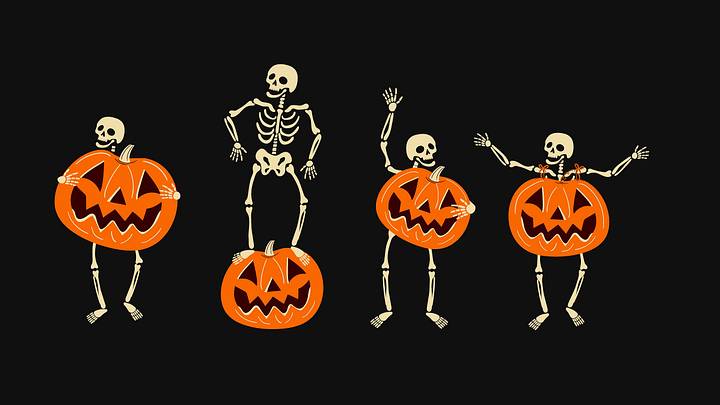
In today's world, horror revolves around blood, guts, or psychological trauma. A simple skeleton, cleaned and dry, doesn't spark the same fear it once did. But a physical reminder of mortality terrifyingly loomed over our ancestors throughout their art, stories, and culture. And it wasn't only around Halloween that skeletons were seen and mentioned. Generations ago, skeletons merely symbolized how death is a part of life.
So, how did a symbol of death become part of our Halloween celebrations if it wasn't meant to be scary? Well, the ancient holiday was not about scaring or getting scared, and it definitely wasn't about getting candy from strangers. But skeletons and bones have been part of All Hallow's Eve for ages.

Samhain
The ancient origins of Halloween begin with the Celtic people. They celebrated Samhain (pronounced "sow-in"), a day that honored the harvest and the life cycle of nature. The Celts believed that Samhain was the one day of the year when the boundaries between the living and the dead were loosened. They thought that spirits roamed the earth on Samhain, and they also believed that the graves would be opened so that the bodies could return to the mortal realm.
Samhain not only allowed the dead to walk the earth, but to return to the land of the dead with living beings. People began dressing in costumes, including those of skeletons, to hide among the dead and not be taken away. Even after converting to Christianity, many Celts kept these traditions and Samhain morphed into All Hallows Eve.

Día de los Muertos
On the other side of the world, ancient Central and South Americans celebrated a similar holiday in honor of life and death. Día de los Muertos, or Day of the Dead, has been a tradition since the Aztec Empire. The icon for this holiday has always been the skeleton, or sometimes just the skull. It also takes place at the end of October to celebrate the harvest and prepare for the winter.
Día de los Muertos honors family ties being stronger than death. People build shrines to their late loved ones with food, flowers, and candles to show reverence and respect to those who came before them. During the parades held, thousands paint their faces and don skeleton costumes to signify that there is life after death, and that death is not to be feared.

Medieval Europe
In the Middle Ages, people didn't really need a reminder that death was a part of life. Especially during the Black Plague, dead bodies could be found pretty much anywhere. But it was at this time that much of the artwork depicting death used skeletons as its symbol of choice.
Many medieval artists personified death as a skeleton or skeletons leading people away in what has been called the Danse Macabre, or the Dance of Death. These paintings became a cultural phenomenon in medieval times, as a way of reckoning with the inevitability of death.
Skeletons in Modern History
In Victorian England, people were obsessed with death, the occult, and the supernatural. Skeletons became symbols of Gothic horror rather than reminders of mortality, adding an element of fear to them. The first popular horror film, Le Manoir du Diable (The House of the Devil), was released just before the turn of the century, and its use of skeletons really drove home that they were something to be feared.
Just a generation later, Walt Disney would create one of the first cozy-spooky films, The Skeleton Dance. This animated short film helped ease children into the fun of Halloween without it being too scary. But it also meant that the work of the Victorians in making skeletons something to fear, began to be undone.
Still, skeletons have kept to their roots, symbolizing the ancient purpose of Halloween, which was to represent death within the life cycle.