%20%20--%3E%0A%3Csvg%20version%3D%221.1%22%20id%3D%22Layer_1%22%20xmlns%3D%22http%3A%2F%2Fwww.w3.org%2F2000%2Fsvg%22%20xmlns%3Axlink%3D%22http%3A%2F%2Fwww.w3.org%2F1999%2Fxlink%22%20x%3D%220px%22%20y%3D%220px%22%0A%09%20viewBox%3D%220%200%20684.6%2068.1%22%20style%3D%22enable-background%3Anew%200%200%20684.6%2068.1%3B%22%20xml%3Aspace%3D%22preserve%22%3E%0A%3Cg%3E%0A%09%3Cpath%20d%3D%22M444.1%2C29.3h-17.4v14.5h17.4V29.3z%20M36.4%2C68.1l29.3-50.8V0H50.4L32.9%2C36.8L15.5%2C0H0v68.1h16.7V45.8l12.4%2C22.3H36.4z%0A%09%09%20M49.1%2C68.1h16.6V23.4L49.1%2C52.1V68.1z%20M76.6%2C68.1h45V53.8H93.3V41.6h21V27.1h-21V14.8h28.3V0.1h-45V68.1z%20M175.6%2C68.1h17.3v-68%0A%09%09h-16.5v40.3L150%2C0.1h-17.6v68h16.7V27.7L175.6%2C68.1z%20M235.8%2C14.8h15.4V0.1h-47.4v14.7H219v53.2h16.8V14.8z%20M290.3%2C45.9h-17.1%0A%09%09l7.5-15.6h2L290.3%2C45.9z%20M298.7%2C68.1h18l-32.2-68h-5.7l-32%2C68h18l3.3-7.1h27.1L298.7%2C68.1z%20M325.2%2C68.1h46.2V53.8h-29.6V0.1h-16.7%0A%09%09V68.1z%20M423.7%2C14.8h27.2V0.1H407v68h16.7V14.8z%20M462%2C68.1h46.2V53.8h-29.6V0.1H462V68.1z%20M564.8%2C34.1c0%2C10.7-7.2%2C19.2-18.5%2C19.2%0A%09%09c-11.4%2C0-18.5-8.5-18.5-19.2s7.1-19.2%2C18.5-19.2C557.6%2C14.9%2C564.8%2C23.4%2C564.8%2C34.1%20M580.6%2C34.1c0-19-14.2-34-34.3-34%0A%09%09c-20.2%2C0-34.3%2C15-34.3%2C34c0%2C19%2C14.1%2C34%2C34.3%2C34C566.4%2C68.1%2C580.6%2C53.1%2C580.6%2C34.1%20M604.8%2C20.5c0-4.1%2C3.3-6.2%2C6.7-6.2%0A%09%09c4.4%2C0%2C6.6%2C3%2C6.6%2C6.6h14.7C631.8%2C9.1%2C625.1%2C0.1%2C611%2C0.1c-12%2C0-21.7%2C9.3-21.7%2C20.6c0%2C10.9%2C5.9%2C15.9%2C16.7%2C19.8%0A%09%09c5.2%2C1.8%2C11.5%2C3.2%2C11.5%2C8c0%2C3.3-2.4%2C5.5-6.4%2C5.5c-3.6%2C0-6.6-3-6.6-6.7h-15.2c0%2C11.5%2C7.9%2C20.8%2C21.8%2C20.8c12%2C0%2C21.6-9.3%2C21.6-20.6%0A%09%09c0-10-5.3-16.4-16.7-19.8C610.6%2C26.1%2C604.8%2C25.3%2C604.8%2C20.5%20M670%2C20.9h14.7C683.8%2C9.1%2C677.1%2C0.1%2C663%2C0.1c-12%2C0-21.7%2C9.3-21.7%2C20.6%0A%09%09c0%2C10.9%2C5.9%2C15.9%2C16.7%2C19.8c5.2%2C1.8%2C11.5%2C3.2%2C11.5%2C8c0%2C3.3-2.4%2C5.5-6.4%2C5.5c-3.6%2C0-6.6-3-6.6-6.7h-15.2c0%2C11.5%2C7.9%2C20.8%2C21.8%2C20.8%0A%09%09c12%2C0%2C21.6-9.3%2C21.6-20.6c0-10-5.3-16.4-16.7-19.8c-5.4-1.6-11.3-2.4-11.3-7.2c0-4.1%2C3.3-6.2%2C6.7-6.2C667.7%2C14.4%2C670%2C17.3%2C670%2C20.9%0A%09%09%22%2F%3E%0A%3C%2Fg%3E%0A%3C%2Fsvg%3E%0A)

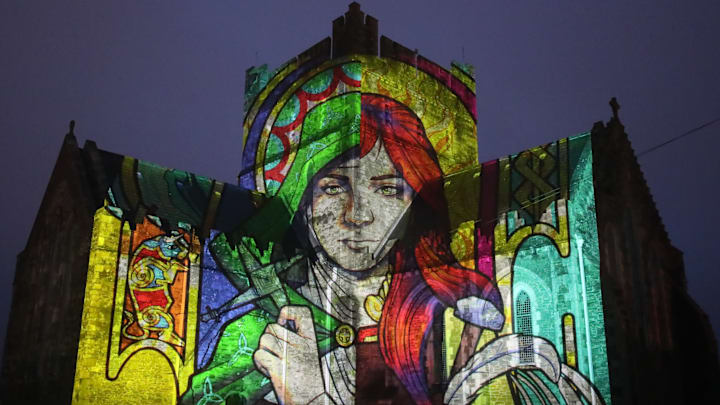
Ireland’s most infamous saint might be St. Patrick, but there’s another public figure from the Emerald Isle who has an enduring place in history—and in the hearts of many people of the past and the present.
That would be St. Brigid, who is sometimes colloquially referred to as Ireland’s patroness or “mother saint.” Though she has a prominent place in the Christian church, her legacy is also bound up with earth-based, pagan traditions that predate Christianity.
In 2023, St. Brigid’s Day became an official holiday in Ireland, and it typically takes place on the first Monday of each February. The holiday’s implementation is the product of a years-long campaign by the group Herstory and other advocates, and it honors women, ancient Irish spirituality, and the coming of spring.
Who Was St. Brigid?

Little is known for certain about St. Brigid, but legends say she was born in 451 in Dundalk, Ireland and died in 525. According to some stories, she was the child of a Christian slave and a wealthy pagan father, and was her father’s servant during her early life.
However, he is said to have grown tired of Brigid's habit of giving away all of her possessions to those in need, and apparently tried to sell her to the King of Leinster. During the transaction, she gave the king’s jeweled sword to a leper, which caused the king to recognize her saintliness and to free her from servitude.
Brigid is said to have gone on to become a nun who established numerous monasteries and learning centers across Ireland, including a large monastic community at Kildare. She eventually became one of Ireland’s three patron saints along with St. Patrick and St. Columba, and is sometimes referred to as the patron saint of beer, dairy farmers, midwives, and blacksmiths.
According to some legends, she was a great lover of ale. Others have theorized that she may have shared her bed and life with a woman. Many stories also say she could perform various miracles, and almost all speak of her compassion and strength.
Is St. Brigid Related to the Celtic Goddess Brigid?

St. Brigid bears many similarities to a much older Celtic goddess known as Brigid or Bríg, who symbolizes fertility and is also associated with poetry, wisdom, healing, and protection.
In some traditions, Brigid was depicted as three sister-goddesses who symbolized healing, poetry, and smithcraft, though most legends depict her as one goddess who presides over all three attributes. Some historians believe Brigid was once followed all across Europe, and that she may have links to even older goddesses dating far back before recorded history.
Before the rise of Christianity, Irish pagans are also believed to have celebrated a festival called Imbolc around February 1 which specifically honored Brigid. This holiday marked the midpoint between the winter solstice and the spring equinox, and involved gratitude and prayers for the rebirth of the land and the coming of warmer days.
Around this time, the season's first flowers might have been poking through the snow, and the earliest lambs may have been born, allowing people who had been huddled inside all winter—often with their livestock right next to them—to taste their first sips of fresh milk of the season. Together and in combination with these factors, Imbolc and Brigid traditionally symbolized rebirth, reawakening, and hope in the darkness.
Many scholars also believe that the goddess Brigid and St. Brigid may have slowly merged into one figure over the years. After all, Ireland was a pagan country until Christianity overtook it around the 5th century. It’s certainly possible that there was a saint called St. Brigid whose attributes resembled Brigid’s enough that they were easily combined due to forced colonization, natural synergy, or a mix of both.
Regardless of the actual relationship between St. Brigid and the Celtic goddess Brigid, for many people across the world today, the two have become one figure who primarily symbolizes fertility, femininity, and spring.
How Was Brigid Traditionally Celebrated?

Brigid and Imbolc were traditionally celebrated by feasting, often on buttery potatoes. During this feast, families would give thanks for the crops that had helped them survive winter while also praying for a new year of abundance.
Often, people would weave variations of Brigid’s Cross, the most famous of which is a four-pronged cross made of wood or straw plaits tied together. Different families from different areas would weave unique crosses, sometimes looping in reeds, feathers, or droplets of holy water. These crosses were often hung in barns or near animals and were thought to bring good fortune.
People would often also leave out pieces of cake or bread wrapped in cloth as ways of appeasing Brigid, who they believed could protect them from illness. Sometimes children would also travel from home to home carrying Brigid-inspired dolls, collecting money and donations for festivities in her honor. Some people would also make pilgrimages to one of the many holy wells in Ireland dedicated to Brigid, and many believed that water from the wells could be a cure for infertility.
Today, many people around the world have resurrected some of these traditions to honor Brigid the goddess, St. Brigid, and all they represent.