%20%20--%3E%0A%3Csvg%20version%3D%221.1%22%20id%3D%22Layer_1%22%20xmlns%3D%22http%3A%2F%2Fwww.w3.org%2F2000%2Fsvg%22%20xmlns%3Axlink%3D%22http%3A%2F%2Fwww.w3.org%2F1999%2Fxlink%22%20x%3D%220px%22%20y%3D%220px%22%0A%09%20viewBox%3D%220%200%20684.6%2068.1%22%20style%3D%22enable-background%3Anew%200%200%20684.6%2068.1%3B%22%20xml%3Aspace%3D%22preserve%22%3E%0A%3Cg%3E%0A%09%3Cpath%20d%3D%22M444.1%2C29.3h-17.4v14.5h17.4V29.3z%20M36.4%2C68.1l29.3-50.8V0H50.4L32.9%2C36.8L15.5%2C0H0v68.1h16.7V45.8l12.4%2C22.3H36.4z%0A%09%09%20M49.1%2C68.1h16.6V23.4L49.1%2C52.1V68.1z%20M76.6%2C68.1h45V53.8H93.3V41.6h21V27.1h-21V14.8h28.3V0.1h-45V68.1z%20M175.6%2C68.1h17.3v-68%0A%09%09h-16.5v40.3L150%2C0.1h-17.6v68h16.7V27.7L175.6%2C68.1z%20M235.8%2C14.8h15.4V0.1h-47.4v14.7H219v53.2h16.8V14.8z%20M290.3%2C45.9h-17.1%0A%09%09l7.5-15.6h2L290.3%2C45.9z%20M298.7%2C68.1h18l-32.2-68h-5.7l-32%2C68h18l3.3-7.1h27.1L298.7%2C68.1z%20M325.2%2C68.1h46.2V53.8h-29.6V0.1h-16.7%0A%09%09V68.1z%20M423.7%2C14.8h27.2V0.1H407v68h16.7V14.8z%20M462%2C68.1h46.2V53.8h-29.6V0.1H462V68.1z%20M564.8%2C34.1c0%2C10.7-7.2%2C19.2-18.5%2C19.2%0A%09%09c-11.4%2C0-18.5-8.5-18.5-19.2s7.1-19.2%2C18.5-19.2C557.6%2C14.9%2C564.8%2C23.4%2C564.8%2C34.1%20M580.6%2C34.1c0-19-14.2-34-34.3-34%0A%09%09c-20.2%2C0-34.3%2C15-34.3%2C34c0%2C19%2C14.1%2C34%2C34.3%2C34C566.4%2C68.1%2C580.6%2C53.1%2C580.6%2C34.1%20M604.8%2C20.5c0-4.1%2C3.3-6.2%2C6.7-6.2%0A%09%09c4.4%2C0%2C6.6%2C3%2C6.6%2C6.6h14.7C631.8%2C9.1%2C625.1%2C0.1%2C611%2C0.1c-12%2C0-21.7%2C9.3-21.7%2C20.6c0%2C10.9%2C5.9%2C15.9%2C16.7%2C19.8%0A%09%09c5.2%2C1.8%2C11.5%2C3.2%2C11.5%2C8c0%2C3.3-2.4%2C5.5-6.4%2C5.5c-3.6%2C0-6.6-3-6.6-6.7h-15.2c0%2C11.5%2C7.9%2C20.8%2C21.8%2C20.8c12%2C0%2C21.6-9.3%2C21.6-20.6%0A%09%09c0-10-5.3-16.4-16.7-19.8C610.6%2C26.1%2C604.8%2C25.3%2C604.8%2C20.5%20M670%2C20.9h14.7C683.8%2C9.1%2C677.1%2C0.1%2C663%2C0.1c-12%2C0-21.7%2C9.3-21.7%2C20.6%0A%09%09c0%2C10.9%2C5.9%2C15.9%2C16.7%2C19.8c5.2%2C1.8%2C11.5%2C3.2%2C11.5%2C8c0%2C3.3-2.4%2C5.5-6.4%2C5.5c-3.6%2C0-6.6-3-6.6-6.7h-15.2c0%2C11.5%2C7.9%2C20.8%2C21.8%2C20.8%0A%09%09c12%2C0%2C21.6-9.3%2C21.6-20.6c0-10-5.3-16.4-16.7-19.8c-5.4-1.6-11.3-2.4-11.3-7.2c0-4.1%2C3.3-6.2%2C6.7-6.2C667.7%2C14.4%2C670%2C17.3%2C670%2C20.9%0A%09%09%22%2F%3E%0A%3C%2Fg%3E%0A%3C%2Fsvg%3E%0A)

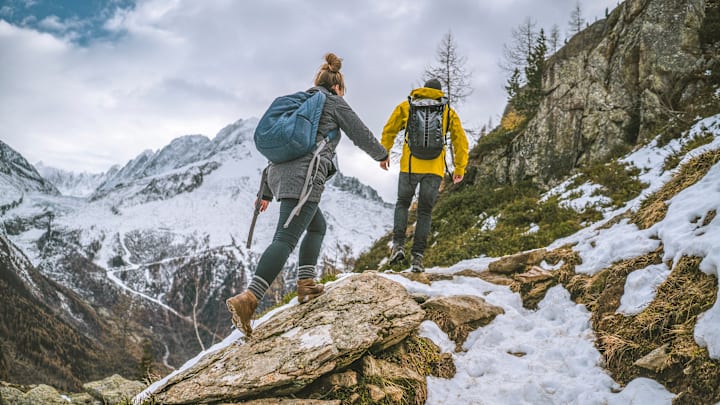
A chilling dating term is making the rounds online—but its origins trace back much further than social media. Known as “alpine divorce,” the phrase has recently resurfaced in conversations about relationships, carrying a dark implication that feels more at home in a mystery novel than modern dating discourse.
You can think of it like ghosting in real life, but with a much more murderous twist—one that echoes the premise of a 19th-century short story. So what does “alpine divorce” actually mean, and where did it come from?
A Dating Term with a Dark Edge
It seems that even abuse isn’t exempt from that signature social media sugarcoating, as seen with the term “alpine divorce." While the first word suggests fresh mountain air and vistas, the deeper meaning is much darker. “Alpine divorce” is used as a euphemism for one partner—typically a man—abandoning the other during a hike, whether after an argument or simply for falling behind.
But recent discussions about the “alpine divorce” in relation to its eerie origin story and true crime show the more sinister side of the phrase. Some argue it refers not just to abandonment, but to deliberate harm—such as pushing a partner off a cliff. In this sense, an “alpine divorce” suggests not just the end of a relationship, but the end of a life.
From Literature to Language

The phrase can be traced back to a 1893 short story by Robert Barr, which follows an unhappy married couple traveling through the Alps. During a hike, the husband plots to push his wife off a mountain. But in a final twist, she reveals she has already framed him for her murder before jumping to her death herself, leaving him to face the consequences.
Over time, that dark premise—one partner abandoning or harming the other in a remote setting—became the foundation for the modern use of “alpine divorce.” As the phrase resurfaced online, it shed its literary roots and evolved into shorthand for describing similarly unsettling relationship scenarios, sometimes reflecting real-world cases.
Why It’s Trending in True Crime Today
From fiction to fact, the “alpine divorce” shows just how thin the line between the two can be. More recently, the phrase has gained traction on social media, where it’s used to describe unsettling or extreme dating scenarios. In one widely circulated TikTok from February 2026, a woman, @EverAfterIya, filmed herself alone on a rocky mountain trail, visibly upset, after claiming the person she was hiking with had abandoned her. “POV: you go on a hike with him in the mountains, but he leaves you alone, and you realize he never liked you to begin with,” she wrote over the clip. The video quickly racked up millions of views and sparked a wave of commentary, from messages of solidarity to references to true crime cases.
While she made it back safely, others in similar situations have not been as fortunate. Social media users have started to sprinkle the term "alpine murder" in the comment sections of true crime TikToks and even clips from court. In 2025, an Austrian mountaineer, Thomas P, was convicted after leaving his exhausted girlfriend behind on a mountain while he went for help, resulting in her death. In another case from that same year that hit the stands in March 2026, a doctor in Hawaii has been accused of attempting to murder his wife on a steep hiking trail at Pali Puka.
In its latest form, “alpine divorce” is no longer just a story—it’s a phrase that reflects how quickly online language can turn from metaphor into something much more chilling.