%20%20--%3E%0A%3Csvg%20version%3D%221.1%22%20id%3D%22Layer_1%22%20xmlns%3D%22http%3A%2F%2Fwww.w3.org%2F2000%2Fsvg%22%20xmlns%3Axlink%3D%22http%3A%2F%2Fwww.w3.org%2F1999%2Fxlink%22%20x%3D%220px%22%20y%3D%220px%22%0A%09%20viewBox%3D%220%200%20684.6%2068.1%22%20style%3D%22enable-background%3Anew%200%200%20684.6%2068.1%3B%22%20xml%3Aspace%3D%22preserve%22%3E%0A%3Cg%3E%0A%09%3Cpath%20d%3D%22M444.1%2C29.3h-17.4v14.5h17.4V29.3z%20M36.4%2C68.1l29.3-50.8V0H50.4L32.9%2C36.8L15.5%2C0H0v68.1h16.7V45.8l12.4%2C22.3H36.4z%0A%09%09%20M49.1%2C68.1h16.6V23.4L49.1%2C52.1V68.1z%20M76.6%2C68.1h45V53.8H93.3V41.6h21V27.1h-21V14.8h28.3V0.1h-45V68.1z%20M175.6%2C68.1h17.3v-68%0A%09%09h-16.5v40.3L150%2C0.1h-17.6v68h16.7V27.7L175.6%2C68.1z%20M235.8%2C14.8h15.4V0.1h-47.4v14.7H219v53.2h16.8V14.8z%20M290.3%2C45.9h-17.1%0A%09%09l7.5-15.6h2L290.3%2C45.9z%20M298.7%2C68.1h18l-32.2-68h-5.7l-32%2C68h18l3.3-7.1h27.1L298.7%2C68.1z%20M325.2%2C68.1h46.2V53.8h-29.6V0.1h-16.7%0A%09%09V68.1z%20M423.7%2C14.8h27.2V0.1H407v68h16.7V14.8z%20M462%2C68.1h46.2V53.8h-29.6V0.1H462V68.1z%20M564.8%2C34.1c0%2C10.7-7.2%2C19.2-18.5%2C19.2%0A%09%09c-11.4%2C0-18.5-8.5-18.5-19.2s7.1-19.2%2C18.5-19.2C557.6%2C14.9%2C564.8%2C23.4%2C564.8%2C34.1%20M580.6%2C34.1c0-19-14.2-34-34.3-34%0A%09%09c-20.2%2C0-34.3%2C15-34.3%2C34c0%2C19%2C14.1%2C34%2C34.3%2C34C566.4%2C68.1%2C580.6%2C53.1%2C580.6%2C34.1%20M604.8%2C20.5c0-4.1%2C3.3-6.2%2C6.7-6.2%0A%09%09c4.4%2C0%2C6.6%2C3%2C6.6%2C6.6h14.7C631.8%2C9.1%2C625.1%2C0.1%2C611%2C0.1c-12%2C0-21.7%2C9.3-21.7%2C20.6c0%2C10.9%2C5.9%2C15.9%2C16.7%2C19.8%0A%09%09c5.2%2C1.8%2C11.5%2C3.2%2C11.5%2C8c0%2C3.3-2.4%2C5.5-6.4%2C5.5c-3.6%2C0-6.6-3-6.6-6.7h-15.2c0%2C11.5%2C7.9%2C20.8%2C21.8%2C20.8c12%2C0%2C21.6-9.3%2C21.6-20.6%0A%09%09c0-10-5.3-16.4-16.7-19.8C610.6%2C26.1%2C604.8%2C25.3%2C604.8%2C20.5%20M670%2C20.9h14.7C683.8%2C9.1%2C677.1%2C0.1%2C663%2C0.1c-12%2C0-21.7%2C9.3-21.7%2C20.6%0A%09%09c0%2C10.9%2C5.9%2C15.9%2C16.7%2C19.8c5.2%2C1.8%2C11.5%2C3.2%2C11.5%2C8c0%2C3.3-2.4%2C5.5-6.4%2C5.5c-3.6%2C0-6.6-3-6.6-6.7h-15.2c0%2C11.5%2C7.9%2C20.8%2C21.8%2C20.8%0A%09%09c12%2C0%2C21.6-9.3%2C21.6-20.6c0-10-5.3-16.4-16.7-19.8c-5.4-1.6-11.3-2.4-11.3-7.2c0-4.1%2C3.3-6.2%2C6.7-6.2C667.7%2C14.4%2C670%2C17.3%2C670%2C20.9%0A%09%09%22%2F%3E%0A%3C%2Fg%3E%0A%3C%2Fsvg%3E%0A)

Georgian England, 1714 to 1837: a world where social class, status, manners, and estate were held in the highest regard, and women had very little choice but to marry for convenience and financial security.
These were the realities of the era, but Jane Austen believed they deserved a rewrite, and she did just that. In her stories, women were quick-witted, educated, and picky about the partners they chose to spend their lives with. Society’s seemingly silly rules and manners fed her unmistakable satire, and women were no longer side characters passing time in the tea rooms of rich and powerful men.
Between the ages of 19 and 41, Austen wrote six novels, published from 1811 to 1817: Sense and Sensibility, Pride and Prejudice, Northanger Abbey, Mansfield Park, Emma, and Persuasion, in that order.
Throughout these works, she explored love, sisterhood, affluence, naivety, self-awareness, survival, practicality, regret, moral integrity, and imagination; her dry wit unfailingly in step with the drama that unfolded in every chapter.
She also introduced phrases first recorded in her novels that we still use today, bringing a bit of Austen’s England into the present.
From Pride and Prejudice:
Austen wrote Pride and Prejudice in 1796, unaware that Mr. Darcy would one day flex his hand and inspire a generational rewatch in 2005, more than 200 years after the novel was published. The story follows the Bennet family through love, heartbreak, and... boiled potatoes. Elizabeth and Mary, both determined to marry for love, capture the special attention (as Mr. Collins would say) of Mr. Darcy and Mr. Bingley. Through trials, misfortunes, and characters fond of walking, everyone learns a lesson and finds their match in the end, be it true love, immaturity, or security.
Phrases Austen introduced in the novel:
Dress a Salad
"These two girls had been above an hour in the place, happily employed in visiting an opposite milliner, watching the sentinel on guard, and dressing a sallad and cucumber."
Doorbell
"She was suddenly roused by the sound of the door bell, and her spirits were a little fluttered by the idea of its being Colonel Fitzwilliam himself."
From Emma:
Austen began drafting Emma in 1814, at age 38. The novel invites us into the life of 21-year-old Emma Woodhouse, "with very little to distress or vex her." In one of her most satirical stories, Austen examines social classes, self-discovery, and marriage as Emma and her family and friends navigate everyday life in Highbury. Emma matures through matchmaking (both successful and failed) and her affections, and lack thereof, for those of lower social status, influenced by her eventual suitor, George Knightley. True to Austen’s storytelling, everyone learns from their missteps, and their choices determine their ending.
Phrases Austen introduced in the novel:
Dinner Party
"Dinner-parties and evening-parties were made for him and his lady; and invitations flowed in so fast that she had soon the pleasure of apprehending they were never to have a disengaged day."
Brace Yourself
"It was particularly necessary to brace her up with a few decisive expressions..."
From Mansfield Park:
Mansfield Park was published in the same year Austen finished writing Emma. The novel follows poor Fanny Price, who moves in with her wealthy aunt and uncle at just ten years old. Her cousins are cold towards her, except Edmond, whom she considers a friend and mentor. Siblings Henry and Mary Crawford arrive: Mary is interested in Edmond, and Henry is attracted to both Maria and Julia. Henry later proposes to Fanny, who rejects him. Edmond, turned away by Mary’s reaction to her brother’s scandal with the previously wedded Maria, falls in love with Fanny and her good morals. After a few changes of setting, the pair settles at the parsonage near the main estate. Once again, everyone gets what they deserve.
The phrase Austen introduced in the novel:
Family Portrait
"Of pictures there were abundance, and some few good, but the larger part were family portraits, no longer anything to anybody but Mrs. Rushworth, who had been at great pains to learn all that the housekeeper could teach, and was now almost equally well qualified to shew the house.”
From Persuasion:
Persuasion was published posthumously six months after Austen’s passing in 1817 and tells the story of Anne Elliot and her second chance at love (eight years later) with Captain Frederick Wentworth. When Anne was 19, she was persuaded not to marry the sailor due to his lack of fortune. He returns when Anne herself is experiencing financial misfortune, now a decorated military man. Realizing his feelings for Anne remain the same, he travels to Bath and confesses his love in a letter. The pair become engaged, both never having loved another. As always in Austen’s literary worlds, everything settles as it should by the last page.
The phrase Austen introduced in the novel:
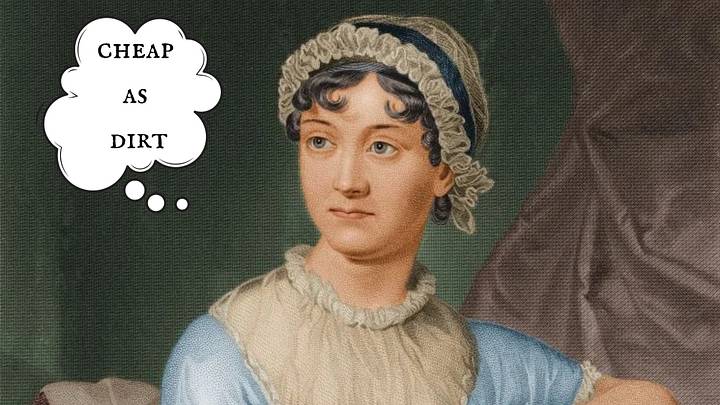
Dirt Cheap
"His chance for the Kellynch estate was something, but all the honour of the family he held as cheap as dirt."