%20%20--%3E%0A%3Csvg%20version%3D%221.1%22%20id%3D%22Layer_1%22%20xmlns%3D%22http%3A%2F%2Fwww.w3.org%2F2000%2Fsvg%22%20xmlns%3Axlink%3D%22http%3A%2F%2Fwww.w3.org%2F1999%2Fxlink%22%20x%3D%220px%22%20y%3D%220px%22%0A%09%20viewBox%3D%220%200%20684.6%2068.1%22%20style%3D%22enable-background%3Anew%200%200%20684.6%2068.1%3B%22%20xml%3Aspace%3D%22preserve%22%3E%0A%3Cg%3E%0A%09%3Cpath%20d%3D%22M444.1%2C29.3h-17.4v14.5h17.4V29.3z%20M36.4%2C68.1l29.3-50.8V0H50.4L32.9%2C36.8L15.5%2C0H0v68.1h16.7V45.8l12.4%2C22.3H36.4z%0A%09%09%20M49.1%2C68.1h16.6V23.4L49.1%2C52.1V68.1z%20M76.6%2C68.1h45V53.8H93.3V41.6h21V27.1h-21V14.8h28.3V0.1h-45V68.1z%20M175.6%2C68.1h17.3v-68%0A%09%09h-16.5v40.3L150%2C0.1h-17.6v68h16.7V27.7L175.6%2C68.1z%20M235.8%2C14.8h15.4V0.1h-47.4v14.7H219v53.2h16.8V14.8z%20M290.3%2C45.9h-17.1%0A%09%09l7.5-15.6h2L290.3%2C45.9z%20M298.7%2C68.1h18l-32.2-68h-5.7l-32%2C68h18l3.3-7.1h27.1L298.7%2C68.1z%20M325.2%2C68.1h46.2V53.8h-29.6V0.1h-16.7%0A%09%09V68.1z%20M423.7%2C14.8h27.2V0.1H407v68h16.7V14.8z%20M462%2C68.1h46.2V53.8h-29.6V0.1H462V68.1z%20M564.8%2C34.1c0%2C10.7-7.2%2C19.2-18.5%2C19.2%0A%09%09c-11.4%2C0-18.5-8.5-18.5-19.2s7.1-19.2%2C18.5-19.2C557.6%2C14.9%2C564.8%2C23.4%2C564.8%2C34.1%20M580.6%2C34.1c0-19-14.2-34-34.3-34%0A%09%09c-20.2%2C0-34.3%2C15-34.3%2C34c0%2C19%2C14.1%2C34%2C34.3%2C34C566.4%2C68.1%2C580.6%2C53.1%2C580.6%2C34.1%20M604.8%2C20.5c0-4.1%2C3.3-6.2%2C6.7-6.2%0A%09%09c4.4%2C0%2C6.6%2C3%2C6.6%2C6.6h14.7C631.8%2C9.1%2C625.1%2C0.1%2C611%2C0.1c-12%2C0-21.7%2C9.3-21.7%2C20.6c0%2C10.9%2C5.9%2C15.9%2C16.7%2C19.8%0A%09%09c5.2%2C1.8%2C11.5%2C3.2%2C11.5%2C8c0%2C3.3-2.4%2C5.5-6.4%2C5.5c-3.6%2C0-6.6-3-6.6-6.7h-15.2c0%2C11.5%2C7.9%2C20.8%2C21.8%2C20.8c12%2C0%2C21.6-9.3%2C21.6-20.6%0A%09%09c0-10-5.3-16.4-16.7-19.8C610.6%2C26.1%2C604.8%2C25.3%2C604.8%2C20.5%20M670%2C20.9h14.7C683.8%2C9.1%2C677.1%2C0.1%2C663%2C0.1c-12%2C0-21.7%2C9.3-21.7%2C20.6%0A%09%09c0%2C10.9%2C5.9%2C15.9%2C16.7%2C19.8c5.2%2C1.8%2C11.5%2C3.2%2C11.5%2C8c0%2C3.3-2.4%2C5.5-6.4%2C5.5c-3.6%2C0-6.6-3-6.6-6.7h-15.2c0%2C11.5%2C7.9%2C20.8%2C21.8%2C20.8%0A%09%09c12%2C0%2C21.6-9.3%2C21.6-20.6c0-10-5.3-16.4-16.7-19.8c-5.4-1.6-11.3-2.4-11.3-7.2c0-4.1%2C3.3-6.2%2C6.7-6.2C667.7%2C14.4%2C670%2C17.3%2C670%2C20.9%0A%09%09%22%2F%3E%0A%3C%2Fg%3E%0A%3C%2Fsvg%3E%0A)

- Spondulix
- Ducats
- Quid
- Bob
- Bucks
- Clams
- Simoleons
- Greenbacks
- C-note
- Smackers
- Bacon
- Chump Change
- Dough
- Bread
- Lettuce
- Cheddar
- Moolah
- Benjamins
- Dead Presidents
- Paper
- Bank
- Guap
- Fetti
- Racks
- Bands
- Bag
Money talks, but not everyone speaks the language. From old-school street terms for currency to social media slang for cash, money has many monikers—and if you don't know the lingo, you'll never be in the loop when it comes to the loot.
Whether you're actually stacking racks or just wondering how fetti ended up on your favorite playlist, money is most likely on your mind. We're breaking down the most popular slang terms for money, tracking their evolution from the birth of America to hip-hop to the internet—and why they remained staples in daily conversation the whole way.
Spondulix

Also commonly spelled spondulicks and spondoolicks, this 19th-century slang term for money was used by authors such as Mark Twain. It stems from spondylos, the ancient Greek word for a vertebra. Language researcher Doug Wilson linked the slang to mid-19th-century American students, who noted that a vertical stack of coins looked exactly like a human spine—a theory backed by an 1867 textbook defining the word as "coin piled for counting."
Coincidentally, the root word spondylos also has ties to spondylus, a genus of spiky oyster seashells that served as one of the earliest forms of currency in Maya society.
Ducats
This term ducats or duckets stems from the gold coins issued by European duchies, starting in late 13th-century Italy. Because of their reliable purity, ducats became the gold standard for international trade across the continent for centuries, cementing their place in literature ranging from Shakespeare’s The Merchant of Venice to modern street slang.
Quid

The quintessential British slang for a pound sterling has been around since the late 1600s. Linguists generally trace it back to the Latin phrase quid pro quo ("something for something"), which aptly captures the essential nature of a financial transaction.
Bob
Used for generations to describe a British shilling—which was worth 12 old pennies until decimalization in 1971—the slang term bob is still used today to refer to a small sum of money. While its exact origin is a bit of a historical mystery, some etymologists believe the nickname was a direct nod to Sir Robert Walpole, Britain's first Prime Minister.
Bucks

This American classic traces its roots to the 18th-century frontier, decades before the U.S. Mint even existed. European settlers and Native Americans used deer pelts—specifically buckskins—as currency. A frontier journal entry from 1748 famously records a barrel of whiskey being traded for the value of "5 bucks."
Clams
Emerging in 19th-century America and popularized during the 1920s, this coastal slang term for a dollar was inspired by Native American shell money. Funny enough, the slang is kept alive in SpongeBob SquarePants, where the local paper money literally features pictures of clams, and characters use the word as slang for cash.
Simoleons

An eccentric piece of American slang for a singular dollar, simoleon is actually a linguistic mashup from the 1880s. Linguists believe it blends “Simon” (an old British slang term for a sixpence coin) with the “Napoleon” (a glittering gold coin widely circulated in France at the time). The word surged back into popularity in 2000 after it became the official in-game currency of The Sims franchise.
Greenbacks
Born out of necessity during the American Civil War, the term greenbacks refers to the emergency paper currency issued by the Lincoln administration in 1862 to fund the Union army. To thwart counterfeiters, the government printed the reverse side of the bills with a vibrant green ink that cameras of the era couldn’t capture.
C-note

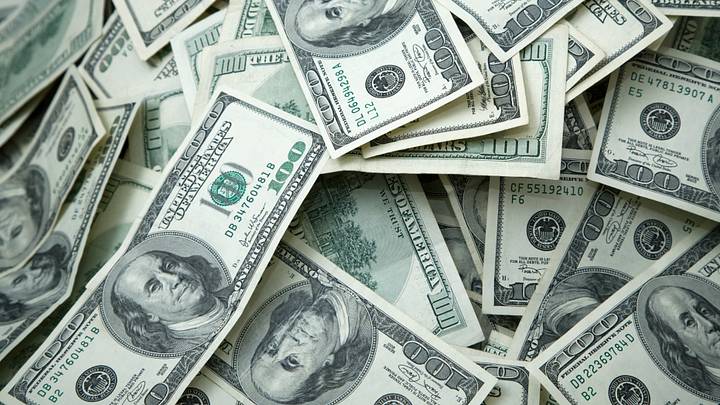
Unlike many of its low-value counterparts, the old-fashioned slang C-note refers specifically to a $100 bill. The "C" is simply the Roman numeral for 100, which was stamped on the front of early $100 bills before the design was modernized in 1914.
Smackers
Popularized during the "Roaring Twenties," smackers is an expressive slang term for dollars or pounds coined to mimic the distinct sound of a spender slapping a bill flat into someone’s hand. The more playful variation, smackeroos, was later adopted in the 1940s.
Bacon

Around the same time it became a breakfast staple in the 1920s, the word bacon became synonymous with money and wealth— think "bringing home the bacon.” While one theory traces the idiom to county fairs, where a greased pig was sometimes awarded as a prize, an even older legend dates back to 12th-century England, where a town church would literally award a slab of bacon to any married couple who could prove they hadn't argued for a year.
Chump Change
Arising from mid-20th-century American Black slang, this phrase describes a sum of money so insultingly small or pathetic that only a "chump" would work for it or accept it as fair payment.
Dough

The term dough kneaded its way into American money slang in the mid-19th century as a nod to "earning your daily bread." It set off a massive wave of baking metaphors over the next century, including the 1930s slang bread and the phrase "rolling in the dough," used to describe someone so rich they were practically swimming in cash.
Bread
Following the logic of dough, bread rose to prominence as financial slang because a basic loaf was the baseline requirement for keeping a family fed. While it started out decades ago as a Great Depression-era staple, the term has remained in the modern lexicon thanks to its role in rap and hustle culture.
Lettuce

A purely visual 20th-century American pun, the slang term lettuce—along with its leafy cousin, cabbage—was inspired by the crisp, green, tightly layered look of a thick wad of dollar bills.
Cheddar
This cheesy slang for money originated in the mid-19th century but exploded in the late 20th century thanks to hip-hop—and the government. Cheddar originally referred to the blocks of welfare cheese distributed to low-income families in the 1980s. Eventually, "getting your cheddar" evolved from a term for receiving government aid into a widespread slang term for securing any kind of wealth.
Moolah

First appearing in the 1930s, moolah is a true etymological mystery. Some linguists suspect it stems from the Romani word for money, mol, while another popular idea traces it to the Spanish word mula, noting that mules were once used as currency, and pointing to the old Spanish phrase bájate de la mula, which literally means "get off your mule" but colloquially translates to "pay up."
Benjamins
A direct shout-out to Benjamin Franklin, Benjamins refers to the $100 bill, which has featured his portrait since 1914. Hip-hop took the nickname nationwide with the 1997 anthem "It's All About the Benjamins," but the real irony is historical: Franklin himself was a legendary advocate for extreme modesty, thriftiness, and penny-pinching.
Dead Presidents

The term dead presidents is a blanket description for U.S. paper bills, even though the nickname is actually a historical misnomer. Two of the most famous faces on American currency, Alexander Hamilton ($10) and Benjamin Franklin ($100), were founding fathers, but neither one was ever president.
Paper
The slang term paper is a hip-hop staple for describing physical cash, but U.S. bills aren't actually paper at all. Federal currency is actually a durable blend made of 75% cotton and 25% linen fibers, which is exactly why your cash survives an accidental trip through the washing machine.
Bank

While bank has referred to money since the 1500s, using it to describe a large pile of cash—like "making bank"—only took off in the 1990s. The word itself traces back to the Italian banca, which literally meant a wooden bench where early street-level money changers laid out their coins.
Guap
Popping up in rap lyrics in the early 2000s, guap is unique because it doesn’t stand for an exact amount of money, unlike a rack or a milli. While its origin was long considered a mystery, the leading theory traces it to Harlem street slang as a shortened version of the Spanish word guapo (handsome)—a clever play on bringing in a "pretty penny."
Fetti

Born in the Bay Area, fetti is usually traced back to feria, a Spanish slang term for money. Another popular theory suggests it’s short for “confetti,” painting a perfect picture of what it looks like when you throw a thick stack of cash into the air.
Racks
Meaning exactly one thousand dollars, the slang rack scales up by the count, so ten racks means ten thousand dollars. While the term had been around the streets for a minute, it blew up nationwide after Atlanta rapper Yung Chris released his track "Racks" in 2011.
Bands

Working hand-in-hand with racks, the term bands refers to the rubber bands used to securely wrap and bind thick wads of cash together.
Bag
Representing a substantial sum of money, the word bag has become an internet meme about chasing wealth. Today, the phrase "securing the bag" is used to describe locking down a promotion or business deal, and alternatively, “fumbling the bag” means the opposite.