%20%20--%3E%0A%3Csvg%20version%3D%221.1%22%20id%3D%22Layer_1%22%20xmlns%3D%22http%3A%2F%2Fwww.w3.org%2F2000%2Fsvg%22%20xmlns%3Axlink%3D%22http%3A%2F%2Fwww.w3.org%2F1999%2Fxlink%22%20x%3D%220px%22%20y%3D%220px%22%0A%09%20viewBox%3D%220%200%20684.6%2068.1%22%20style%3D%22enable-background%3Anew%200%200%20684.6%2068.1%3B%22%20xml%3Aspace%3D%22preserve%22%3E%0A%3Cg%3E%0A%09%3Cpath%20d%3D%22M444.1%2C29.3h-17.4v14.5h17.4V29.3z%20M36.4%2C68.1l29.3-50.8V0H50.4L32.9%2C36.8L15.5%2C0H0v68.1h16.7V45.8l12.4%2C22.3H36.4z%0A%09%09%20M49.1%2C68.1h16.6V23.4L49.1%2C52.1V68.1z%20M76.6%2C68.1h45V53.8H93.3V41.6h21V27.1h-21V14.8h28.3V0.1h-45V68.1z%20M175.6%2C68.1h17.3v-68%0A%09%09h-16.5v40.3L150%2C0.1h-17.6v68h16.7V27.7L175.6%2C68.1z%20M235.8%2C14.8h15.4V0.1h-47.4v14.7H219v53.2h16.8V14.8z%20M290.3%2C45.9h-17.1%0A%09%09l7.5-15.6h2L290.3%2C45.9z%20M298.7%2C68.1h18l-32.2-68h-5.7l-32%2C68h18l3.3-7.1h27.1L298.7%2C68.1z%20M325.2%2C68.1h46.2V53.8h-29.6V0.1h-16.7%0A%09%09V68.1z%20M423.7%2C14.8h27.2V0.1H407v68h16.7V14.8z%20M462%2C68.1h46.2V53.8h-29.6V0.1H462V68.1z%20M564.8%2C34.1c0%2C10.7-7.2%2C19.2-18.5%2C19.2%0A%09%09c-11.4%2C0-18.5-8.5-18.5-19.2s7.1-19.2%2C18.5-19.2C557.6%2C14.9%2C564.8%2C23.4%2C564.8%2C34.1%20M580.6%2C34.1c0-19-14.2-34-34.3-34%0A%09%09c-20.2%2C0-34.3%2C15-34.3%2C34c0%2C19%2C14.1%2C34%2C34.3%2C34C566.4%2C68.1%2C580.6%2C53.1%2C580.6%2C34.1%20M604.8%2C20.5c0-4.1%2C3.3-6.2%2C6.7-6.2%0A%09%09c4.4%2C0%2C6.6%2C3%2C6.6%2C6.6h14.7C631.8%2C9.1%2C625.1%2C0.1%2C611%2C0.1c-12%2C0-21.7%2C9.3-21.7%2C20.6c0%2C10.9%2C5.9%2C15.9%2C16.7%2C19.8%0A%09%09c5.2%2C1.8%2C11.5%2C3.2%2C11.5%2C8c0%2C3.3-2.4%2C5.5-6.4%2C5.5c-3.6%2C0-6.6-3-6.6-6.7h-15.2c0%2C11.5%2C7.9%2C20.8%2C21.8%2C20.8c12%2C0%2C21.6-9.3%2C21.6-20.6%0A%09%09c0-10-5.3-16.4-16.7-19.8C610.6%2C26.1%2C604.8%2C25.3%2C604.8%2C20.5%20M670%2C20.9h14.7C683.8%2C9.1%2C677.1%2C0.1%2C663%2C0.1c-12%2C0-21.7%2C9.3-21.7%2C20.6%0A%09%09c0%2C10.9%2C5.9%2C15.9%2C16.7%2C19.8c5.2%2C1.8%2C11.5%2C3.2%2C11.5%2C8c0%2C3.3-2.4%2C5.5-6.4%2C5.5c-3.6%2C0-6.6-3-6.6-6.7h-15.2c0%2C11.5%2C7.9%2C20.8%2C21.8%2C20.8%0A%09%09c12%2C0%2C21.6-9.3%2C21.6-20.6c0-10-5.3-16.4-16.7-19.8c-5.4-1.6-11.3-2.4-11.3-7.2c0-4.1%2C3.3-6.2%2C6.7-6.2C667.7%2C14.4%2C670%2C17.3%2C670%2C20.9%0A%09%09%22%2F%3E%0A%3C%2Fg%3E%0A%3C%2Fsvg%3E%0A)

Slang, like clothes, music, and recipes, is recycled over decades. One minute, a trend is relevant and widespread; the next, it's a thing of the past, and society is into another craze, whether entertainment, fashion, beauty, or business.
The 1960s gave rise to trends like go-go boots, beehive hair, the twist, and the hippie movement, naming just a few of the decade’s trends that transformed culture in ways previous generations hadn’t considered. Alongside these trends came new words to describe people, places, and feelings, words people had never heard before, or at least not in the same context.
Some of these words became so closely tied to their meanings that they were given their own dictionary definitions, and we still use them to describe the same things in 2026.
Here are nine slang words from the '60s that we still use today!
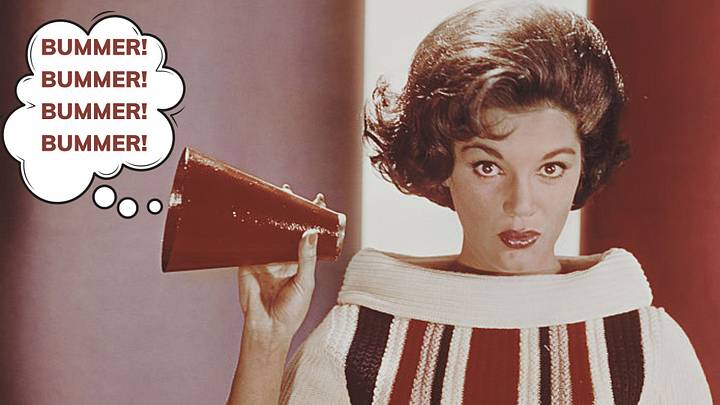
BUMMER

Dictionary definition: "something that is unpleasant or disappointing."
The 1960s inspired the counterculture movement, which included experimentation with substances. So, several terms from this era were drug-related, including "bummer."
While the word alluded to a “bad trip,” it also described anything unpleasant or disappointing. We still use “bummer” today when something doesn’t go our way or turn out as planned.
In a sentence: You didn't get the scholarship? What a bummer!
COOL

Dictionary definition: "very good, very fashionable, impressive, or appealing in a way that is generally approved of especially by young people."
Cool is one of those words that hasn’t gone out of style (since it first meant something other than being physically cold or unfriendly toward another person). In the 1960s, someone who wore tall boots and a pillbox hat was cool, basically meaning they were on trend, or their overall style and presence were impressive, whether through their clothes, accessories, or aura.
We still use cool today to describe someone who is composed or does something impressive.
In a sentence: That shirt is so cool!
FREAK OUT

Dictionary definition: "an act or instance of freaking out."
Similarly to "bummer," the slang phrase "freak out" was used to describe someone who had a poor experience with drugs in the 1960s. While the word "freak" alone was used to describe a '60s scene that opposed conventional standards, it was typically used to highlight a drug-related hallucination gone wrong.
While we don’t use it in exactly the same context in 2026, "freaking out" still refers to having a bad or uncomfortable experience. It’s rarely used positively.
In a sentence: I have to wait four days for my test results to come back, and I am freaking out!
RIP OFF

Dictionary definition: "an act or instance of stealing / a usually cheap exploitative imitation."
According to the University of Pittsburgh, "rip off" described theft or fraud 60 years ago.
In 2026, many still use it to call out situations where someone is taken advantage of or treated unfairly. To "rip someone off" also meant to offer something of lesser value at a high price. Today, we still use this slang to describe being tricked, whether through theft or by being offered something a seller knows is low quality.
In a sentence: The handle already tore off the purse I bought yesterday. What a ripoff!
SHADES

Dictionary definition: "sunglasses."
This '60s slang term has never faded... or shaded! Once people started calling sunglasses "shades," there was no going back. Even in 2026, you’ll hear people use "shades" for sunglasses. Unlike some slang that feels random, this one connects to the meaning: sunglasses provide shade for our eyes, so calling them "shades" just makes sense. (Not to be confused with Gen Z slang for shade: an insult; throwing shade.)
In a sentence: Oh no! It's so sunny, and I forgot my shades!
ZIT

Dictionary definition: "a small, red, swollen spot on the skin."
"Zit" didn’t come from dermatology studies, but people started using it to describe pimples, or, as Merriam-Webster so delicately puts it, a red, swollen spot on the skin. Out of all the possible words, people in the 1960s landed on "zit," and it stuck!
In 2026, people still use the word "zit" to refer to an unwanted bump on their face, instead of calling it a "pimple."
In a sentence: I have a zit on my forehead the size of the Eiffel Tower!
CRASH

Dictionary definition: "to experience the aftereffects (such as fatigue, irritability, headache, or depression) of a physiologically or psychologically active substance / to go to bed or fall asleep / to lose energy: to become very fatigued."
The word "crash" has many definitions, but the slang version is less about running into something and more about sleeping! In the 1960s, "crash" described going to sleep somewhere, or being physically exhausted.
In 2026, people still use "crash" to describe feeling sleepy.
In a sentence: Do you mind if I crash on your couch? I am too tired to drive home.
GRUNGY

Dictionary definition: "shabby or dirty in character or condition."
1960s society could never have predicted that the word they used for something or someone dirty would later inspire a whole genre of music that would take over a decade, 30 years later. Newspapers at the time described something grungy as extremely shabby or dirty.
In 2026, we still use the slang term "grungy" to mean something worn, dingy, or tattered, but now we also associate it with music and bands that fit those descriptors, like Nirvana, Soundgarden, Stone Temple Pilots, and more.
In a sentence: Those jeans are a little grungy, don't you think?
HACKER

Dictionary definition: "a person who illegally gains access to and sometimes tampers with information in a computer system."
What’s the first thing you think of when you hear the word "hacker?" With technology so prevalent in 2026, you probably picture someone breaking into computers, emails, or social media accounts. In the '60s, though, hackers were accessing telephone networks. Different technology, same context!
In a sentence: The hacker tried to get all my information; luckily, they didn’t!