%20%20--%3E%0A%3Csvg%20version%3D%221.1%22%20id%3D%22Layer_1%22%20xmlns%3D%22http%3A%2F%2Fwww.w3.org%2F2000%2Fsvg%22%20xmlns%3Axlink%3D%22http%3A%2F%2Fwww.w3.org%2F1999%2Fxlink%22%20x%3D%220px%22%20y%3D%220px%22%0A%09%20viewBox%3D%220%200%20684.6%2068.1%22%20style%3D%22enable-background%3Anew%200%200%20684.6%2068.1%3B%22%20xml%3Aspace%3D%22preserve%22%3E%0A%3Cg%3E%0A%09%3Cpath%20d%3D%22M444.1%2C29.3h-17.4v14.5h17.4V29.3z%20M36.4%2C68.1l29.3-50.8V0H50.4L32.9%2C36.8L15.5%2C0H0v68.1h16.7V45.8l12.4%2C22.3H36.4z%0A%09%09%20M49.1%2C68.1h16.6V23.4L49.1%2C52.1V68.1z%20M76.6%2C68.1h45V53.8H93.3V41.6h21V27.1h-21V14.8h28.3V0.1h-45V68.1z%20M175.6%2C68.1h17.3v-68%0A%09%09h-16.5v40.3L150%2C0.1h-17.6v68h16.7V27.7L175.6%2C68.1z%20M235.8%2C14.8h15.4V0.1h-47.4v14.7H219v53.2h16.8V14.8z%20M290.3%2C45.9h-17.1%0A%09%09l7.5-15.6h2L290.3%2C45.9z%20M298.7%2C68.1h18l-32.2-68h-5.7l-32%2C68h18l3.3-7.1h27.1L298.7%2C68.1z%20M325.2%2C68.1h46.2V53.8h-29.6V0.1h-16.7%0A%09%09V68.1z%20M423.7%2C14.8h27.2V0.1H407v68h16.7V14.8z%20M462%2C68.1h46.2V53.8h-29.6V0.1H462V68.1z%20M564.8%2C34.1c0%2C10.7-7.2%2C19.2-18.5%2C19.2%0A%09%09c-11.4%2C0-18.5-8.5-18.5-19.2s7.1-19.2%2C18.5-19.2C557.6%2C14.9%2C564.8%2C23.4%2C564.8%2C34.1%20M580.6%2C34.1c0-19-14.2-34-34.3-34%0A%09%09c-20.2%2C0-34.3%2C15-34.3%2C34c0%2C19%2C14.1%2C34%2C34.3%2C34C566.4%2C68.1%2C580.6%2C53.1%2C580.6%2C34.1%20M604.8%2C20.5c0-4.1%2C3.3-6.2%2C6.7-6.2%0A%09%09c4.4%2C0%2C6.6%2C3%2C6.6%2C6.6h14.7C631.8%2C9.1%2C625.1%2C0.1%2C611%2C0.1c-12%2C0-21.7%2C9.3-21.7%2C20.6c0%2C10.9%2C5.9%2C15.9%2C16.7%2C19.8%0A%09%09c5.2%2C1.8%2C11.5%2C3.2%2C11.5%2C8c0%2C3.3-2.4%2C5.5-6.4%2C5.5c-3.6%2C0-6.6-3-6.6-6.7h-15.2c0%2C11.5%2C7.9%2C20.8%2C21.8%2C20.8c12%2C0%2C21.6-9.3%2C21.6-20.6%0A%09%09c0-10-5.3-16.4-16.7-19.8C610.6%2C26.1%2C604.8%2C25.3%2C604.8%2C20.5%20M670%2C20.9h14.7C683.8%2C9.1%2C677.1%2C0.1%2C663%2C0.1c-12%2C0-21.7%2C9.3-21.7%2C20.6%0A%09%09c0%2C10.9%2C5.9%2C15.9%2C16.7%2C19.8c5.2%2C1.8%2C11.5%2C3.2%2C11.5%2C8c0%2C3.3-2.4%2C5.5-6.4%2C5.5c-3.6%2C0-6.6-3-6.6-6.7h-15.2c0%2C11.5%2C7.9%2C20.8%2C21.8%2C20.8%0A%09%09c12%2C0%2C21.6-9.3%2C21.6-20.6c0-10-5.3-16.4-16.7-19.8c-5.4-1.6-11.3-2.4-11.3-7.2c0-4.1%2C3.3-6.2%2C6.7-6.2C667.7%2C14.4%2C670%2C17.3%2C670%2C20.9%0A%09%09%22%2F%3E%0A%3C%2Fg%3E%0A%3C%2Fsvg%3E%0A)

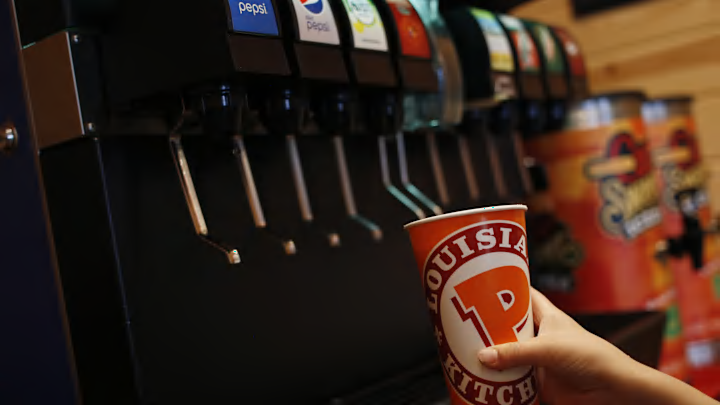
On August 31, 2025, burger chain Whataburger posted a fun image of their food and drinks, making references to the hit animated film, KPop Demon Hunters. Many Texans, where Whataburger is based, did not understand the reference and were furious that the company would use the words "soda pop" to describe the drink in the photo. In Texas, they call all of those types of carbonated beverages "cokes."
Language is always changing. It's fascinating to learn how the same language evolves differently based on where the speakers live. Slang words that are completely natural to one region would get confused reactions in another. With the size of the U.S., there are so many opportunities for multiple slang words with the same meaning to pop up throughout the country. Here are a few words that are used differently depending on where you're at.
- Soda, Pop, or Coke
- Sneakers, Tennis Shoes, Gym Shoes
- Cart, Carriage, Buggy
- Drinking Fountain, Water Fountain, Bubbler
- Beanie, Toboggan, Tuque
- Fireflies, Lightning Bugs

Soda, Pop, or Coke
As mentioned earlier, Texas and other Southern states call all soft drinks "coke." That's because Coca-Cola started in Atlanta and became so popular that the brand name morphed into a common name, known as a genericide.
If you're in the Midwestern or Western states, "pop" is the most popular term. "Soda" is used most frequently on the coasts, with California and New England states preferring it. But in one New England state, Massachusetts, many of the older generations use "tonic" to describe their bubbly drinks.

Sneakers, Tennis Shoes, Gym Shoes
Most of the U.S. calls athletic shoes "tennis shoes," though we wear them for much more than tennis. The Northeast and a small part of Florida are the only areas where "sneakers" is the most popular term, because you can sneak up on someone with the quieter rubber soles.
A small area of the Midwest, mostly Chicago and Cincinnati, calls their athletic shoes "gym shoes." Hawaii just calls them the generic "shoes." And if you ever hear the word "trainers," you're probably not in the U.S.—that’s the term used in the U.K. for athletic shoes.

Cart, Carriage, Buggy
While 77% of Americans would say, "Grab a cart," when grocery shopping, that isn't the only term used to describe the wheeled basket. Much of the South calls it a "buggy," and the Northeast calls it a "carriage."
Hawaii actually uses "wagon," a term similar to "carriage" and "buggy." If you go outside the U.S., the most common name for it is a "shopping trolley," or just "trolley."

Drinking Fountain, Water Fountain, Bubbler
The use of "drinking fountain" versus "water fountain" seems to be split pretty evenly. From Eastern New Mexico, Colorado, Wyoming, and Montana to the East Coast, "water fountain" is most popular. The Western states and those in the Great Lakes area use "drinking fountain." But there is an even smaller area within the Great Lakes where they call it a "bubbler."
Milwaukee, Wisconsin, is the main area where "bubbler" is heard in the U.S., though parts of Rhode Island and other countries, such as Australia, also use it. The alleged origin of the word comes from the Wisconsin-founded company, Kohler, and some of their marketing in the 1910s.

Beanie, Toboggan, Tuque
Outside of the Southern U.S., when you hear the word "toboggan," you'll think of a sled. But in the South, a toboggan is a knit winter hat. Most of the other areas in the U.S. call it a "beanie," after the old slang term for your head: "bean."
Canada calls these hats "tuques," though it can also be spelled "toques" or "touques." Some of the U.S. areas that border Canada have adopted this term as well. Other English-speaking countries like Australia and the U.K. stick with the "beanie" to describe their winter hats.

Fireflies, Lightning Bugs
The summertime insects that let off a glow at night are either "fireflies" or "lightning bugs," depending on the area of the U.S. The South and the Midwestern states prefer "lightning bugs," where the rest of the U.S. chooses "fireflies."
An interesting theory about why the different regions use "fireflies" or "lightning bugs" comes from meteorological researcher Jason Keeler. Keeler noticed that places where "fireflies" is used are prone to wildfires, and the areas that use "lightning bugs" often have lightning storms.